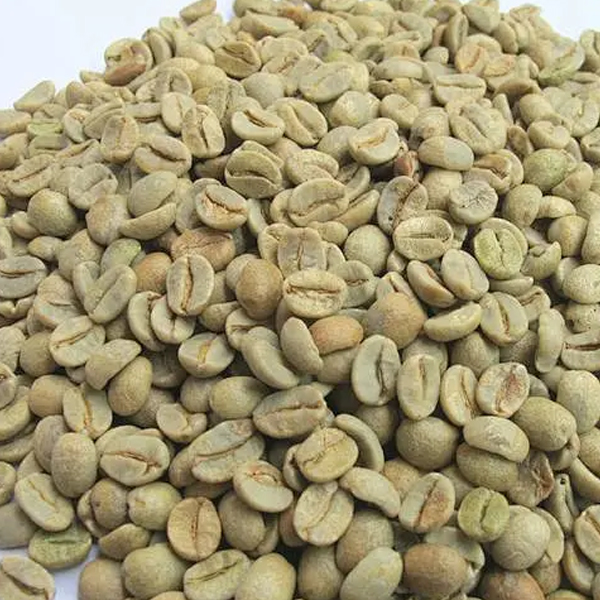
A standard production line for cleaning green coffee beans typically features the following equipment arranged in sequence: Primary Cleaning Sieve (Air-Screen Cleaner) → Gravity Destoner → Magnetic Separator → Vibrating Grading Sieve → Gravity Separator → Color Sorter → Polisher.
1. Primary Cleaning Sieve / Air-Screen Cleaner
Function: The initial coarse cleaning stage; removes large impurities (twigs, leaves, twine, soil clumps) and light impurities (dust, husks, pod fragments).
Principle: Combines vibrating screens with air separation. Large impurities are retained by the upper screen, light impurities are carried away by the airflow, and the cleaned beans flow out through the lower screen.
2. Gravity Destoner
Function: Removes stones, glass shards, and metal fragments that are similar in size to the coffee beans but heavier, thereby protecting downstream equipment.
Principle: Utilizes a vibrating inclined surface combined with directional airflow. The beans are lifted by the airflow and conveyed forward, while heavier stones sink to the bottom and are discharged backward.
3. Magnetic Separator
Function: Specifically extracts ferrous metals (iron nails, wire, metal shavings) to prevent damage to precision equipment such as color sorters and coffee grinders.
Placement: Typically installed after the destoner and before the color sorter.
4. Vibrating Grading Sieve
Function: Grades beans by size (e.g., 17/18, 19/20 mesh sizes); removes undersized broken beans and oversized misshapen beans to ensure uniform roasting.
Principle: Features multiple layers of screens with varying mesh apertures; under vibration, the beans are automatically graded and discharged according to size.
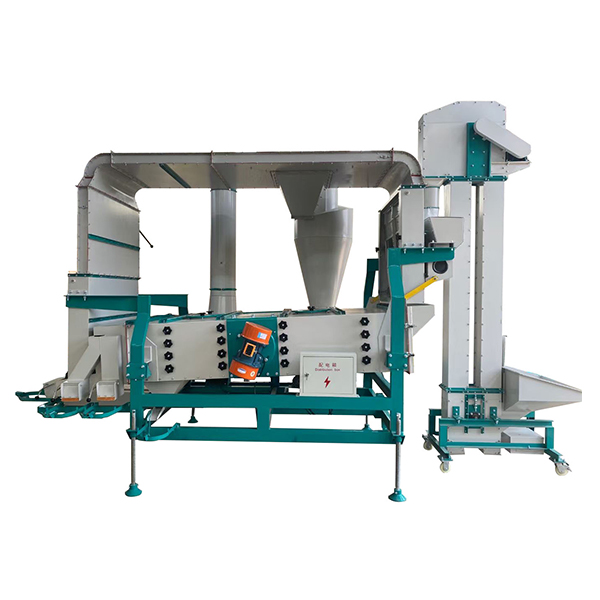
5. Gravity Separator (Specific Gravity Separator)
Function: Separates beans based on density/weight, removing hollow, insect-damaged, moldy, or underdeveloped beans while retaining full-bodied, dense beans.
Principle: Utilizes an adjustable-tilt vibrating bed combined with a uniform airflow; heavier beans move forward, while lighter beans move backward.
6. Color Sorter
Function: Rapidly identifies and removes beans with abnormal coloration, mold spots, insect holes, signs of immaturity, or blackening, as well as foreign-colored impurities (such as plastic or glass).
Principle: Employs high-definition CCD sensors and AI algorithms to eject defective items via high-speed air jets.
7. Polisher
Function: Removes silverskin (inner pericarp) and residual pectin, thereby enhancing the beans’ visual appearance and cleanliness; primarily used for specialty coffee beans.
Principle: Utilizes low-speed rotating brushes or friction rollers to perform a gentle polishing action.
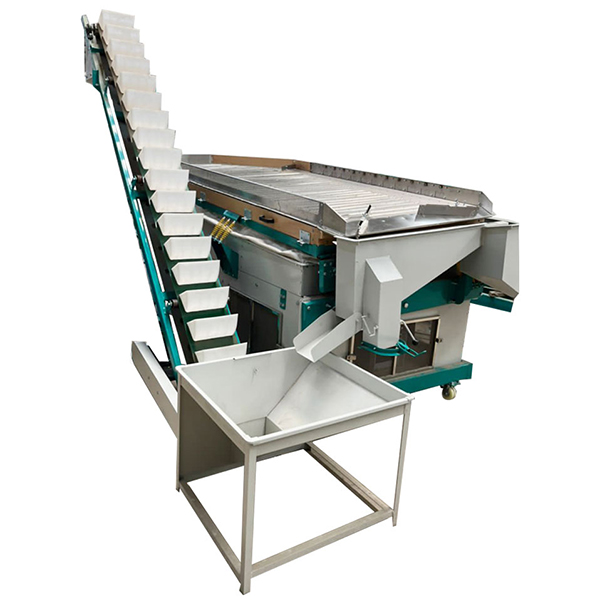
Selecting coffee bean cleaning equipment centers on four core principles: sizing the system based on production capacity, choosing specific machinery based on the nature of impurities, determining processing precision based on quality standards, and managing costs within a defined budget—all while ensuring compatibility with the available facility space and after-sales support requirements.
I. First, Determine Production Capacity: Scale Dictates Equipment Configuration
Begin by calculating the hourly processing throughput (kg/h), as well as the total daily and annual volumes; additionally, reserve a 30% buffer capacity to accommodate potential future production expansion.
1) Micro / Specialty Workshops (50–250 kg/h)
Standard Configuration: Small-scale air-screen pre-cleaner + Mini destoner + Small-scale color sorter
Optional Add-ons: Magnetic separator, small-scale grading screen
Key Features: Compact footprint, compatible with 100–220V power, easily portable, low cost
2) Medium-scale Processing Plants (0.5–2 t/h)
Standard Configuration: Air-screen pre-cleaning → Gravity destoning → Magnetic separation → Vibratory grading → Gravity separation → Color sorting
Optional Add-ons: Polisher (for specialty-grade beans)
Key Features: Continuous-flow operation, moderate footprint, requires 380V power, high cost-performance ratio
3) Large-scale Industrial Lines (3–8 t/h)
Standard Configuration: Full automated line, featuring dual-channel color sorting, deep-learning AI integration, and high-throughput models utilizing belt or chute-based conveying systems
Key Features: 24-hour continuous operation capability, food-grade stainless steel construction, remote monitoring capabilities, higher investment cost
Post time: May-23-2026