
The Philippines is a quintessential Southeast Asian nation characterized by a tropical monsoon climate and a rice-based agricultural system; rice is its most important food crop. The country maintains an annual rice cultivation area of approximately 4.8 million hectares, with an annual paddy output hovering around 20 million metric tons. According to data from the Philippine Statistics Authority and the Department of Agriculture, the harvested area in 2023 was approximately 4.82 million hectares, with paddy production hitting a record high of about 20.06 million metric tons. In 2024, however, production fell back to approximately 19.41 million metric tons—equivalent to about 12.69 million metric tons of milled rice—due to the combined impact of multiple typhoons and the El Niño phenomenon. The Philippines consistently falls short of full rice self-sufficiency, with a self-sufficiency rate ranging between 80% and 90%; as it still imports millions of tons of rice annually and ranks among the world’s largest rice importers, increasing yield per hectare, reducing post-harvest losses, and improving processing quality remain key priorities of its agricultural policy.
Rice cultivation in the Philippines is highly concentrated, with major production zones located in the vast plains of the central and northern regions. The Cagayan Valley is the country’s largest rice-growing area, covering approximately 310,000 hectares with a yield of about 4.07 metric tons per hectare. Other major production areas include the “rice granary” of Nueva Ecija in Central Luzon, Pangasinan province in the Ilocos region, and the SOCCSKSARGEN and BARMM regions on Mindanao. Cultivation methods include both direct seeding and transplanting in paddy fields, with a predominant two-crop annual cycle. The primary varieties grown are stress-tolerant strains (such as the IR and PSB Rc series) and hybrid rice varieties developed by the Philippine Rice Research Institute (PhilRice).
Rice-growing regions in the Philippines are typically characterized by low latitudes, high temperatures, and high humidity; combined with uneven levels of mechanization in harvesting, the raw paddy often suffers from significant issues such as high impurity content, excessive moisture, and inconsistent maturity. Field contaminants—including straw, husks, debris, stones, and soil clods—are frequently present, while sand, gravel, and weed seeds can be introduced during threshing and drying; furthermore, storage conditions often lead to insect damage and mold. Failure to remove these impurities can damage downstream equipment used for husking, milling, and polishing, while also significantly compromising the finished rice’s luster, whole-grain yield, and hygienic quality. This is precisely why air-screen cleaners and gravity destoners are indispensable components of rice processing lines.
I. Air-Screen Cleaner for Paddy Processing: Working Principle, Impurity Removal, and Advantages
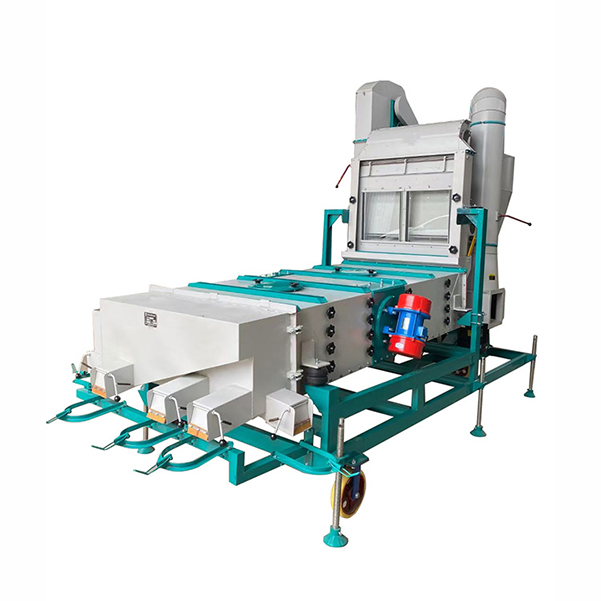
The air-screen cleaner serves as the primary piece of equipment for the initial cleaning of paddy rice. Its core operating principle combines “air separation” and “mechanical screening,” utilizing the differences in physical properties between the paddy grains and impurities to achieve separation.
1. Working Principle. The machine consists of a feed hopper, a vibrating screen assembly, a fan, and a dust removal system. Upon entering the machine, the paddy is first subjected to an airflow generated by the fan: light impurities with low specific gravity and large wind-facing surface areas (such as straw fragments, husks, empty/shriveled grains, and dust) are blown away by the rising airflow, achieving the initial “air separation.” Subsequently, the paddy falls evenly onto a vibrating screen assembly featuring multiple layers of screens with varying aperture sizes. Driven by an eccentric mechanism, the screen assembly undergoes reciprocating vibration, causing the material to move in stratified layers across the screen surface. Coarse impurities larger than the paddy grains (stones, straw, hemp rope, large clods of soil) are trapped and separated by the upper screen layer, while fine impurities smaller than the paddy grains (fine sand, small soil particles, shriveled grains, broken kernels) pass through the screen apertures to the lower discharge outlet; meanwhile, the plump, uniform paddy grains flow along the screen surface toward the next processing stage.
2. Impurities Removed. The air-screen cleaner primarily addresses three categories of impurities: light impurities (straw, stems and leaves, husks, dust, empty/shriveled grains); coarse impurities (large stones, straw, hemp rope, plastic fragments, etc.); and fine impurities (fine sand, soil particles, broken rice, shriveled grains, small weed seeds). By coordinating airflow volume, screen aperture size, and vibration frequency, the machine achieves comprehensive cleaning—removing light, coarse, and fine impurities—in a single pass.
3. Core Advantages. First, the multi-stage air separation and multi-layer screen decks are fully adjustable; given the high moisture content and complex impurity profile of Philippine paddy, the system utilizes variable-frequency speed control for precise matching, ensuring exceptional adaptability. Second, it offers high cleaning capacity, with a single unit capable of processing tens of tons per hour, making it ideal for continuous production in large and medium-sized rice mills in the Philippines. Third, it features enclosed dust extraction and impurity discharge outlets, effectively containing dust to meet hygiene standards while protecting downstream equipment from damage caused by hard impurities.
Following air and screen cleaning, the vast majority of large, light, and small impurities are removed, significantly enhancing purity. This creates optimal feed conditions for subsequent gravity-based destoning and hulling/milling processes, while simultaneously reducing breakage rates during refined rice processing and increasing the yield of whole milled rice.
II. Cleaning Paddy with a Gravity Destoner: Working Principle, Impurity Removal, and Advantages
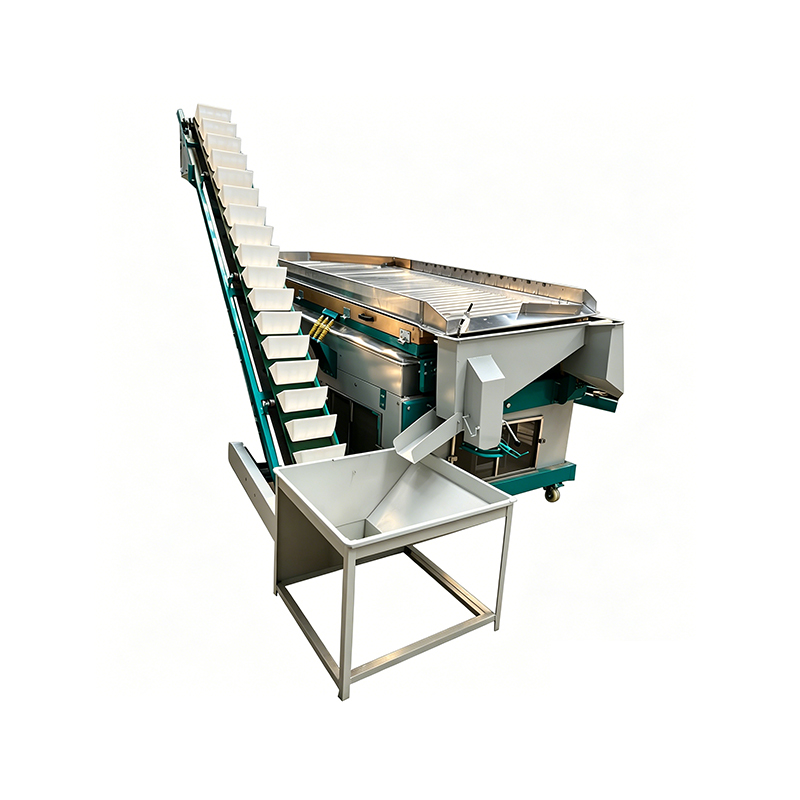
Positioned immediately after the air-screen cleaner, the gravity destoner is specifically designed to handle “impurities with similar sizes but different densities” that are difficult to separate thoroughly using air-screening methods alone. It is a crucial piece of equipment for enhancing paddy purity, particularly in removing stones and soil clods that match the grain size of the paddy and evade removal by air-screening.
1. Working Principle. The core of the equipment consists of an inclined vibrating deck and an upward airflow passing through it. After entering through the inlet, the deck undergoes high-frequency reciprocating motion driven by an eccentric vibration mechanism. Simultaneously, airflow from a fan rises through the permeable deck surface, causing the paddy to undergo fluidized stratification under the combined action of vibration and airflow: denser impurities (stones, soil clods, glass shards) sink to the bottom layer, clinging to the deck and moving upward to be discharged through the high-end stone outlet; conversely, lighter, plump paddy grains float in the upper layer and flow toward the low-end discharge outlet, achieving precise stratification and separation based on specific gravity. The deck inclination angle, vibration frequency, and airflow volume are all adjustable to accommodate different paddy varieties and moisture content levels.
2. Impurities Removed. The gravity destoner primarily removes “heavy impurities” with a specific gravity significantly higher than that of paddy, including stones, sand grains, soil clods, and metal fragments. Although similar in size to the paddy grains—making them impossible to effectively eliminate via screening or air separation alone—these impurities are the primary culprits behind damage to emery and diamond rollers during milling, as well as the root cause of grittiness in the finished rice and lowered hygiene ratings.
3. Core Advantages. First, it boasts strong impurity removal capabilities; by utilizing air suspension and specific gravity-based stratification, it achieves high removal rates and is particularly effective against “hidden stones” that are similar in size to the paddy grains. Second, the paddy is subjected to uniform forces within the fluidized layer, resulting in virtually no additional breakage, which helps preserve the whole-grain yield. Third, the airflow and vibration amplitude are adjustable, allowing the machine to adapt to the characteristics of paddy from various regions in the Philippines—including varying moisture content—while ensuring stable operation and easy maintenance.
After gravity-based destoning, hard impurities such as stones and soil clods are effectively eliminated. The cleanliness of the input material meets the high standards required for subsequent husking and milling processes, thereby extending the service life of the rice mill’s screens and abrasive rollers, significantly enhancing the visual quality and food safety of the finished rice, and reducing equipment wear and downtime for maintenance.
Post time: Oct-13-2026