

During the harvesting, drying, transport, and storage of legumes (such as soybeans, adzuki beans, mung beans, kidney beans, white kidney beans, pinto beans, chickpeas, black beans, and peanuts), the introduction of impurities is inevitable. These impurities can be broadly categorized into three types: large impurities (stones, clods of soil, straw, pod husks, pieces of twine, and large clumps of dirt); small impurities (broken beans, dust, fine sand, weed seeds, and soil particles); and “co-sized” impurities—impurities that are similar in size to the beans but differ in density, shape, or surface characteristics (such as insect-damaged beans, moldy beans, incompletely hulled pods, or stones). Vibratory grading screens are the core equipment designed to efficiently separate these impurities by leveraging two physical principles: size differentiation and multi-layered classification.
I. Operating Principle
The core of a vibrating grading machine lies in a synergistic mechanism combining “multi-layer screen decks,” “reciprocating or circular vibration,” and “automated grading.” This process is fundamentally based on the differences in geometric dimensions, aspect ratios, and sphericity between the beans and the impurities.
1. Multi-layer Screen Decks and Grading Logic
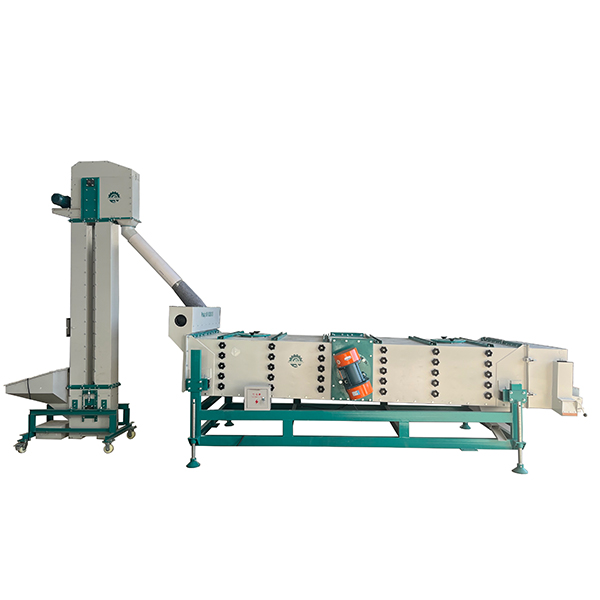
The machine is typically equipped with 2 to 4 (or more) screen decks, each featuring different aperture sizes, arranged from largest at the top to smallest at the bottom. During operation, the material is fed uniformly onto the uppermost screen deck:
Top Layer (Large-aperture screen): The apertures are larger than the “upper limit” of the bean size, allowing acceptable beans to pass through while retaining large impurities (such as stones, straw, or large clods of soil) on the screen surface, which are then directed toward a discharge outlet.
Intermediate Layers (Grading screens): The apertures fall within the “bean size range,” performing an initial classification of the beans by size while allowing smaller impurities to pass through to the layers below.
Bottom Layer (Small-aperture screen): The apertures are smaller than the “lower limit” of the bean size; acceptable beans are retained and collected, while smaller debris—such as broken beans, fine sand, and dust—pass through the screen and are directed to a separate discharge outlet for impurities.
Through this hierarchical structure—which retains large impurities at the top, grades the beans in the middle, and removes small impurities at the bottom—the system achieves a three-way separation of large impurities, small impurities, and beans in a single pass.
2. Vibration Source and Material Movement Dynamics
The screening machine is driven by a vibrating motor (or an eccentric exciter). The excitation force is resolved into horizontal and vertical components, inducing periodic vibration across the screen surface. Rather than simply accumulating passively, the material is continuously transported through a repeating cycle of being “tossed up, falling back down, and leaping forward” under the influence of these vibrational forces:
Vertical component: This lifts the material off the screen surface—a “tossing motion”—which prevents the beans from piling up and clogging the screen apertures, while simultaneously loosening the material and facilitating thorough stratification.
Horizontal component: This provides forward momentum along the screen surface, driving the material to move from the feed end toward the discharge end.
3. The “Self-Grading” Effect: The Core Essence of Vibrating Screens
As the material is repeatedly tossed and bounced across the screen surface, a stratification phenomenon—akin to the action of winnowing beans in a traditional hand-held sieve—occurs, known as “self-grading.” Denser, more uniformly rounded beans tend to sink toward the screen surface, while less dense or irregularly shaped impurities (such as shriveled grains, weed seeds, or insect-damaged beans) rise to the top. This effect causes a secondary rearrangement of beans and impurities on each layer of the screen, significantly enhancing both screening efficiency and grading precision. This is the key advantage that distinguishes vibrating grading screens from conventional fixed screens or rotary screens.
II. Operational Workflow
The impurity-removal process of a vibrating grading machine can be summarized into four stages: “feeding — material distribution — layered screening — three-way discharge.” It can be integrated with upstream and downstream equipment to form a complete cleaning line:
1. Uniform Feeding and Distribution
Material is delivered to the feed inlet via a hoist or conveyor belt. It then passes through a feed hopper and a distribution plate (or distributor), spreading evenly across the full width of the top screen deck. The uniformity of this distribution directly impacts both screening efficiency and the service life of the screen mesh; uneven accumulation can lead to poor screening in the piled-up areas, while other parts of the mesh remain idle.
2. Layered Screening and Grading
On the top screen, large impurities are removed. The material then falls to the middle screen, where it is graded by size and separated from impurities of similar dimensions. Finally, it reaches the bottom screen, where small impurities are removed, leaving behind clean, graded beans. Throughout this process, the vibration causes the material to continuously turn, loosen, and self-stratify, ensuring that every bean has the opportunity to make full contact with the screen apertures.
3. Three-Way Discharge and Collection
Clean beans: These exit through the main discharge outlet and proceed to the next stage of processing (such as gravity-based destoning, magnetic separation, or polishing).
Large impurities: Items such as stones, stalks, and clods of soil are discharged through the upper impurity outlet.
Small impurities: Broken beans, dust, and fine sand are discharged through the bottom (or secondary) impurity outlet.
III. Core Advantages
1. High Screening Efficiency and Large Processing Capacity
Featuring multi-layer screening surfaces combined with an automatic grading effect, the equipment significantly boosts processing capacity per unit of time. A single unit can handle the cleaning requirements for tens to hundreds of tons of beans per day, making it well-suited for large-scale processing operations.
2. Precise Grading with Purity Exceeding 99.5%
By employing a rigorous aperture gradient—capturing large impurities on the upper layers and removing small impurities on the lower layers—complemented by the automatic grading process that assists in separating similarly sized impurities, the system consistently achieves a purity level of over 99.5%. This substantially reduces the workload for downstream processing stages.
3. Compact Structure, Small Footprint, and Low Energy Consumption
Compared to air-separation or gravity-based equipment, the vibrating grading screen features a simpler design without complex air duct systems. It offers flexible installation, easy maintenance, and lower energy consumption per unit of processed material.
4. Stable Operation, Low Noise, and Long Service Life
The screening surfaces are constructed from wear-resistant and corrosion-resistant materials, such as stainless steel woven mesh or perforated plates. The well-configured vibration-damping springs and vibration motors ensure stable operation, extended maintenance intervals, and reduced downtime costs.
5. High Adaptability and Customizability
The equipment can be tailored to various types of beans with significant differences in grain size—such as soybeans, chickpeas, kidney beans, and peanuts—by adjusting screen aperture sizes, vibration amplitude/frequency, and the inclination angle of the screening surfaces. A single unit can thus accommodate the production of multiple varieties.
IV. Scope of Application
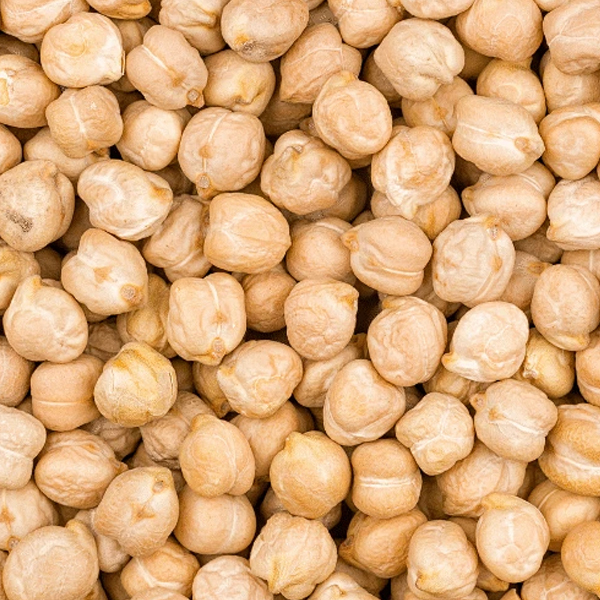
Suitable materials (primarily legumes): Soybeans, adzuki beans, mung beans, black beans, kidney beans, white kidney beans, pinto beans, chickpeas, peas, fava beans, peanuts (requires specialized screen types), and virtually all other common types of beans.
The Taobo vibrating grading machine utilizes a “multi-layer screen deck + automatic vibratory grading” mechanism to achieve rapid, efficient, and precise separation of large impurities, small impurities, and “side-by-side” (similarly sized) impurities from beans. It offers comprehensive advantages, including high efficiency, superior purity, low energy consumption, and strong adaptability. Within a processing line, it serves as the primary impurity-removal unit; when integrated with other Taobo machinery—such as air-screen cleaners, destoners, and magnetic separators—it forms a complete quality assurance system, taking the product from raw material to finished, market-ready beans. This solution is particularly well-suited for applications with stringent purity requirements, such as export trade and large-scale commercial processing.
Post time: Oct-21-2026