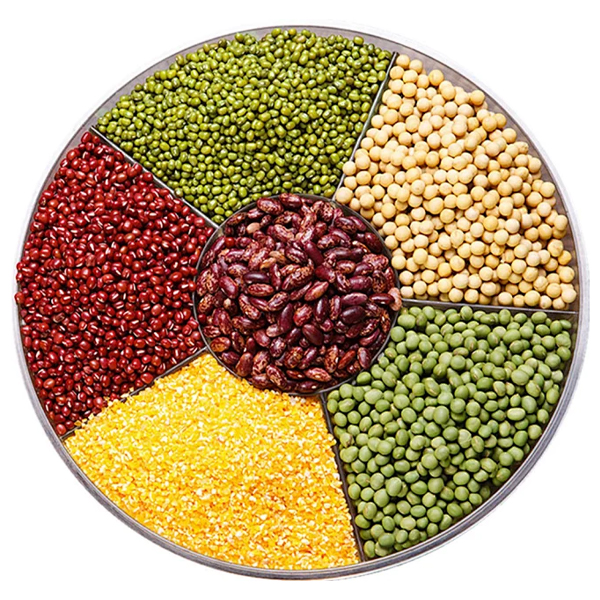
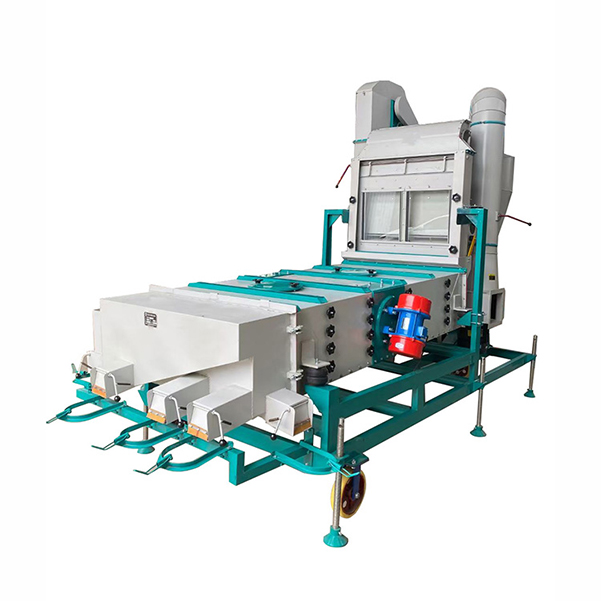
Ranging from foundational air-screen cleaning machines and compound air-screen cleaners to highly integrated air-screen gravity separators, our air-separation and screening equipment covers every stage of the process—from preliminary cleaning to precision sorting. By flexibly adjusting screen specifications and airflow parameters, our machinery efficiently removes impurities such as straw, hulls, weed seeds, shriveled grains, and dust from a wide variety of materials—including grains, legumes, oilseeds, and planting seeds—thereby catering to the diverse capacity requirements of operations ranging from small-scale farm workshops to large-scale processing plants.
To address the need for removing heavy impurities, our destoners and gravity separators precisely separate “shoulder stones” (grains of similar size but heavier density), soil clods, and other heavy contaminants, effectively resolving the persistent challenge of “difficult stone removal” often encountered in the processing of legumes and miscellaneous grains. Our magnetic separators efficiently extract metallic impurities from the material stream, safeguarding both equipment integrity and finished product purity; meanwhile, our color sorters accurately identify and remove moldy grains, discolored kernels, and insect-damaged seeds, thereby significantly enhancing the visual quality and market value of the finished product.
To meet the demands of premium processing, we have also introduced legume polishing machines, which gently buff away surface dust and loose seed coat fragments to give the beans a bright, lustrous finish. Additionally, our grading screens precisely classify materials based on particle size, satisfying the differentiated requirements associated with graded sales, deep processing, and other specialized applications.
From standalone machines to complete production line packages, Taobo Machinery leverages its extensive product range and mature technological expertise to deliver customized cleaning and sorting solutions. We empower agricultural processing enterprises to achieve enhanced product quality, improved operational efficiency, reduced costs, and increased revenue.
I. Core Advantages
1. Multi-stage Purification: Extremely High Impurity Removal Rate
Utilizing a five-stage integrated process—comprising preliminary cleaning, destoning, magnetic separation, gravity separation, and color sorting—the system thoroughly eliminates impurities across four dimensions: particle size, specific gravity, magnetic properties, and color. The comprehensive removal rate exceeds 99.5%, achieving a finished product purity of 99.8%+. It effectively removes stones, metals, moldy grains, insect-damaged grains, discolored grains, and fine, light impurities (such as straw and dust).
2. High Automation: Reduced Costs and Enhanced Efficiency
Features full PLC intelligent control, enabling one-touch startup, automatic feeding, intelligent sorting, and automatic packaging, allowing for continuous 24-hour operation.
Processing capacity ranges from 3 to 50 tons per hour, with a daily throughput reaching 100 to 500 tons—delivering an efficiency rate more than 20 times that of manual labor.
Intelligent Operation & Maintenance: Includes real-time monitoring, fault alarms, and adaptive parameter adjustment to minimize the need for manual intervention.
3. Gentle Processing: Low Breakage and Premium Quality
Equipped with a specialized gentle polishing machine and a low-speed, anti-breakage conveying system, the system ensures a grain breakage rate of ≤0.1%.
The color sorter boasts a recognition precision of 0.5mm, accurately removing discolored or damaged grains. The result is a finished product with uniform color and a smooth surface, significantly enhancing its commercial value.
4. Modular Design: Flexible Adaptability, Energy Efficiency, and Durability
Features a modular architecture that allows for flexible equipment configuration based on raw material impurity levels and production capacity requirements, making it adaptable to diverse operational scenarios.
Employs a fully dry process requiring no water and generating zero wastewater discharge. Power consumption is as low as 0.89 kWh per ton—representing an energy saving of over 20% compared to traditional methods.
Constructed with a stainless steel body and wear-resistant components, ensuring corrosion resistance and a long service life while meeting stringent food-grade hygiene standards.
Functions of the Preliminary Cleaner, Air-Screen Cleaner, Destoner, Magnetic Separator, Gravity Separator, and Color Sorter
1. Primary Cleaning Sieve
Core Function: The first-stage “coarse filtration” process, designed to remove large-volume and heavy coarse impurities from the raw material.
Main Impurities Removed: Large pieces of straw, fragments of woven bags, soil clods, hemp ropes, large weed seeds, etc.; simultaneously screens out a portion of airborne dust and fine soil.
Significance: Reduces the operational load on downstream equipment and prevents large impurities from clogging critical machinery—such as bucket elevators and air-screen cleaners—thereby laying a solid foundation for the stable operation of the entire production line.
2. Air-Screen Cleaning Machine
Core Function: The “core cleaning foundation” of the production line; it combines air separation with multi-layer sieves to grade and remove impurities based on differences in particle size and weight.
Main Impurities Removed:
Light Impurities: Dust, shriveled grains, insect-damaged grains, hulls/chaff, and leaf fragments.
Large/Small Impurities: Contaminants that are either significantly larger or smaller than the target material, foreign grain types, and broken beans.
Significance: Accomplishes the removal of the majority of common impurities, substantially enhancing material purity, and provides a stable, uniform material stream for subsequent processes such as destoning and color sorting.
3. Destoner
Core Function: Specifically designed to remove heavy impurities—such as stones and soil clods—that are similar in size to the target material but differ in density.
Main Impurities Removed: Stones, sand grains, and soil clods that are nearly identical in size to the beans or grains being processed; these impurities cannot be separated using standard sieves and represent a major challenge in grain processing.
Significance: Prevents stones from entering downstream equipment and causing abrasive wear, while simultaneously ensuring that no stones contaminate the finished product, thereby safeguarding both food safety and the operational lifespan of the machinery.
4. Magnetic Separator
Core Function: Utilizes a magnetic field to attract and remove metallic impurities from the material stream.
Primary Targets: Iron nails, metal shavings, steel wires, metal particles, etc.—including both impurities inherent in the raw materials and metal fragments generated by equipment wear.
Significance: Prevents metallic impurities from entering and damaging downstream precision equipment (such as color sorters and polishing machines), while simultaneously ensuring that no metal contaminants find their way into the finished product, thereby meeting food safety production standards.
5. Gravity Separator (Specific Gravity Cleaner)
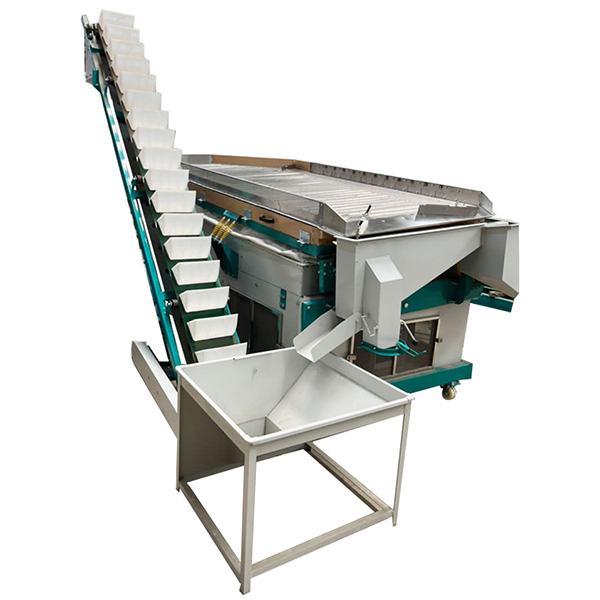
Core Function: Leverages differences in specific gravity among materials to perform further grading and impurity removal; it serves as a supplementary, advanced processing stage following air-screen cleaning.
Primary Targets:
Light Impurities: Moldy grains, insect-damaged grains, hollow or shriveled grains;
Heavy Impurities: Heavier contaminants such as stones and clods of earth;
It also enables the classification of materials based on specific gravity—for instance, separating plump, full-bodied beans from shriveled ones.
Significance: Building upon the foundation of air-screen cleaning, it further enhances the plumpness and purity of the finished product, while simultaneously reducing the sorting workload placed on the color sorter.
6. Color Sorter
Core Function: Employs high-precision optical recognition technology to accurately identify and reject defective items based on their color, shape, and specific flaw characteristics.
Primary Targets: Discolored grains, moldy grains, insect-damaged grains, broken grains, foreign grain varieties, and grains exhibiting spots or blemishes.
Significance: This is a critical stage for enhancing the visual quality and commercial value of the finished product; it ensures uniform color and consistent appearance, thereby directly meeting the rigorous standards required by high-end markets and export regulations.
II. Scope of Application
1. Applicable Bean Varieties
Major Beans: Soybeans, Mung Beans, Red Beans, Black Beans, Kidney Beans, Broad Beans, Peas;
Specialty Beans: Chickpeas, Pinto Beans, Pigeon Peas, Lentils, and other miscellaneous grains.
2. Applicable Scenarios and Industries
Food Processing: Snack foods (braised beans, roasted beans), bean products (soy milk, tofu, bean sheets), bean flour/meal replacement powders, baking ingredients;
Grain and Oil Trade: Grain storage facilities, grain purchasing stations, wholesalers of miscellaneous grains, export traders (high-quality cleaned beans);
Seed Processing: Selection, grading, and impurity removal for bean seeds to enhance germination rates;
Deep Processing Support: Pre-treatment stages involving bean dehulling, milling, oil extraction, and protein extraction.
Post time: May-29-2026