
Core Advantages of the Seed Cleaning Production Line
This comprehensive seed cleaning production line is specifically designed for high-quality seed processing. It focuses entirely on protecting the seed embryo, ensuring germination rates, and enhancing seed purity. Unlike standard grain cleaning lines, it is suitable for processing various seeds—including cereals, legumes, and oilseeds—and offers advantages across eight key areas:
I. Specialized Low-Damage Process Preserving Seed Vitality (Core Advantage)
The entire line features a seed-protection design that prevents damage to the seed embryo and internal kernel injuries right from the source:
Buffer discharge structures are installed at equipment transfer points to reduce the impact force of falling seeds, eliminating invisible internal cracks;
Gravity separators utilize customized low-amplitude and gentle airflow modes to minimize material compression and friction, preventing scratches to the hilum and embryo;
An optional specialized gentle polisher uses low-speed, soft-velvet friction to remove only surface dirt and mold, without thinning the seed coat or damaging the radicle;
The machinery operates smoothly with optimized vibration amplitudes, keeping breakage rates extremely low for thin-skinned legumes and small cereal seeds.
Post-processing seed germination rates remain virtually undiminished, and seedling emergence uniformity is significantly improved, meeting Grade I seed quality standards.
II. Multi-Stage Layered Selection for Significantly Enhanced Seed Purity
A progressive impurity removal and sorting process filters out inferior kernels and impurities layer by layer:
Front-end magnetic separation thoroughly removes iron nails and filings, preventing hard metal objects from damaging seeds or equipment;
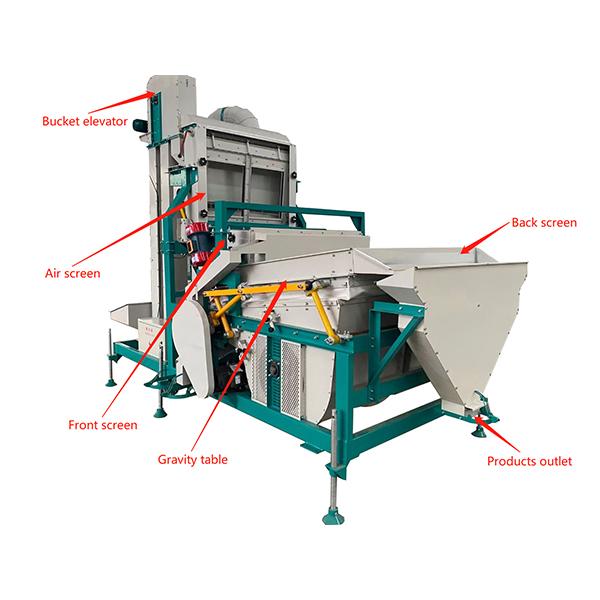
Compound air-screen separation removes stalks, weed seeds, soil, and empty or shriveled light seeds, filtering out 80% of external impurities in the initial stage;
An enlarged gravity separator utilizes density-based precision layering to separately discharge insect-damaged, underdeveloped, moldy, and shriveled seeds, retaining only plump, mature, high-quality seeds; for raw materials with high impurity content, a dual-gravity separator setup can be used for secondary purification;
An integrated color-sorting unit automatically rejects diseased, discolored, or off-type kernels;
After the complete process, the finished seeds exhibit high purity—free from weed seeds and defective kernels—meeting the commercial grading standards of seed companies and breeding bases.
III. Precise Grading and Sorting for Standardized High-Quality Seed Sales
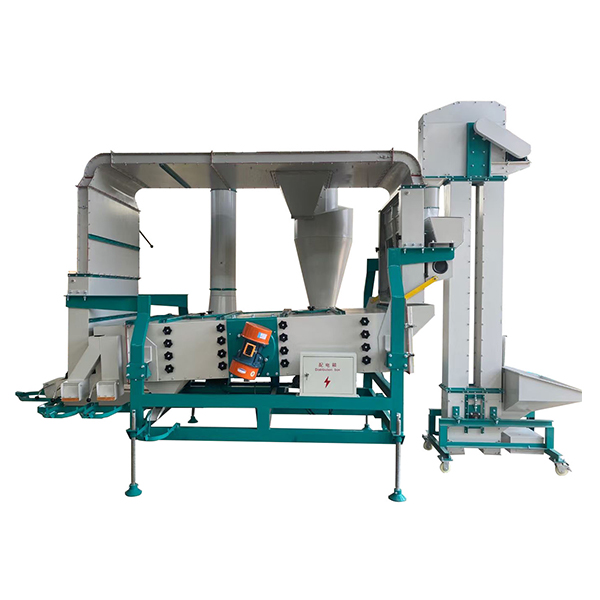
The production line can be equipped with multi-layer precision grading screens to automatically sort seeds into large, medium, and small sizes based on kernel diameter:
Seeds within the same grade exhibit consistent plumpness and water absorption rates, ensuring uniform field emergence and preventing uneven crop growth; graded seeds command a premium price and are suitable for mechanized sowing and export as high-quality bagged products—capabilities that standard, simple cleaning equipment lacks.
IV. Versatile Multi-Crop Compatibility (Grains, Legumes, and Oilseeds)
By simply changing screens with appropriate aperture sizes and making minor adjustments to air pressure, vibration frequency, and polishing speeds, the system can switch between processing various grain and oilseeds—including wheat, corn, rice, sorghum, mung beans, kidney beans, chickpeas, sesame, and rapeseed. Breeding facilities avoid the need to purchase multiple dedicated production lines, thereby saving factory space and equipment procurement costs.
V. Automated Continuous Operation: Labor Savings and Stable, Controllable Capacity
The entire process—from lifting and impurity removal to precision sorting and packaging—operates as an integrated system. Variable-frequency control allows for adjustable feed rates and 24-hour continuous processing, ensuring schedules are met even during peak-season, high-volume operations;
The entire line requires only 1–2 operators for monitoring, replacing manual sorting, transport, and grading steps, which significantly reduces labor costs over the long term;
Widened and lengthened screen surfaces and gravity separation decks prevent clogging or sticking—even when processing damp, mud-laden raw seeds—thereby reducing the frequency of downtime for cleaning.
Comprehensive Application Scope of Seed Cleaning Production Lines
I. Professional Breeding Research Bases & Seed Multiplication Farms
Crop breeding trial fields and multiplication bases: Processing foundation seeds (wheat, corn, rice, sorghum) by separating shriveled grains, diseased kernels, and off-type seeds to enhance purity and ensure accurate experimental data.
Large-scale seed production farms: Handling bulk harvests of commercial foundation seeds by removing field soil, stalks, weed seeds, and debris; utilizing standardized precision cleaning to guarantee germination rates and prepare seeds for subsequent coating and storage.
Specialty grain multiplication bases: Sorting high-quality seeds such as mung beans, kidney beans, chickpeas, pigeon peas, and sesame; employing low-damage processing techniques to protect the germ and maintain seed viability.
II. Large Seed Companies & Seed Processing Centers
Seed procurement and processing centers: Collecting raw seeds from farmers and using automated assembly lines for batch purification, grading, and packaging for commercial sale.
Precision processing of vegetable, flower, and forage seeds: Combining multi-stage screening for small seeds with gravity separation to remove discolored, moldy, or empty husks, thereby increasing market value.
Export-oriented seed enterprises: Processing high-quality grain and legume seeds for export; ensuring finished product purity and soundness meet customs inspection standards; offering customized models adapted for overseas voltage requirements and containerized shipping.
III. In-house Seed Production Units for Grain & Oil Processing Enterprises
Flour mills, rice mills, and oil extraction plants: Processing retained seed stock (wheat, rice, sesame, rapeseed) separately from commercial grain.
Specialty grain food factories: Operating seed multiplication workshops for internal seed retention and the sale of premium specialty grain seeds.
IV. Township Grain Procurement Stations & Small-scale Specialty Grain Processing Plants
Small-to-medium grain stations: Adding seed processing capabilities by installing compact 2–5 ton cleaning lines, allowing for both commercial grain cleaning and small-batch seed sorting.
Local specialty grain cooperatives: Centrally processing and sorting legume and grain seeds for members, eliminating the need for manual sorting and reducing processing costs. V. Import/Export Processing Plant (African & South American Pulses/Grain Seeds)
Imports raw sesame seeds from Nigeria and kidney/pinto beans from South America; sorts and selects plump, viable seeds for separate packaging and export as high-quality seed stock.
Domestic processing plant for high-quality grain seeds; equipment features anti-corrosion treatment, custom 415V/60Hz motors, and CE certification to meet overseas operational requirements.
Overseas seed processing plants; complete production lines designed for modular disassembly, facilitating containerized shipping and on-site reassembly.
Post time: Jun-25-2026