
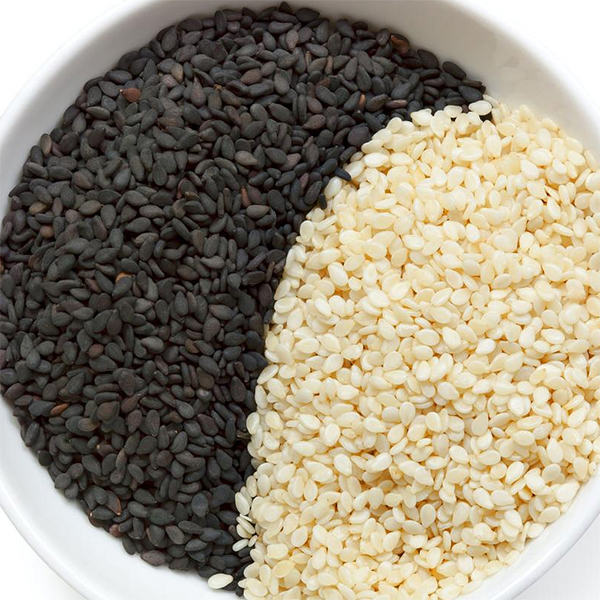
Nigeria is the second-largest sesame producer in Africa and the seventh-largest globally, with an output of approximately 420,000 tons in 2024. The main product is white sesame, with 80% exported. The core production area is concentrated in the northern Sudanese savanna, primarily cultivated by smallholder rainfed farmers. While yields are relatively low, export quality standards are high.
Core Cultivation Situation:
Main Production Areas: Northern states including Kano, Yobe, Borno, and Bauchi, characterized by a Sudanese savanna climate with an average annual rainfall of 1000–1500 mm. The loose, well-drained sandy loam soil is well-suited to sesame’s drought and poor-fertility characteristics.
Cultivation Entities and Methods: 90% of cultivation is by smallholder farmers using traditional rainfed methods. Sowing occurs in June–July, and harvesting in October–November, providing year-round supply. A small number of commercial farms employ crop rotation and simple irrigation, achieving yields exceeding 800 kg/hectare.
Variety and Quality: Primarily white sesame with an oil content ≥45%, low moisture content. Export requirements necessitate compliance with SPS (Soluble Sesame Processing) and purity standards. In recent years, international projects have been implemented to improve quality control capabilities.
Key challenges include high levels of post-harvest impurities (fine sand, straw, shriveled kernels), unstable yields, insufficient mechanization in processing, and geopolitical conflicts affecting some production areas.
Production, Sales, and Trends: Exports are the core driver. Sesame is one of Nigeria’s top three non-oil exports, with exports reaching approximately US$338 million in 2024, accounting for 4.63% of non-oil exports.
Trends: Government agencies are promoting training for smallholder farmers, subsidizing export certification, and improving mechanization and processing levels, with the goal of stabilizing production and increasing pricing power.
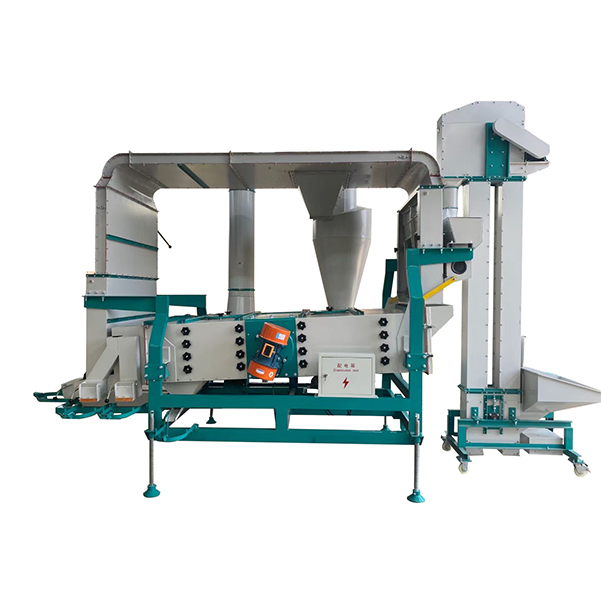
The core functions of an air-screen cleaning machine:
Air separation for light impurities: Utilizing airflow separation, it efficiently removes light impurities such as dust, straw, shriveled husks, and broken leaves, preventing clogging of the screen holes during subsequent grading.
Screening for large/small impurities: Through screens with different apertures, it separates large impurities (pebbles, large straw pieces) from small impurities (broken soil, small shriveled particles), providing initial material purification.
Gravity-assisted destoning: Some models are equipped with a gravity table to separate stones and mud lumps with a large specific gravity difference from sesame seeds, reducing the load on subsequent destoning machines.
Ensuring purity and quality: The impurity removal rate can reach over 99%, meeting export purity and food hygiene standards, reducing the pressure on subsequent color sorting.
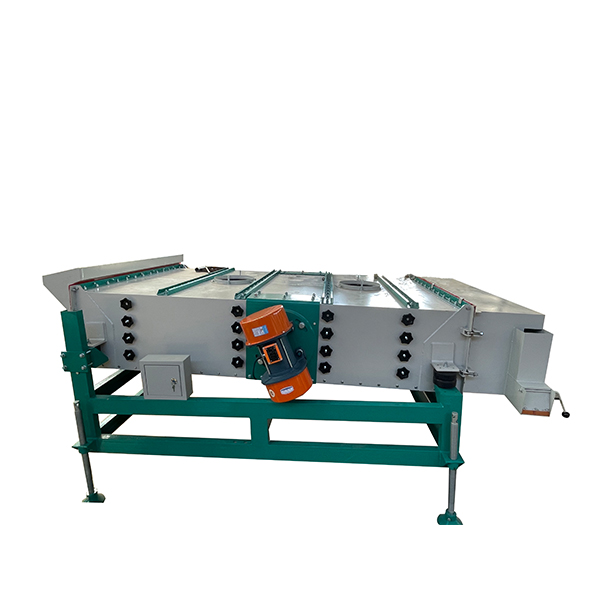
The core functions of a grading sieve:
Precise particle size grading: Separates sesame seeds into large, medium, and small sizes according to sieve aperture specifications, suitable for different export orders and processing applications (e.g., large seeds for food, medium/small seeds for oil extraction).
Secondary impurity removal: Further separates residual small impurities and broken particles through multiple sieve surfaces, improving the uniformity and marketability of the finished product.
Stable batch quality: Uniform particle shape and size, reducing damage during storage and transportation, and improving pricing power and customer acceptance.
Key Application Considerations for Nigerian Sesame Seeds
Equipment Selection: Prioritize air-screen cleaning machines with dual air separation and multi-layer sieves, along with high-frequency, low-amplitude vibrating grading screens. This is suitable for the high-impurity characteristics of mixed materials harvested by smallholder farmers, balancing efficiency and cost.
Screen Configuration: For sesame seeds, a screen aperture of 0.8–1.2 mm is recommended (adjusted according to particle size). Grading screens should have 3–5 layers of screen surfaces, balancing grading and secondary impurity removal.
Suggested Accessories: Add a destoner at the front end and a color sorter at the back end to form a “cleaning → destoning → grading → color sorting” process, meeting the stringent export requirements for cleanliness, particle size, and discolored particles.
Air-screen cleaning machines are the “foundation for purification,” while grading screens are the “key to added value.” Connecting them in series can solve the problems of impurities and uneven particle size in Nigerian sesame seeds.
Suitable models can improve cleanliness to over 99.5% and grading accuracy to ±0.1 mm, significantly enhancing export competitiveness and premium pricing.
Post time: Dec-22-2025