
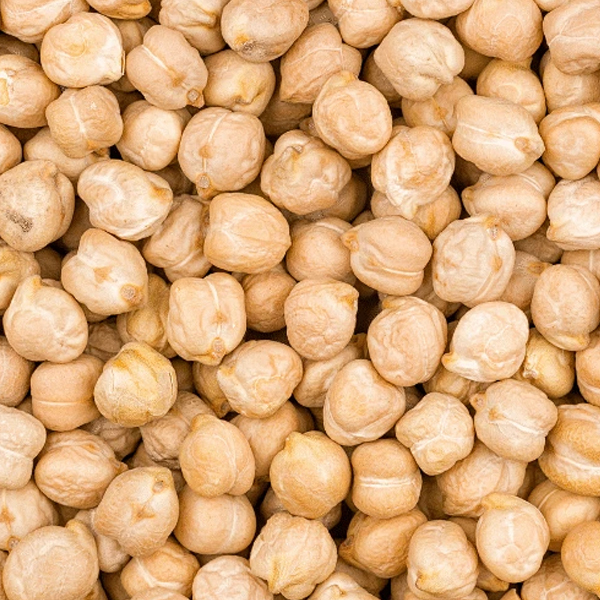
Chickpeas are a traditional legume crop in Oman, adapted to the local climate. While there is a certain scale of cultivation, it is characterized by concentrated planting areas and large yield fluctuations due to natural conditions and market factors. In recent years, efforts have been made to stabilize production through technological means. Specific planting conditions are as follows: Planting areas are concentrated in suitable terrain: In Oman’s predominantly tropical desert climate, chickpeas, due to their drought resistance, are concentrated in inland oasis areas. These areas can sustain growth relying on limited groundwater and oasis water resources, creating a differentiated layout from the coastal lowlands where vegetable and date palm production is the main focus. At the same time, there is also sporadic cultivation on some highland plateaus, but due to water scarcity, the planting density is much lower than inland oases.
Cultivation is constrained by multiple factors, resulting in drastic yield fluctuations.
Prominent natural risks: Although chickpeas are drought-resistant, they are susceptible to Oman’s common dust storms and hot, dry winds during the flowering period, leading to pollination problems, flower and pod drop, directly reducing yield. Furthermore, Oman experiences sparse rainfall overall. Even in arid regions, extreme drought years can still negatively impact chickpea growth due to insufficient water. Changes in water resource allocation within oasis areas also indirectly affect the scale of chickpea cultivation.
Management is challenging: Chickpeas are highly sensitive to soil fertility. Continuous cropping easily leads to soil nutrient imbalances and soil-borne diseases, necessitating crop rotation and fallow to restore soil fertility. Improper planting arrangements can result in significant yield drops. Moreover, fluctuations in international soybean prices influence farmers’ planting intentions. When prices rise, farmers may blindly expand planting, while new farmers with insufficient technical skills may lower overall yields. Conversely, when prices fall, farmers may switch to other crops, causing temporary reductions in production capacity.
Upgrading cultivation techniques to boost yields: To improve the unstable yield situation, Oman is using technology to optimize chickpea cultivation. A precision agriculture monitoring system has been introduced to track the microclimate and soil moisture in soybean fields in real time, guiding farmers in irrigation, fertilization, and other field management practices, reducing the risk of yield reductions due to natural disasters and improper management. Meanwhile, the government is promoting chickpea cultivation towards standardization and high yield through policies such as subsidies for legume planting and preferential policies for agricultural machinery purchases, coupled with the promotion of high-quality legume varieties and the popularization of green pest control technologies.
The value of chickpea cultivation aligns with local needs: Chickpeas are a common ingredient in Oman’s traditional diet, providing the population with protein and other nutrients. They are also an important raw material for the local feed industry, supporting livestock development. Therefore, chickpea cultivation has a fundamental value in ensuring the supply of local food and the stability of the feed industry chain.
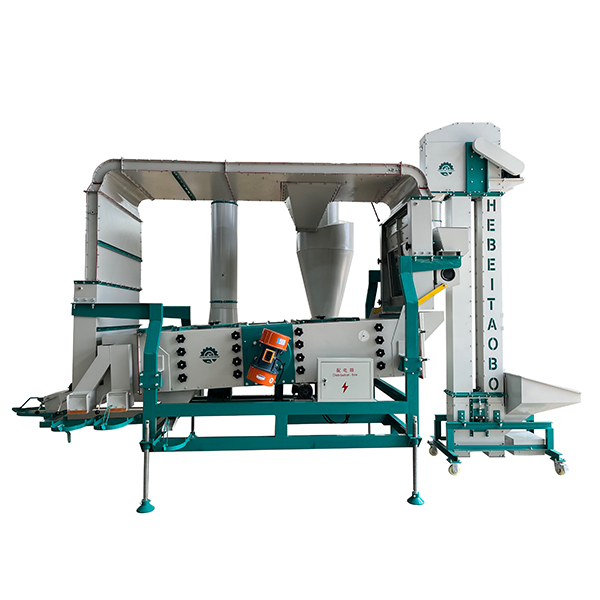
The air-screen cleaner, a core piece of equipment in the chickpea cleaning process, utilizes a combined working principle of “air separation + screen grading” to precisely remove light impurities (dust, broken leaves, shriveled kernels), heavy impurities (pebbles, clods of dirt, metal particles), and missized kernels (oversized seeds, broken kernels) from chickpeas. It is well-suited to the dispersed chickpea cultivation and complex impurity types (desert environments easily mix in sand and pebbles), making it a key piece of equipment for achieving standardized chickpea processing.
The Working Principle of an Air Screen Cleaner for Chickpeas
The air screen cleaner achieves efficient separation of chickpeas from impurities through a closed-loop process of “pre-cleaning → air separation → screen grading → secondary cleaning.” The core logic utilizes dual screening based on “aerodynamic differences” and “geometric size differences”:
Pre-cleaning: Chickpea raw materials enter the equipment through the feed hopper, first passing through a grid or primary screen to quickly intercept large impurities (such as branches, large clumps of soil, and weed roots), preventing subsequent screen clogging. This is suitable for situations where Omani chickpeas may be mixed with oasis weeds and field debris.
Air Separation: Raw materials enter the air separation chamber, where a fan generates a stable horizontal or vertical airflow. Based on the density difference between chickpeas and light impurities, light impurities are carried away by the airflow and discharged or collected through dust removal pipes; plump chickpeas, due to their gravity exceeding the buoyancy of the airflow, fall vertically to the screen grading area. The airflow speed can be adjusted to prevent excessively strong airflow from carrying away qualified chickpeas, or insufficient airflow from leaving light impurities behind.
Screening and grading: This is the core step for accurately separating heavy impurities and out-of-size particles. The screens are usually designed with multiple layers (4-5 layers), each with different mesh sizes and functions.
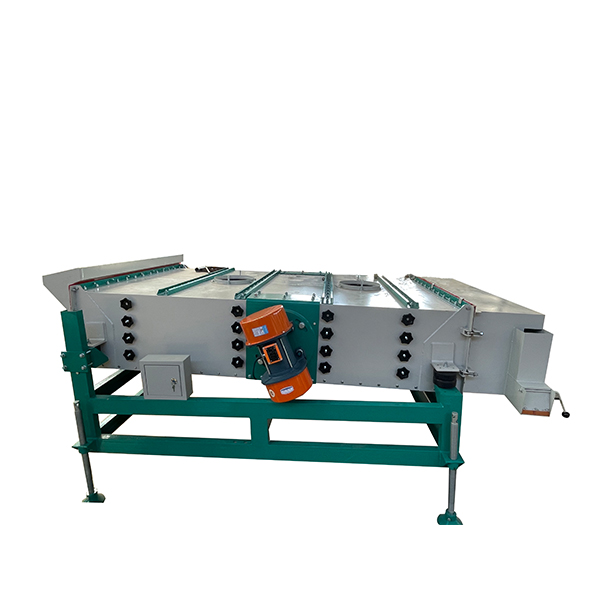
The grading screen is a key piece of equipment in chickpea processing, integrating cleaning and grading. The working principle of the grading screen for cleaning and grading chickpeas: The core of the grading screen is “multi-layer screen grading + vibration/rotation drive.” Utilizing the differences in particle size and shape between chickpeas and impurities, it achieves simultaneous “impurity removal” and “grading.” The process emphasizes grading more than ordinary air-screen cleaning machines, specifically as follows: Feeding and Pre-distribution: Chickpea raw materials enter the equipment through the feed hopper and are evenly distributed on the top screen by the distributor, avoiding uneven grading caused by localized material accumulation. This also allows for the initial interception of large impurities (twigs, clods of soil) that may be mixed into Omani chickpeas.
Vibration/Rotation Driven Screening: The equipment uses a motor-driven eccentric block to generate vibration (vibrating grading screen), causing the material to reciprocate or rotate on the screen mesh, accelerating material stratification and screening. Multi-layer Screen Grading + Impurity Removal: The screen mesh typically uses a 4-5 layer design, with each layer’s screen aperture arranged in a “larger at the top, smaller at the bottom” pattern, simultaneously achieving impurity separation and grading.
If you have any legume or grain materials that need cleaning, please feel free to contact us for a quote.
Post time: Nov-25-2025