
I. Chickpea (Bengal Grain)
Planting Season: Indian chickpeas are mainly grown during the rabbi season (winter, sown in October-November and harvested in March-April of the following year), making it a core winter legume crop in India.
Main Producing Regions: Rajasthan, Maharashtra, Madhya Pradesh, Uttar Pradesh, etc. These regions are mostly arid and semi-arid climates, well-suited to the drought-tolerant characteristics of chickpeas. The planted area in 2025/26 was approximately 9.5 million hectares, and is projected to decrease to 9 million hectares in 2026/27.
Yield and Production: Annual production is 13-15 million tons, with a projected yield of 1.2 tons/hectare in 2026/27, for a total production of 11.02 million tons. India accounts for 65%-90% of global production, ranking first globally.
Planting Conditions: Suitable for arid and semi-arid climates, drought-tolerant, but intolerant of waterlogging. It thrives in well-drained sandy loam and loam soils with a pH of 6.0-8.0. The optimal growing temperature is 15-25℃, and it requires ample sunlight during flowering and pod formation.
Key features: The government provides planting subsidies and a minimum support price (MSP) policy to encourage farmers to cultivate it; it is often rotated with wheat to improve soil fertility and is an important source of plant protein for the Indian population.
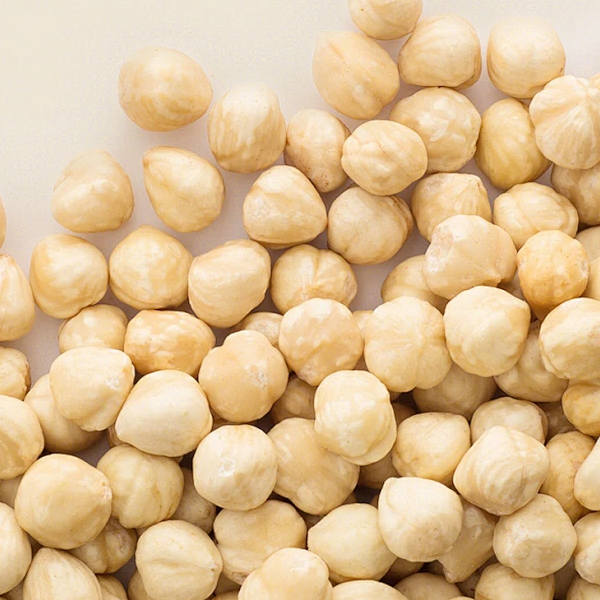
II. Soybean
Planting Season: Primarily the kafir season (rainy season, sowing in June-July, harvesting in September-October), concentrated in the summer rainy season (Directorate of Pulses Development).
Main Producing Areas: Madhya Pradesh (accounting for over 50% of national production), Maharashtra, Rajasthan, etc., with the core producing area being the black cotton soil region of the Deccan Plateau (Directorate of Pulses Development). The planted area for 2025/26 was approximately 11.5 million hectares, a ten-year low.
Yield and Production: Annual production is typically 10-13 million tons. Due to abnormal rainfall and other factors, the estimated production for 2025/26 is 10.7 million tons. Yield per unit area fluctuates greatly depending on variety and weather, with traditional varieties showing lower yields.
Key characteristics: Indian soybeans are primarily non-GMO, with strong domestic demand (approximately 25 million tons), resulting in an import gap. Imports mainly come from Myanmar and Mozambique.
III. Pigeon Pea (Arhar/Tur)
Planting season: Mostly planted during the kafir season (sown in June-July), but short-season varieties are also available for summer (April) and winter (September). Late-maturing varieties have a growth period of 6-11 months, while early-maturing varieties have a growth period of 3-4 months.
Main producing areas: Maharashtra (largest in both area and yield, accounting for approximately 30%), Madhya Pradesh, Karnataka, Uttar Pradesh, and Gujarat, with over 80% of production coming from these six states. The national planting area is approximately 3.8-4 million hectares, with an annual output of 3-4 million tons.
Yield and Profit: Yield is relatively low, averaging about 587-600 kg/hectare nationwide. In well-managed areas like Bihar, yields can reach 1695 kg/hectare. Variety and planting techniques are key to increasing yield.
Planting Conditions: Drought-tolerant and tolerant of poor soil, with strong adaptability. Suitable for well-drained black cotton soil and loam, with a pH of 7.0-8.5. Optimal growth temperature is 25-35℃. Continuous rainy weather during the flowering period is detrimental to pollination.
Key Characteristics: It is India’s second most important legume, with extremely high domestic consumption. It is often intercropped with sorghum and corn to improve land utilization. It is divided into two main types: late-maturing (Arhar) and early-maturing (Tuvar), to suit different planting cycles.
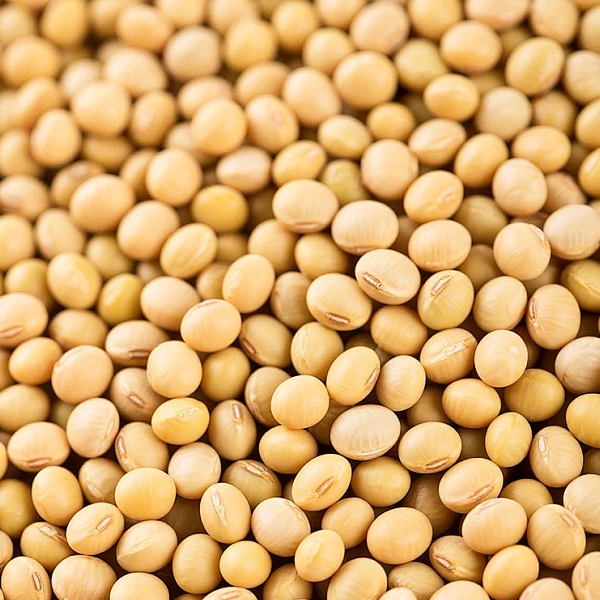
I. Chickpeas
Core Characteristics and Climate Influence
Seeds are relatively large (4-8mm in diameter) and dense, with a hard seed coat. The main producing areas are arid and semi-arid regions. At harvest, the seed moisture content is low, and impurities are mainly sand and shriveled seeds. However, during the rainy season, mud can easily be mixed in. Production scale is large (tens of millions of tons), suitable for large-scale cleaning.
Recommended Equipment Type
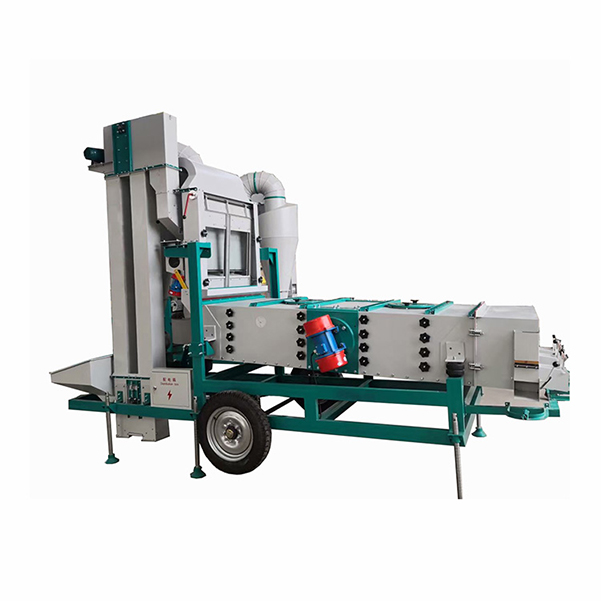
Main Equipment: Air Screen Cleaner + Gravity Separator Combination
The air screen cleaner is responsible for initial impurity removal, using airflow to remove light straw and dust, while the screen separates sand and small shriveled seeds. The gravity separator targets differences in specific gravity, separating stones and heavier impurities of similar density to improve purity.
Auxiliary Configuration: If the producing area has high winds and many impurities, a pre-cleaning screen should be used to remove large-volume straw and mud clods to prevent clogging of subsequent equipment.
II. Soybeans and Pigeon Beans
Core Characteristics and Climate Impact
Soybeans have medium seed size (4-6mm), thin and easily damaged seed coats, and high oil content. Planted in the main producing areas during the rainy season, harvesting is often accompanied by rainfall, resulting in high seed moisture content. Impurities mainly consist of damp straw and mud, and seed mold is common. Production scale is large (tens of millions of tons), requiring a balance between cleaning efficiency and seed integrity.
Recommended Equipment Type
Main Equipment: Air Screen Cleaner + Gravity Graviser
The air screen cleaner performs basic impurity removal, while the gravity grader separates high-quality seeds from shriveled and moldy seeds.
Special Configuration: For graded sales, a grading screen can be added to classify seeds by size, increasing commercial value.
Post time: Jan-16-2026