
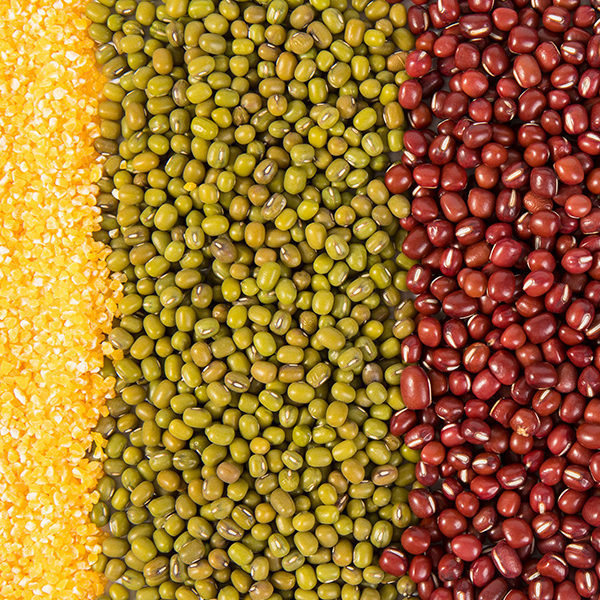
Complete Process Flow of Bean Cleaning Production Line
Suitable for: Soybeans, mung beans, red kidney beans, pinto beans, chickpeas, cowpeas, and other edible beans. Can produce standard clean grains, packaged grade, and export grade finished products.
I. Overall Process Flow
Raw material feeding → Primary cleaning screen → Bucket elevator → Air screen cleaner → Gravity destoner → Grading screen → Bean polishing machine → Color sorter → Finished product packaging
II. Function and Process Description of Each Equipment
Primary cleaning screen: First processes bulk raw grains, preliminarily cleaning large impurities, long straws, hemp ropes, large clods of soil, shriveled beans, and dust, reducing the load on downstream equipment, and serving as a pre-cleaning and coarse filtration mechanism.
Air screen cleaner: Utilizes air separation and multi-layer screens to grade by particle size, cleaning light impurities, broken beans, shriveled beans, dust, small stones, and moldy beans, removing most irregularly shaped and sized impurities.
Gravity Destoning Machine: Utilizing gravity, wind power, and vibration, this machine specifically removes stones, hard clods of soil, and mud lumps that are similar in size to beans. It’s an essential core piece of equipment for bean processing, preventing stones from entering subsequent equipment and contaminating the finished product.
Grading Screen: This screen grades the cleaned beans according to size, separating them into large, medium, small, and broken beans for graded sales and processing.
Bean Polishing Machine: This machine removes surface dust, mud, wrinkles, and mold from beans, brightening the color and improving surface smoothness for better appearance, meeting the requirements of supermarkets and exports.
Color Sorter:This machine sorts beans by color and color difference, removing moldy beans, spotted beans, discolored beans, moldy beans, and mixed beans, further improving the purity of the finished product to meet premium and export standards.
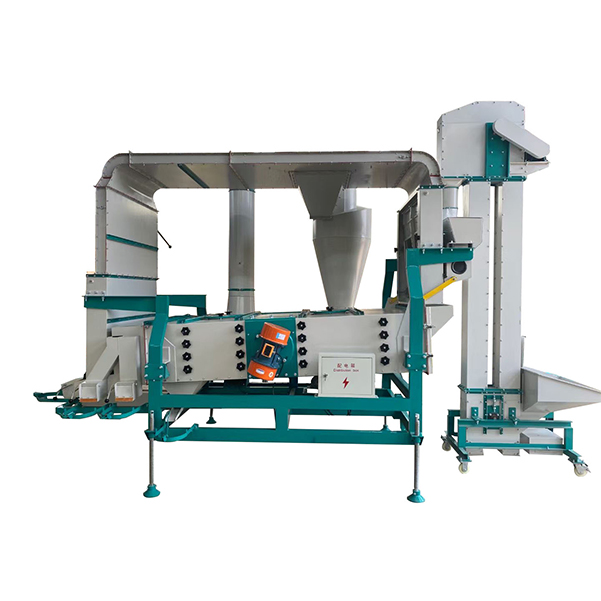
III. Core Functions of the Entire Production Line: Fully automated production line from coarse cleaning → screening → destoning → grading → polishing → color sorting. Removes straw, dust, broken beans, stones, clods of earth, moldy beans, and discolored beans in one pass. Minimal bean breakage and loss, enabling continuous mass production. Finished products meet the quality inspection standards for food processing, grain packaging, and export trade.
Working Principle of the Destoning Machine in a Bean Processing Production Line
The bean-specific gravity destoning machine relies on a four-pronged approach: material density difference, airflow suspension, reciprocating vibration, and the inclination angle of the fish-scale screen. It specifically separates soybeans, mung beans, kidney beans, chickpeas, and other beans from stones, clods of earth, and mud (similar in size to beans and indistinguishable by ordinary sieves).
I. Core Principle Logic
Uniform Feeding: Raw materials fall evenly onto the destoning machine’s screen surface, forming a thin, fluidized suspension under negative pressure. Bean particles are lifted by the airflow and do not adhere to the screen.
Gravity Segregation:Stones and clods of earth, with a much higher density than beans, cannot be suspended by the airflow and settle directly on the fish-scale screen surface. Beans, with a lower density, are lifted by the airflow and remain suspended in the upper layer, achieving automatic stratification based on weight.
Vibration + Fish Scale Pattern Pushing on the Screen: The screen surface undergoes reciprocating tilting vibration, coupled with a specially designed fish scale pattern on the surface: Heavy impurities, stones, and clods at the bottom are pushed in the opposite direction by the fish scale pattern, slowly rising and being discharged from the stone outlet; Clean beans at the top flow forward by gravity along the tilt of the screen surface towards the discharge outlet.
Air Classification and Pressure Stabilization: The entire machine uses a negative pressure closed air duct with adjustable airflow for precise control of suspension force: Too little airflow and beans sink to the bottom and cannot be separated; too much airflow and large beans follow the stones. Matching the airflow speed to the weight of the bean particles ensures stable stratification and stone removal.
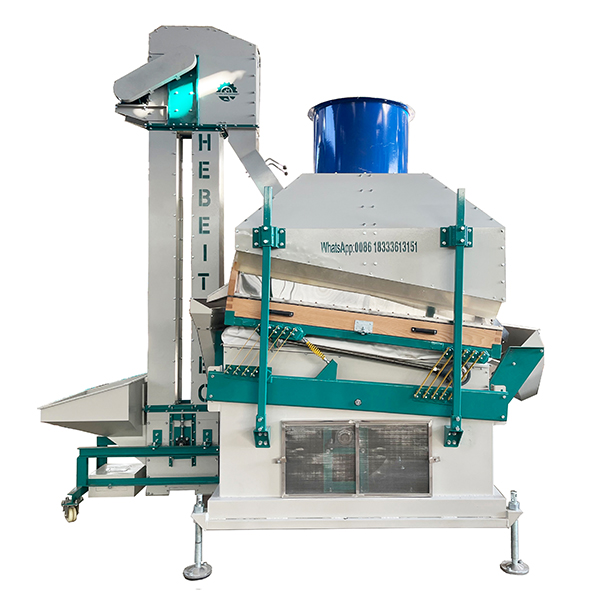
The Core Role of Destoning Machines in Bean Processing Production Lines:
1. Precise Removal of Side-by-Side Stones, Clogs, and Mud: Bean raw materials often contain side-by-side stones, clods of soil, and clumps of sand and mud similar in size and shape to the beans. Ordinary screening and air separation methods struggle to separate these. Destoning machines utilize differences in specific gravity to thoroughly separate heavier impurities, preventing stones from contaminating the finished product.
2. Protection of Subsequent Processing Equipment: Removing hard stones and clods of soil prevents them from entering polishing machines, color sorters, and grinding/peeling equipment, avoiding screen damage, roller scratches, machine noise and wear, and reducing equipment failure rates and maintenance costs.
3. Improved Cleanliness and Commercial Grade of Finished Beans: After removing stones and heavy soil impurities, the beans are free of sand and hard lumps, meeting the standards for food processing, grain packaging, and export. This improves the appearance and purchasing grade, and reduces weight deductions for impurities.
4. Ensure Food and Processing Safety: Eliminate stones from the finished bean products, preventing consumers from experiencing toothache or damage; simultaneously prevent sand and gravel from entering deeper processing (bean products, red bean paste, soy milk, etc.), ensuring processed taste and food safety.
5. Adapt to Continuous Production Line Operation: Connected in series after the primary cleaning screen and air screening machine, it continuously and automatically removes stones without disrupting the overall production line’s rhythm, suitable for large-scale cleaning of beans (soybeans, mung beans, red kidney beans, pinto beans, chickpeas, etc.).
Post time: May-09-2026