
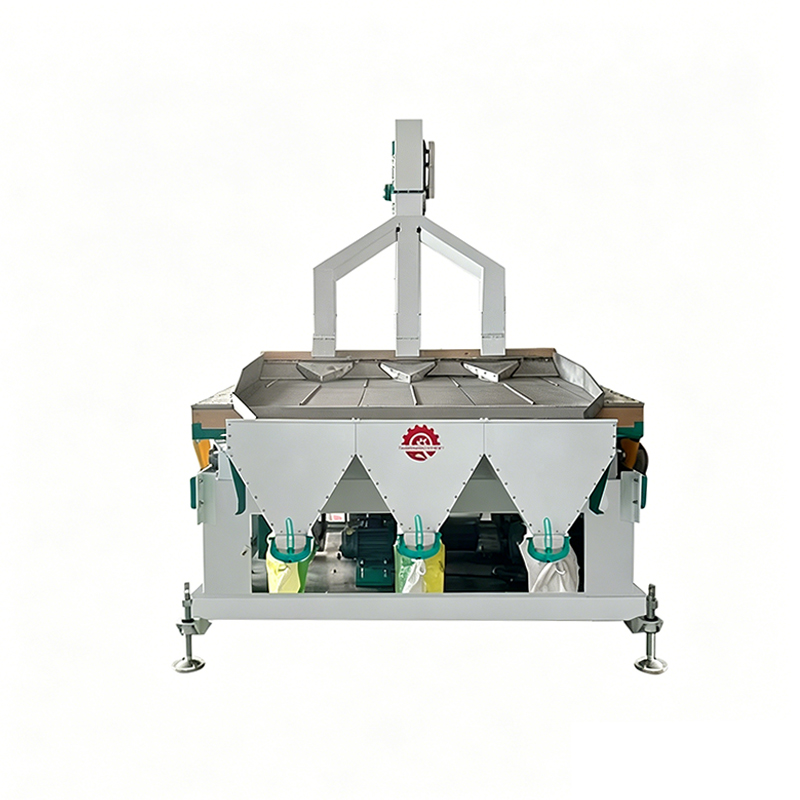
Destoners separate stones from granular material by exploiting differences in specific gravity and suspension velocity; they are essential equipment in grain processing lines for removing “co-sized” stones (stones similar in size to the grain), mud clods, and heavy impurities. Sesame is a small-grained, lightweight oilseed crop characterized by fine particles, low mass, and low bulk density, whereas corn is a large-grained cereal with large, heavy kernels and high flowability. Due to these significant physical differences, the operation of the destoner—including parameter adjustments, feed conditions, separation logic, and stone discharge settings—varies markedly depending on the material being processed. Only by matching operating conditions to the specific material can heavy impurities like stones, mud clods, and soil particles be efficiently removed without losing the product itself, thereby ensuring the quality of subsequent processing steps. The following sections detail the workflows, equipment functions, and key differences involved in cleaning sesame versus corn.
1、Destoning Sesame (Including Co-sized Stones)
Sesame seeds are very small, typically 1–2 mm in diameter, with low specific gravity and low suspension velocity. Impurities often include fine sand and “co-sized” stones—stones similar in size to the sesame seeds themselves—which are difficult to remove via standard screening and require separation based on specific gravity differences. Sesame raw material is also frequently mixed with weed seeds, broken hulls, and dust, and exhibits relatively poor flowability. Excessive feed rates easily lead to material accumulation on the screen surface and the failure of fluidization and stratification; conversely, insufficient feed rates result in bare spots on the screen, erratic material bouncing, and the loss of sesame seeds through the stone discharge outlet.
Complete Sesame Destoning Workflow
Material is fed evenly onto the destoner’s screen surface through the upper inlet and is first leveled by a distribution mechanism to form a thin, uniform layer. A fan directs airflow upward from beneath the screen body; this air passes through the perforations in the screen plate and acts upon the layer of sesame material. By adjusting the airflow to a suitable low level, the sesame seeds are maintained in a state of light suspension and fluidization; lighter sesame seeds float in the upper layer, while heavier particles—such as sand, stones, and soil clumps—overcome the airflow’s buoyancy and settle onto the surface of the screen plate. The screen plate undergoes reciprocating, inclined vibration directed toward the stone discharge end. It features specialized “fish-scale” perforations designed to support heavy impurities while simultaneously conveying stones upward.
Driven by the equipment’s inclination and the material’s own weight, the lighter sesame seeds in the upper layer flow slowly along the screen surface toward the product discharge outlet. Meanwhile, the stones and sand in the lower layer—resting directly against the screen—are propelled by the reciprocating vibration toward the discharge end, gradually accumulating in the stone removal zone. An airflow compensation mechanism at the stone discharge outlet uses a small counter-current of air to blow any sesame seeds trapped within the stone pile back onto the separation screen, thereby minimizing product loss. Ultimately, clean sesame seeds exit through the product outlet, while stones and heavy impurities are continuously discharged through the stone outlet. If the raw material has a high impurity content, the feed rate should be reduced to extend the material’s stratification time on the screen, preventing small stones from becoming trapped within the sesame layer and failing to settle out.
Key Functions of Sesame Destoning
The primary function is to remove stones, fine sand, and mud clumps from the raw sesame. Because sesame seeds are small, standard air-sifting cleaners can only remove large stones, leaving behind smaller stones of similar size. If these are not removed, the grit and stones will damage the internal components of hulling and oil-pressing machinery during subsequent processing steps; furthermore, if grit mixes with the finished oil, it renders the product substandard. A secondary function is the removal of heavy mud clumps and heavy metal particles, which reduces dust and impurities and lowers the load on downstream processing equipment. Given the high value of sesame, the destoning process must strictly control product loss to avoid economic waste caused by sesame seeds being discharged along with the stones. Destoning requires precise airflow control: excessive airflow blows the sesame away, while insufficient airflow prevents the material from fluidizing and stratifying, meaning stones fail to sink and are not effectively removed.
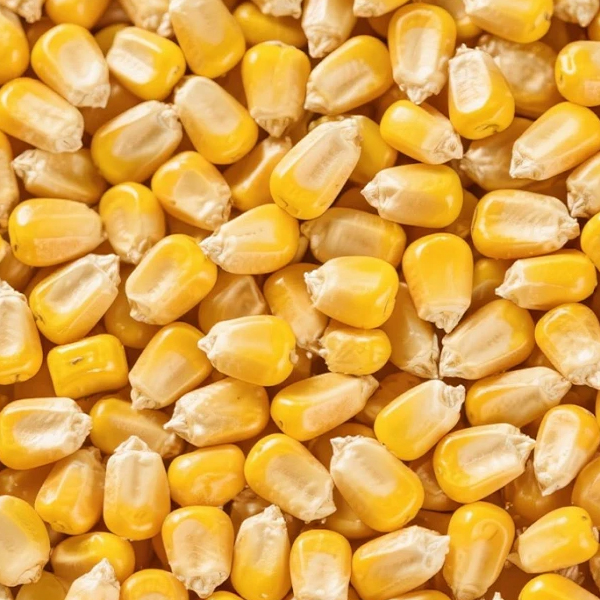
2. Cleaning Corn with a Specific Gravity Destoner (Removing Stones and Impurities)
Corn kernels are large, heavy, and have a high bulk density; their suspension velocity is far higher than that of sesame. Impurities in the raw material include large stone fragments and soil clumps, as well as stones similar in size to the kernels. Corn often contains broken cobs, broken kernels, and moldy grains; the material flows well, allowing for higher processing throughput. Due to the hardness and weight of corn, stronger vibration and higher airflow are required to achieve stratification between the grain and the stones. Simply adopting the operating parameters used for sesame would result in inadequate material fluidization and a significant drop in stone separation efficiency.
Complete Corn Destoning Workflow
Corn is transported via an elevator to the destoner’s inlet and evenly distributed across the destoning screen using a distribution mechanism. A fan generates high air pressure and volume, forcing the airflow upward through the scale-like screen plate and into the layer of corn. Airflow lifts the corn kernels to form a fluidized layer; lighter kernels remain suspended in the upper layer, while stones, soil clods, and heavy impurities—being denser than the corn—settle and adhere to the surface of the fish-scale screen plate. The screen body undergoes high-frequency reciprocating vibration directed toward the stone discharge outlet; utilizing vibrational friction, the fish-scale apertures continuously convey heavy impurities from the bottom toward the discharge end.
Relying on the inclination of the screen surface, the upper layer of corn kernels flows continuously toward the finished product outlet. A reverse back-blowing airflow is applied at the stone discharge section; this counter-airflow blows any sound corn kernels mixed within the stone pile back onto the main sorting screen, ensuring that only pure stones and soil clods remain in the discharge zone to be expelled. Adjustments are made based on impurity fluctuations in the raw corn: when there is a high concentration of soil clods and stones, the vibration amplitude and feed rate are increased to maintain a stable material layer on the screen; conversely, when raw material moisture is high—reducing corn fluidity—the feed rate is lowered to prevent material accumulation and clumping, which would disrupt the fluidization and stratification process. When there is a high proportion of broken kernels, airflow must not be increased indiscriminately, as this could cause broken corn to be carried away with the stones, resulting in material loss.
The Core Function of Corn Destoning
Corn is widely used in feed processing, starch production, and grain trading, yet the harvesting process often introduces field soil clods and gravel. The primary purpose of the destoning process is to remove stones and soil clumps, preventing hard stones from entering crushers or milling equipment—where they could shatter hammers or grinding discs—thereby avoiding equipment damage and safety hazards. Secondly, it separates some heavy soil clods, reducing the corn’s ash content to meet raw material standards for grain procurement and feed processing. Given the high volume of corn production, destoners must handle large throughputs, balancing impurity removal efficiency with production capacity. Additionally, some heavy, moldy kernels are discharged along with the heavy impurities, helping to improve the overall quality of the finished corn product.
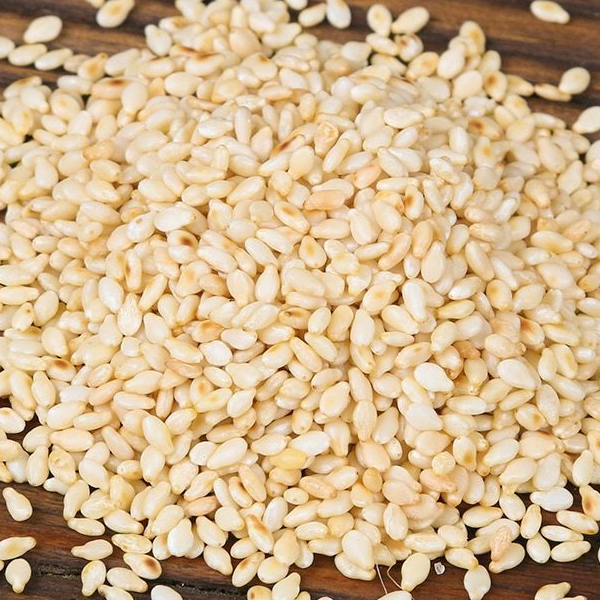
3. Key differences in removing stones and impurities from sesame versus corn
First, there are differences in airflow volume and pressure. Sesame consists of small, lightweight particles; therefore, low air pressure and low airflow volume are used. Excessive airflow would blow away the sesame seeds, causing significant material loss. In contrast, corn kernels are large and heavy, requiring high airflow volume and pressure to ensure full material fluidization; insufficient airflow prevents the corn from suspending and stratifying, leading to incomplete stone separation.
Second, vibration and screen plate parameters differ. For sesame, operating parameters with smaller amplitudes and screen plates with smaller “fish-scale” aperture sizes are selected to prevent the seeds from getting stuck in the holes. For corn, larger amplitudes and larger fish-scale aperture specifications are used to accommodate the large particles and ensure efficient stone discharge.
Third, feeding conditions vary. Sesame requires a lower feed rate to maintain a thin material layer on the screen surface, which facilitates the sinking of small stones. Corn allows for a higher feed rate and a thicker material layer, relying on that thickness to achieve stable fluidization.
Fourth, the back-blowing airflow at the stone discharge outlet differs. For sesame, the back-blowing airflow must be gentle to prevent crushing the tiny seeds. For corn, the back-blowing airflow can be increased to efficiently recover whole kernels trapped among the stones.
Fifth, operational differences arise from the nature of the impurities. The main challenge with sesame is the presence of small stones similar in size to the seeds; given the high value of the material, minimizing loss is the priority. With corn, impurities often include large clods of soil and gravel; the focus here is on high throughput and protecting downstream crushing and grinding equipment.
In summary, while the fundamental separation principle of the gravity destoner remains the same for both sesame and corn, the physical differences between the materials necessitate targeted adjustments to operating parameters, feed control, and stone discharge settings. Only by properly matching these parameters can stones and impurities be efficiently removed across different processing scenarios while minimizing product loss and ensuring high-quality raw material for subsequent processing stages.
Post time: Sep-24-2026