
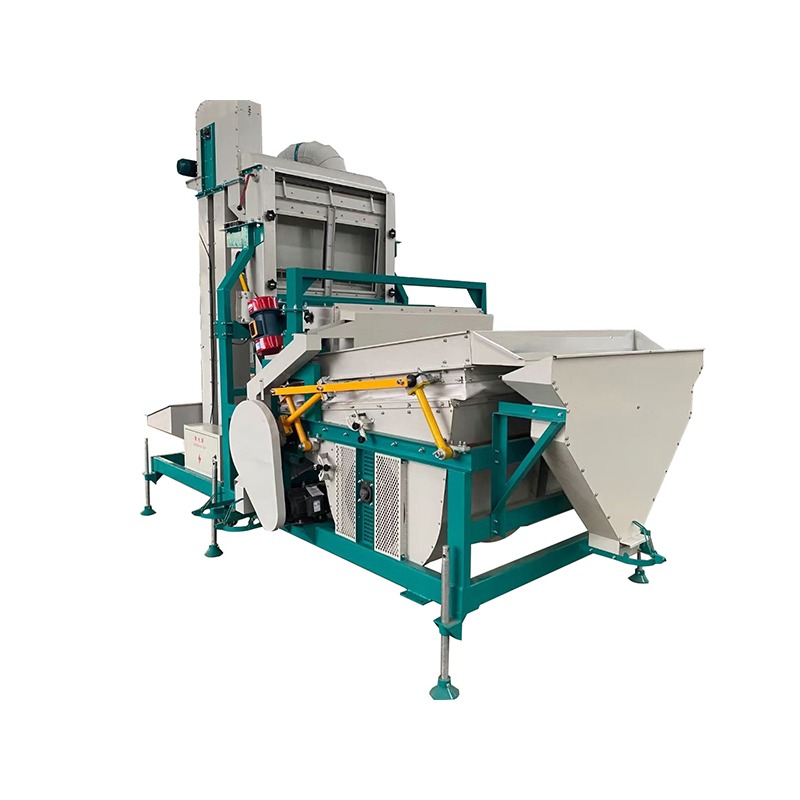
The air-screen gravity separator integrates three functions: air separation, multi-layer screen grading, and gravity-based sorting. This single unit performs primary impurity removal, size grading, and the separation of light and heavy materials for hibiscus seeds in one pass, serving as the core machine in the seed cleaning line.
First, the front-end air separation system uses adjustable airflow to suction away lightweight impurities—such as shriveled or empty shells, petal fragments, fine withered leaves, dust, fruit skin debris, and light weed seeds—thereby separating low-density, substandard material from sound, plump seeds.
Next, a multi-layer interchangeable screen system employs vibration to grade the seeds by size; it filters out large impurities like twigs and soil clods, sifts out fine sand and tiny weed seeds, and removes undersized or broken seeds, achieving preliminary size-based sorting.
Finally, the gravity separation deck performs precision sorting based on density differences by adjusting vibration frequency, deck inclination, and bottom airflow pressure. High-quality, plump, and dense hibiscus seeds flow toward the discharge outlet, while lower-density shriveled grains, semi-mature seeds, insect-damaged or spoiled seeds, and contaminants—such as stones or hard weed seeds that are similar in size but different in weight—are diverted and discharged separately.
Processing with this machine significantly improves hibiscus seed purity and uniformity, removes the majority of inferior seeds that would otherwise compromise germination rates, and directly enhances seed grade and commercial value. It establishes a foundation of high-quality raw material for subsequent processes such as coating, color sorting, and packaging, making it particularly well-suited for the processing requirements of high-standard flower seed production.
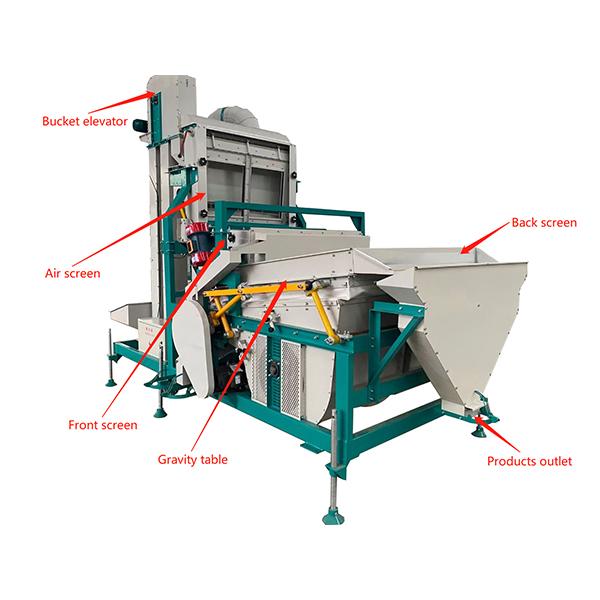
Complete Workflow
1. Feeding and Loading
Material is conveyed into the feed hopper via a lift; the feed gate regulates the flow to ensure a uniform and stable discharge rate, preventing overloading that could cause blockages or reduce sorting efficiency.
2. Primary Air-Separation Pre-treatment
As the material falls, an upward airflow from the primary air duct carries away light impurities—such as dust, empty husks, straw fragments, and shriveled kernels—discharging them through the light-impurity outlet, while heavier material drops onto the lower screen assembly.
3. Multi-layer Screen Separation
Material undergoes reciprocating motion on vibrating screen decks: the top screen (large mesh) traps large impurities, soil clods, and large husks; the middle screen retains qualified material; and the bottom screen (fine mesh) allows fine sand and broken seeds to pass through, thereby removing impurities and grading the material by size.
4. Precision Gravity Separation
Pre-screened material is conveyed to the gravity separation deck, which features inclined reciprocating vibration and uniform bottom-up airflow. Plump, dense, heavy particles stay close to the deck surface and move toward the high-end discharge outlet as the finished product; meanwhile, empty or shriveled kernels, insect-damaged grains, stones, and light, low-quality materials float on the upper layer and are discharged through the low-end impurity outlet.
5. Multi-channel Discharge
The equipment features separate discharge outlets for finished high-quality seeds, secondary-grade grains, stones, light impurities, and fine soil/dust, allowing for the automatic, separate collection of each material type.
6. Shutdown, Cleaning, and Maintenance
After production, the feed supply is stopped, and the machine runs until the internal chamber is completely emptied. The motor power is then turned off, and residual material and dust are cleared from the screens, air ducts, and gravity separation deck to complete the cleaning and maintenance process.
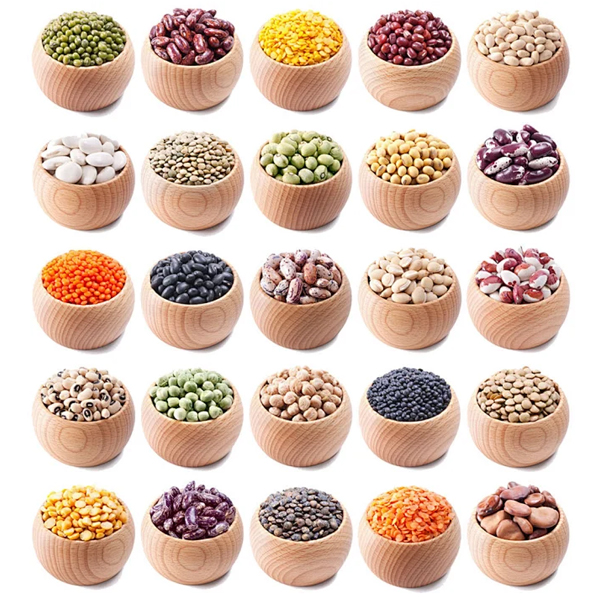
Scope of Application for the Air-Screen Gravity Cleaner
This equipment is designed for cleaning and grading various grains, oilseeds, vegetable and flower seeds, legumes, and coarse grains. It utilizes a combined process of air separation, screening, and gravity grading to remove impurities and select high-quality seeds. It is suitable for use by grain procurement centers, seed processing stations, grain and oil processing plants, and agricultural export enterprises.
1. Grains and Cereals:Wheat, corn, sorghum, rice, barley, oats, buckwheat, etc. It removes dust, straw fragments, shriveled grains, and stones, while separating plump, high-quality grains from inferior ones.
2. Oilseeds: Sesame, rapeseed, flaxseed, sunflower seeds, soybeans, peanut kernels, perilla seeds, etc. It removes husk fragments, empty/shriveled seeds, and soil clods, thereby increasing the purity of the raw material.
3. Legumes: Soybeans, mung beans, white kidney beans, pinto beans, pigeon peas, black-eyed peas, adzuki beans, chickpeas, etc. It removes broken beans, insect-damaged grains, stones, and husk impurities, while grading and selecting intact, high-quality beans.
4. Vegetable, Flower, and Forestry Seeds:Small, lightweight seeds such as hibiscus, chili pepper, coriander, carrot, onion, alfalfa, and forage grass seeds. It removes empty hulls, fine soil, and fruit skin fragments to improve germination rates.
5. Specialty Cash Crops:Cash crops and spices such as coffee beans, cocoa beans, fennel, cumin, and Sichuan pepper seeds. It performs impurity removal and quality grading.
The equipment features interchangeable screens of various specifications and allows for the adjustment of airflow, deck inclination, and vibration frequency. It is capable of processing everything from large-grain cereals and legumes to tiny, lightweight seeds. It can operate as a standalone unit or be integrated with elevators, storage silos, and color sorters to form a complete seed cleaning production line, meeting the high standards required for quality seed propagation, commercial grain processing, and agricultural exports.
Post time: Sep-07-2026