
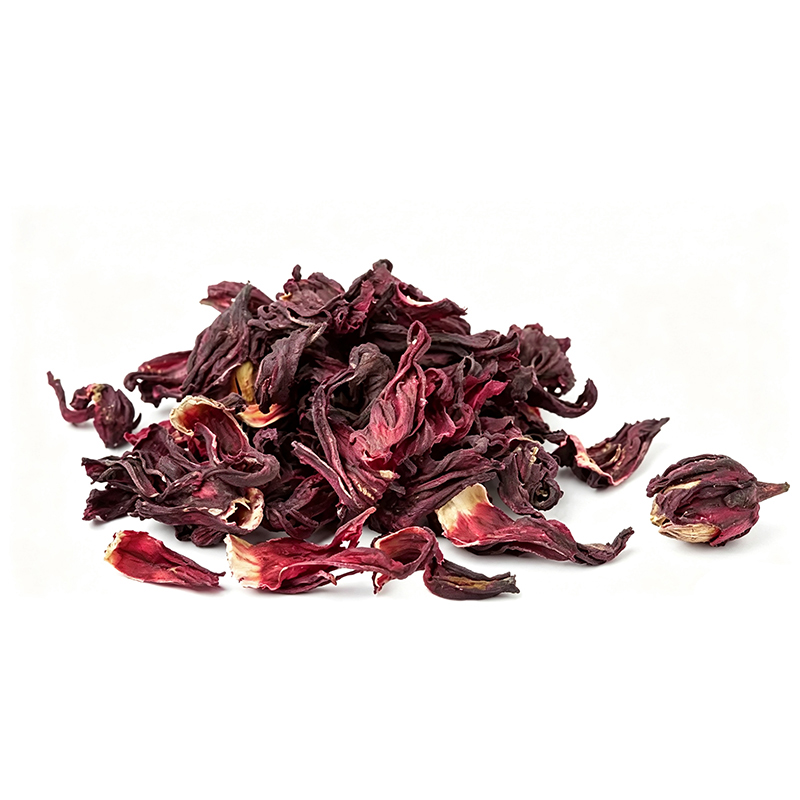
After harvesting and threshing Hibiscus syriacus seeds, the raw material contains a mixture of split capsule fragments, stalks, fuzz and dust, shriveled empty seeds, fine sand, and small stones similar in size to the seeds. Manual sorting of such impurities is highly inefficient; therefore, an air-screen cleaner serves as the primary pre-processing unit in the production line. It employs a dual physical separation method—combining vibration screening with negative-pressure air separation—to perform coarse cleaning and lay the groundwork for subsequent fine impurity removal. *Hibiscus* seeds are flat and kidney-shaped with a fine, fuzzy outer coating, resulting in poor flowability; consequently, the equipment must be fitted with appropriate multi-layer perforated screens. The upper layer uses larger apertures to catch large impurities like pod fragments and twigs, while the lower layer uses finer mesh to filter out soil and sand. A vibration motor regulates the amplitude and screen inclination to ensure the material slides slowly and evenly across the surface, preventing the fuzz from tangling and clogging the screen. Simultaneously, the machine features front and rear vertical air ducts operating at a gentle, low-volume setting; the airflow precisely removes lightweight pod debris, dust, and low-density empty or damaged seeds. Heavier, healthy seeds remain on the screen and are conveyed smoothly to the discharge end. This coarse cleaning stage removes over 70% of lightweight and oversized/undersized impurities, significantly reducing the workload for the subsequent gravity destoner and preventing pod debris and fuzz from clogging the destoning screen, thereby ensuring the continuous, stable operation of the entire cleaning process. Although the air-screen cleaner removes the vast majority of visible waste, small amounts of impurities—such as stones and dense soil clumps similar in size to the seeds, as well as partially filled, low-quality seeds—remain. Because these impurities differ minimally in physical dimensions from qualified seeds, they cannot be fully separated by screens or standard air separation alone and must undergo a precision sorting process in a gravity destoner.
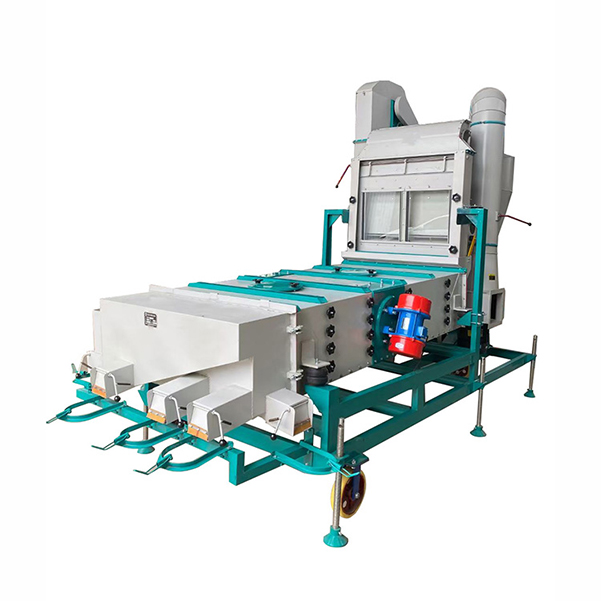
Serving as the initial pre-processing unit for Hibiscus seed cleaning, the air-screen cleaner integrates negative-pressure air separation with vibratory screening. It primarily removes the vast majority of lightweight impurities and irregularly sized contaminants, thereby easing the workload for subsequent precision cleaning stages. During operation, a bucket elevator feeds the uniformly mixed *Hibiscus* seed material into the screen box at a constant rate. The screen body undergoes high-frequency, low-amplitude reciprocating vibration; combined with custom-fitted screens, this facilitates graded separation. The upper screen, featuring large apertures, effectively catches coarse debris such as fruit husks, stalks, and twigs, while the lower, fine-mesh screen sifts out fine sand, soil dust, and tiny fragments. Meanwhile, intact seeds meeting specifications remain steadily on the screen surface and are conveyed forward. The machine is equipped with an adjustable negative-pressure suction system; given the lightweight, fuzzy nature of Hibiscus seeds, the airflow is set to a gentle, stable low-speed mode. This allows for the precise extraction of airborne fuzz and dust, shriveled or empty seeds, and lightweight moldy grains, effectively preventing the loss of plump, high-quality seeds due to excessive airflow, while also avoiding issues like residual light impurities or screen clogging caused by insufficient airflow. Following this pre-processing stage, over 90% of visible impurities are thoroughly removed, significantly enhancing overall seed purity and material uniformity—creating the ideal feed condition for the subsequent gravity-based destoning process.
As the core equipment for the precision cleaning of Hibiscus seeds, the gravity destoner targets contaminants that air-screen cleaners cannot handle—specifically stones, high-density soil clods, and compact, low-quality seeds—by utilizing differences in material specific gravity. The pre-processed Hibiscus seeds are fed at a constant rate onto the destoner’s inclined screen surface. Through the synergistic action of uniform bottom-up airflow and the screen body’s reciprocating vibration, the material forms a uniform, fluidized suspension layer, enabling the complete separation of seeds from heavy impurities. Due to significant density differences between plump hibiscus seeds, inferior shriveled seeds, and heavy impurities (such as sand, gravel, and soil clods), the combined action of airflow and vibration causes separation: the lightest seeds—including partially filled, insect-damaged, and shriveled ones—float to the top layer and are discharged via a minor side-flow; high-quality seeds of moderate density occupy the middle layer, sliding smoothly down the inclined screen surface to the finished product outlet; meanwhile, the densest particles—fine stones and hard soil clods—cling to the bottom screen plate, are propelled “uphill” against the flow by vibrational force, and are continuously discharged through a dedicated heavy-impurity outlet. During operation, parameters such as airflow, amplitude, screen inclination, and feed rate can be precisely adjusted to suit the characteristics of hibiscus seeds (which are small and prone to clumping); this ensures thorough removal of stones and impurities while minimizing seed breakage and material loss, achieving precise separation of high-quality seeds, inferior seeds, and heavy impurities.
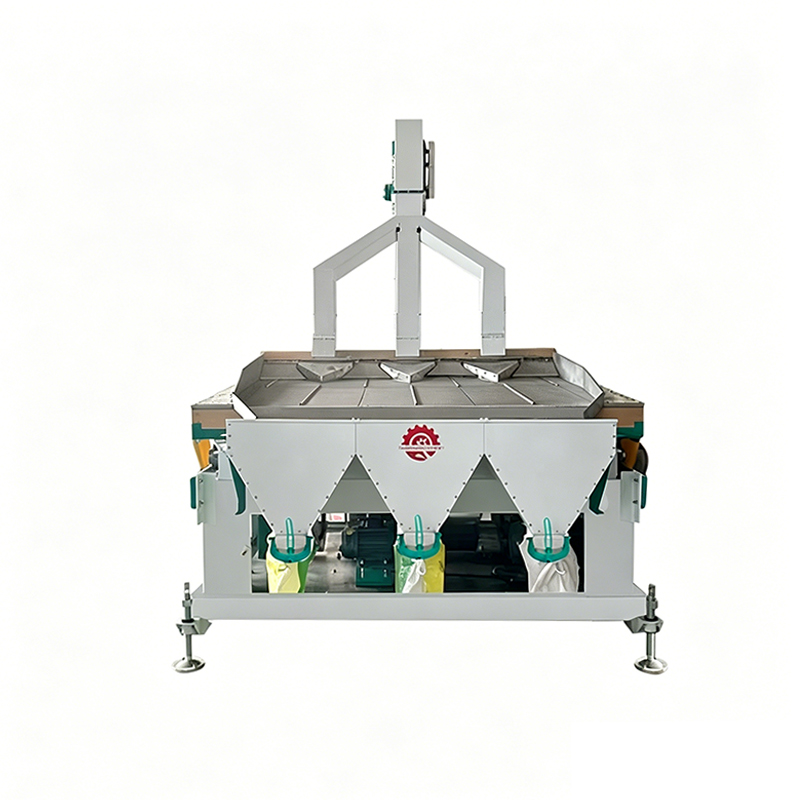
The air-screen cleaner and the gravity destoner operate in tandem, forming a standardized dry-cleaning process tailored to hibiscus seeds; the entire workflow is scientifically closed-loop, prevents secondary pollution, and preserves seed viability. The air-screen cleaner focuses on “coarse screening and cleaning,” removing impurities of various sizes, light debris, and dust to optimize material conditions; the gravity destoner focuses on “precision screening and removal,” tackling the challenge of separating similarly sized stones and heavy impurities—making the two machines complementary and indispensable. The entire operation utilizes an enclosed structure to effectively suppress dust and improve the production environment; the dry physical cleaning method leaves the seed coat and germ intact, fully preserving the germination potential and storability of the hibiscus seeds. After undergoing this two-stage cleaning process, the hibiscus seeds achieve a purity of over 99%, featuring plump, uniform grains free from impurities and inferior seeds; this significant enhancement in appearance and quality meets the needs of home seedling raising and landscaping projects, while also satisfying high-end standards for commercialization and export, representing the optimal process combination for the large-scale, standardized cleaning and processing of hibiscus seeds.
Post time: Sep-08-2026