
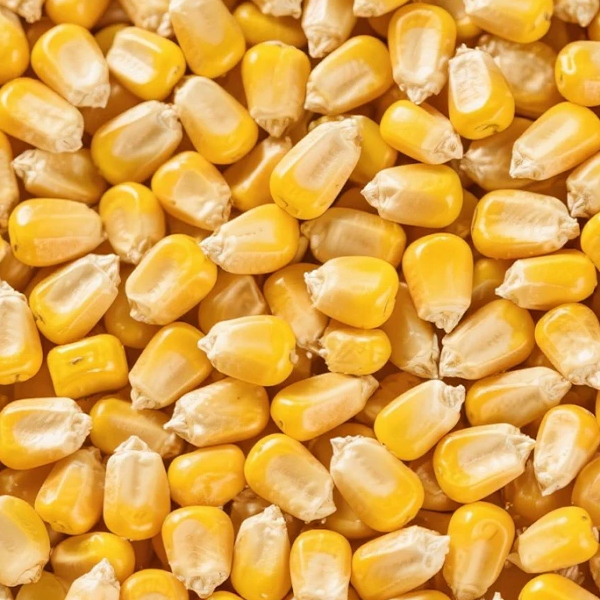
Raw corn often contains impurities such as stones similar in size to the kernels, as well as clods of mud and soil particles. The destoner achieves separation by utilizing the differences in specific gravity between the material and the stones, combined with airflow and a vibrating screen surface; the core objective is to effectively separate the corn from the stones and grit.
Operational Process
Feeding and Distribution
Corn is fed continuously and evenly onto an inclined destoning screen. A stable feed rate ensures the material forms a thin, uniform layer across the entire screen surface.
Combined Action of Vibration and Airflow
The screen surface undergoes reciprocating vibration while a fan blows a vertical airstream upward through the mesh.
Airflow passes through the material layer: Lighter corn kernels are lifted by the airflow into a fluidized, suspended state, whereas heavier stones and mud clods remain unaffected by the lift and stay in close contact with the screen surface.
Stratification and Separation
Upper layer: Suspended corn kernels flow toward the discharge outlet, following the slope of the screen.
Lower layer: Stones and soil clods are propelled by the screen’s reciprocating vibration, moving against the flow of the corn toward the stone discharge outlet.
Key mechanism: The screen is inclined and vibrates at an angle; stones are “pushed upward” by the vibration while corn moves downward along the slope. Moving in opposite directions, the materials are successfully separated.
Stone Discharge and Material Return
Stones gradually accumulate at the discharge outlet. Since a small amount of corn may be mixed in, a return air duct is used to blow the mixed corn back into the separation chamber for reprocessing, while stones are discharged, thereby minimizing corn loss.
Key Adjustable Operating Parameters (for Corn Processing)
Airflow volume: Excessive airflow blows the corn away; insufficient airflow fails to suspend the corn, resulting in incomplete stone separation. Corn kernels are larger than sesame or wheat seeds, requiring a higher airflow volume.
Screen amplitude and vibration frequency: Amplitude determines the speed at which stones are propelled; if the amplitude is too low, stones fail to move effectively and may contaminate the finished corn product.
Screen inclination angle: A steeper angle increases corn flow speed and processing capacity but reduces separation efficiency; a shallow angle results in lower throughput. Feed flow rate: If the feed is too dense or the material layer is excessively thick, airflow penetration is poor, stratification fails, and stones are not effectively removed.
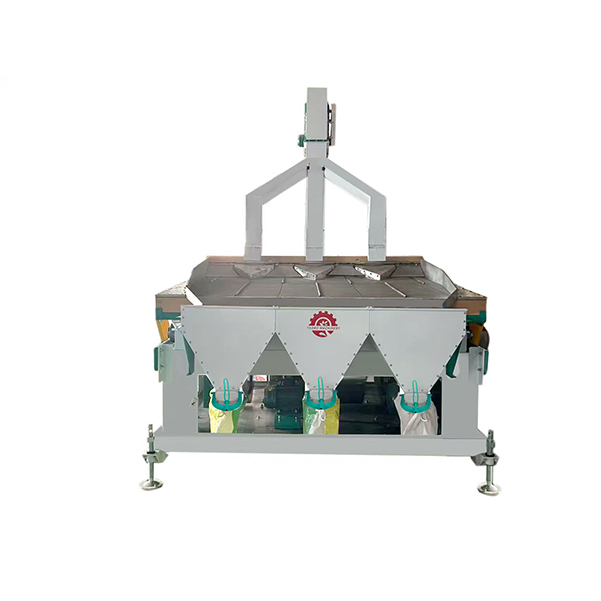
Methods for Adjusting Airflow on Specific-Gravity Destoners Based on Grain Variety
Core Logic: Larger and heavier grain kernels require a higher upward fluidizing airflow; conversely, smaller and lighter oilseeds or seeds require reduced airflow. The goal is to maintain the grain kernels in a state of fluidized suspension—where they neither press heavily against the screen plate nor get blown away into the stone discharge outlet. Airflow adjustments must be based on observing the material’s behavior on the screen surface, rather than relying solely on fan speed.
Key Points for Airflow Adjustment by Grain Type
1. Corn and Soybeans (Large kernels, high individual kernel weight)
Require high airflow. Due to the weight of corn kernels and the significant resistance to airflow, insufficient airflow prevents full fluidization, making it likely for stones to mix into the finished product.
Adjustment Reference: Corn kernels should bounce loosely on the screen, separating from one another without forming large, compacted clumps; there should be no excessive tumbling or flying of kernels. The stone discharge outlet should contain primarily stones and clods, with only a small amount of broken grain.
Note: Damp corn has reduced permeability; do not simply increase airflow. Instead, first reduce the feed rate, then make small upward adjustments to the airflow.
2. Wheat and Barley (Medium-sized kernels)
Require moderate airflow—lower than that for corn and soybeans, but higher than for rapeseed and sesame.
Wheat kernels are smaller and have a slightly lower specific gravity; excessive airflow can easily blow whole kernels into the stone outlet, increasing grain loss.
Adjustment: The material should form a thin, evenly suspended layer with slight undulation of the kernels; avoid violent “boiling” or turbulence.
3. Paddy Rice (Hulled; light husks)
Requires low-to-moderate airflow. Because rice husks are light and thin, even slightly excessive airflow causes husks to fly about and kernels to drift into the stone discharge chamber.
Key Control: Avoid high airflow; ensure proper stratification of kernels and prevent large quantities of husks from being sucked into the dust extraction system.
4. Rapeseed, Sesame, Flaxseed, and Chili Seeds (Small-kernel oilseeds)
Require low airflow. Due to their light weight and small size, even a slight excess in airflow can blow away whole seeds, resulting in a high grain content in the stone discharge outlet. The material requires a state of gentle fluidization; the material layer must be thin, and the feed rate should not be excessive. If the raw material contains a significant amount of soil, do not attempt to remove it by increasing airflow; instead, use an auxiliary air-screen cleaner to remove light impurities beforehand.
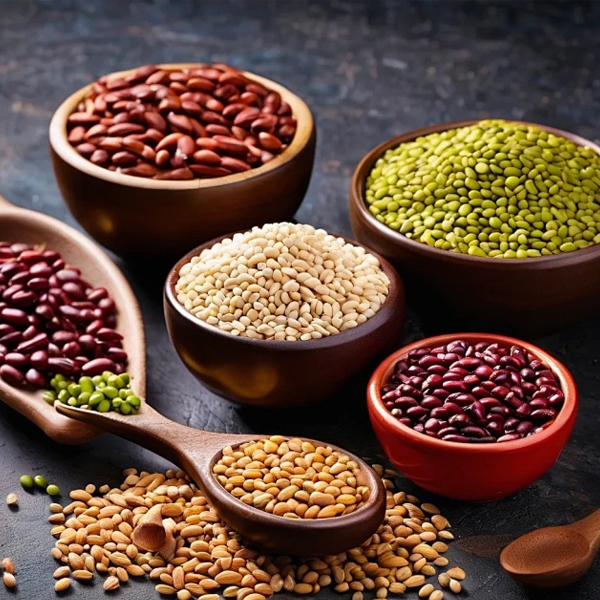
5. Various types of beans (mung beans, adzuki beans, white kidney beans)
Kidney beans have large grains, requiring airflow similar to that used for corn; mung beans have smaller grains, so the airflow setting should be reduced by one level.
Note that beans have smooth surfaces and fluidize readily; if the airflow is too high, the beans can easily surge into the stone discharge outlet.
Impact of Airflow Rate on Impurity Removal Efficiency in Gravity Destoners
The core mechanism of a gravity destoner involves using airflow to create a fluidized, suspended layer of grain; airflow rate is the most critical adjustment parameter. It directly determines the effectiveness of material stratification. Both excessively high and low airflow rates result in destoning failure, with specific optimal ranges for corn, wheat, and other grains.
Insufficient Airflow
Inadequate airflow results in insufficient upward lifting force passing through the screen surface; grain kernels fail to achieve full suspension and fluidization, causing the material layer to compact against the screen plate.
Effective stratification of grain and stones is impossible; stones are carried along with the grain out of the product discharge outlet, leading to excessive stone content in the finished grain and incomplete destoning.
Material permeability is poor; screen vibration merely causes the material mass to slide as a whole, denying stones the conditions needed to “climb” upward. Large quantities of stones accumulate in the center of the screen, quickly causing equipment blockage.
Soil clumps and light impurities are not dispersed by the airflow; soil clumps break apart, leaving fine soil residue in the grain, and the removal efficiency for light impurities drops.
Corn kernels are heavy and require a higher baseline airflow than rapeseed or sesame; consequently, the problem of insufficient airflow is more likely to occur during corn processing.
Excessive Airflow
The lifting force of the airflow exceeds the weight of the grain kernels themselves.
Large numbers of grain kernels are blown upward and suspended too high, dispersing the material layer; grain spills into the stone discharge channel, significantly increasing grain content within the rejected stones and resulting in substantial grain loss.
The material layer loses its stable, thin-layer state; the movement patterns of grain and stones become chaotic, disrupting stratification and again resulting in stones remaining in the finished product.
Some intact kernels are carried away by the aspiration system, causing raw material loss; dust leakage increases, raising dust levels in the workshop.
Optimal Airflow (Ideal State)
The grain achieves a state of moderate fluidization and suspension, with kernels loosely arranged to form a stable, uniform, and thin material layer.
The upper layer consists of suspended, flowing grain moving along the screen surface toward the product outlet; the lower layer consists of stones resting against the screen plate, propelled by vibration to climb toward the stone discharge outlet, effectively separating the movement paths of the grain and stones. At the same time, light soil and debris are carried away by the airflow; the stone fraction contains minimal grain, and the finished product is virtually free of stones, ensuring optimal stone-removal performance.
Post time: Aug-29-2026