
I. Step 1: Identify the material to be processed and match the machine model, screening system, and airflow configuration
Material particle size and impurity content directly determine the equipment structure and serve as the basis for model selection:
Processing large-grain materials (soybeans, corn, wheat, kidney beans, etc.)
Select a standard multi-layer coarse-screening model equipped with large-aperture perforated screens; the airflow adjustment range should be moderate—avoiding excessively high pressure prevents good material from being blown away; a double-layer screen suffices to separate both large and small impurities from raw materials containing soil clods or straw.
Processing fine oilseeds or grains (sesame, rapeseed, millet, etc.)
Prioritize models featuring independent dual-air-duct airflow control and fine stainless-steel woven screens, equipped with a high-capacity cyclone dust collector; a wider fan airflow adjustment range prevents dust leakage and screen clogging caused by fine material; note that the actual processing capacity for sesame is 40%–50% lower than for soybeans on the same model, so capacity calculations should include a safety margin.
Processing multiple materials interchangeably (universal use for sesame, soybeans, and grains)
Select a model with quick-change screens, independent front and rear air-duct dampers, and adjustable vibration frequency and screen inclination; ensure the manufacturer provides multiple sets of spare screens with varying aperture sizes, allowing for material switching and system recalibration within 30 minutes.
Seed precision processing
Select a model with a four-layer screen and a low-breakage vibration structure; low vibration amplitude minimizes kernel damage and preserves seed germination rates; gentle airflow reduces the loss of plump seeds being carried away with the waste.
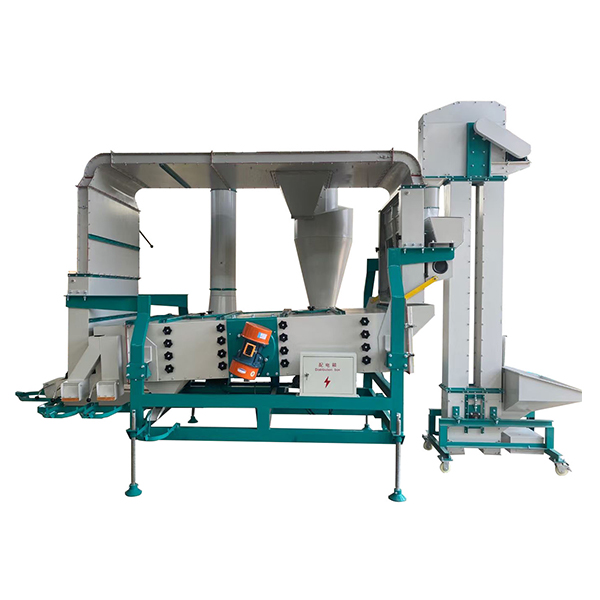
II. Step 2: Determine equipment capacity based on total daily processing volume (Key Parameter)
Nominal capacity is based on soybeans and wheat; capacity for fine grains/seeds (e.g., sesame, millet) is calculated at 50% of the nominal rate. A 20% redundancy margin is factored into equipment selection to prevent overloading during peak seasons.
Small-scale collection stations and family workshops (Daily processing < 40 tons; 8-hour shift)
Hourly requirement of 3–5 tons: Suitable for processing scattered grain intake and preliminary cleaning for local sales.
Medium-sized coarse grain processing plants and oil mills (Daily processing 50–80 tons)
Hourly requirement of 8–10 tons: Stable processing capacity of 10 tons/hour for soybeans and 4–5 tons/hour for sesame; suitable for use as the pre-cleaning stage in integrated production lines.
Large-scale grain depots and export processing plants (Daily processing > 100 tons)
Hourly capacity of 15 tons or more: Wide-body duplex air-screen cleaner featuring extra-wide double-layer screens and dual fans; designed for continuous, high-performance operation over 24-hour cycles.
III. Step 3: Selecting Equipment Configuration Based on Finished Product Standards
1. Domestic market, primary processing only (removal of stalks, dust, and large clods/debris)
Standard configuration suffices: Multi-layer vibrating screen + single-stage adjustable air separation, manual air dampers, and basic dust removal; no need for variable frequency drives (VFD) or upgraded automatic dust removal.
2. Export / Premium-grade soybeans / Sesame (high purity, low loss)
Required upgrades:
Independent airflow adjustment for front and rear air ducts (precise control to minimize loss of good product);
Variable frequency fan (stepless speed control) to maintain stable cleaning performance despite fluctuations in impurity levels;
Fully enclosed cyclone dust collection system (dust-free workshop environment, meeting export facility environmental standards);
Thickened, wear-resistant stainless steel screens and low-breakage, shock-absorbing vibration mechanisms.
3. Integration into a complete production line
Equipped with upstream and downstream connection interfaces for direct integration with bucket elevators, gravity destoners, and magnetic separators; export models support customized motors to match specific national voltage requirements.
IV. Step 4: Site, Operating Conditions, and Power Supply Compatibility
Factory Dimensions
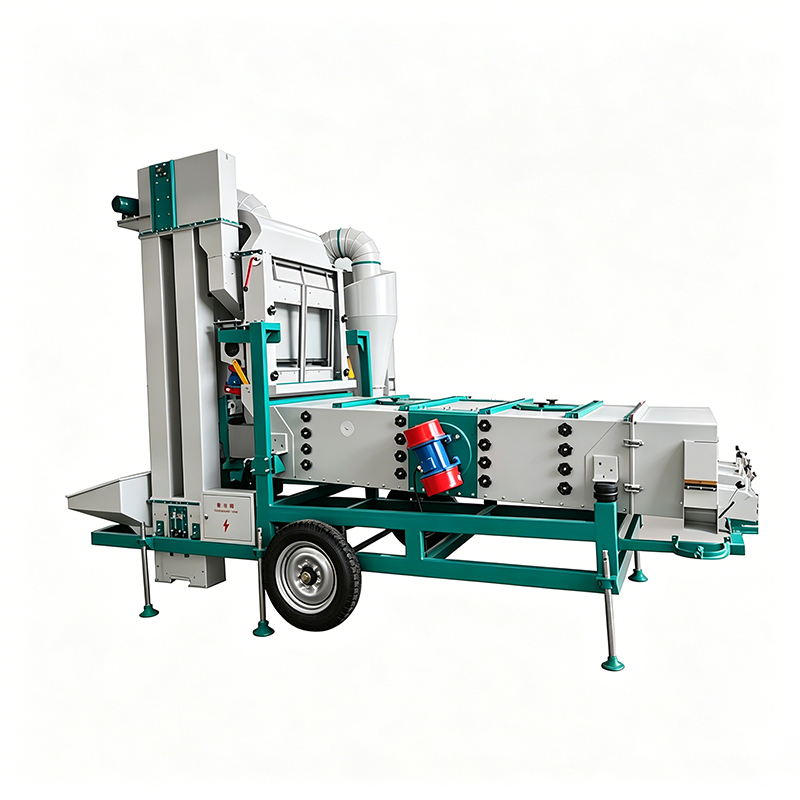
Measure length, width, and height in advance. The compact 5TB-5 model has a small footprint and low profile; high-capacity, wider models are taller and require space for dust extraction ducting. For confined spaces, mobile wheeled models are available.
Raw Material Moisture Content
For processing damp, mud-laden sesame or wet beans year-round: choose models with larger screening areas, anti-clogging screens, and powerful dust extraction to prevent screen blinding and reduced throughput.
High-Temperature, Dusty Overseas Environments
Specify thickened, rust-resistant steel plating, dust-proof motor covers, and waterproof wiring.
Power Supply Conditions
Standard domestic 380V three-phase power; overseas orders can be customized for specific voltages and 50/60Hz motors.
V. Step 5: Equipment Quality and Manufacturer Selection Criteria
Machine Body Materials
Thickened carbon steel or stainless steel body; wear-resistant woven or perforated screens; vibration motors and fans featuring national-standard copper-core windings for low failure rates during long-term operation.
Ease of Adjustment
Features include locking handles with airflow scales, quick-release screens, and adjustable vibration angles for simple daily adjustments; avoid basic dampers lacking scales, which make readjustment cumbersome when switching materials.
Post time: Jun-24-2026