
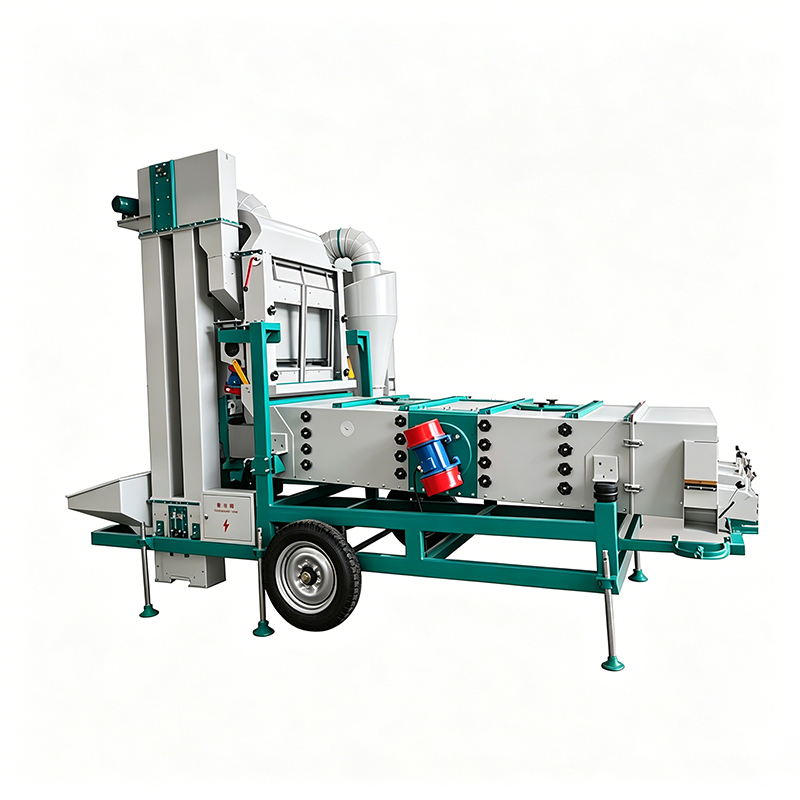
How to Select the Right Sesame Cleaning Equipment (A Practical Guide for Grain and Oil Processing Plants)
I. Step One: Define Your Core Processing Needs (The Basis for Selection)
1. Determine Hourly Processing Capacity (The Key Metric)
Calculate the hourly throughput based on average daily volume, allowing a 10%–20% buffer for peak loads, and match equipment across three tiers:
Small-scale oil mills / Individual operators: 0.5–1 t/h
Compact, mobile, all-in-one air-screen and gravity cleaning units; suitable for storefronts and small workshops; no need for a full assembly line.
Medium-sized processing plants / Sesame traders: 1–3 t/h
Modular cleaning lines (pre-cleaning + destoning + gravity separation + magnetic separation + grading); continuous automated production; suitable for year-round batch processing and third-party cleaning services.
Large food factories / Hulled sesame export plants: 3–5 t/h and above
Fully enclosed, dust-free production lines integrated with color sorters, polishers, and automatic packaging machines; meets high standards for food export inspections.
2. Distinguish Sesame Varieties and End-Uses
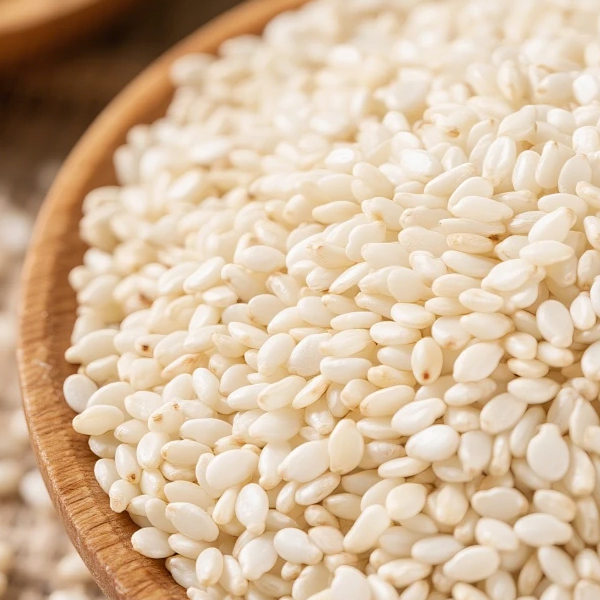
White/Black sesame for oil extraction: Focus on removing stones, soil clods, and iron impurities to protect oil presses; prioritize gravity destoners and magnetic separators; color sorting can be omitted due to low color requirements.
Food-grade hulled sesame, roasted sesame, and export-grade sesame: Requires a complete process flow—pre-cleaning → destoning → gravity separation → magnetic separation → grading → color sorting → polishing; demands ≥99% purity with no mold, discolored grains, or dust.
Raw sesame collection and cleaning services: Basic impurity removal only; a simple all-in-one air-screen cleaner suffices to minimize investment costs. 3. Analysis of Impurities in Raw Grain
Sesame purchased in the field: Contains significant amounts of stalks, soil clumps, stones, fine sand, and shriveled grains; a combination of a pre-cleaning screen and a gravity destoner is essential.
Semi-processed sesame from transit warehouses: Contains few large impurities but high levels of fine sand and discolored or moldy grains; priority should be given to upgrading gravity separators and color sorters.
Imported raw sesame: Contains significant amounts of iron filings and wire fragments from packaging; high-intensity magnetic separators are essential equipment.
II. Step 2: Assemble the necessary individual machines according to the cleaning process (complete standard workflow)
Standard complete sesame cleaning process: Feeding/Hoisting → Pre-cleaning (air-screen) → Magnetic separation (iron removal) → Gravity separation (stone & heavy impurity removal) → Grading/Sizing → Color sorting (optional) → Polishing (optional) → Automatic packaging. Equipment may be omitted based on specific needs:
Pre-cleaning screen (Mandatory)
Removes stalks, weed seeds, large soil clods, and broken stems; choose a dual-layer or triple-layer integrated air-screen machine with built-in dust extraction ducts to prevent dust dispersion.
Magnetic separator (Mandatory)
Removes iron nails, filings, and baling wire to prevent damage to gravity separators, color sorters, and oil presses; choose a chute-type high-intensity magnetic separator.
Gravity separator/destoner (Core/Mandatory)
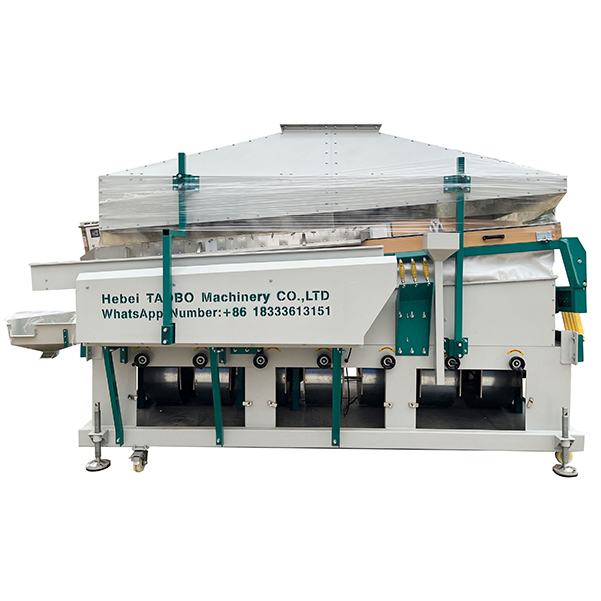
Separates stones, mud balls, and heavy shriveled grains that are similar in size to sesame seeds; given the small size of sesame seeds, a suction-type (negative pressure) gravity separator is preferred, as it offers superior stratification compared to blowing-type models.
Grading screen (Optional)
Sorts seeds by size (e.g., premium grade vs. standard grade); essential for food packaging and high-end sesame products, but can be omitted if the seeds are solely for oil extraction.
Color sorter (Optional for high-end processing)
Removes moldy grains, seeds with black tips, discolored seeds, and insect-damaged grains; essential for export, baking, and hulled sesame processing plants.
Polishing machine (Optional for food-grade sesame)
Removes surface dust and enhances the seeds’ luster and visual appeal; not required for small-scale oil workshops.
Conveying equipment: Bucket elevator + Belt conveyor
Enclosed conveying throughout the process to minimize breakage; sesame seeds are brittle, so choose a low-speed elevator with shallow buckets to keep the breakage rate below 1%.
Automatic packaging machine (Optional for downstream processing)
For quantitative packaging (5kg/10kg/25kg); used in large-scale production lines.
III. Step 3: Selection Criteria for Key Equipment Performance Parameters
Cleaning Purity Standards
For qualified equipment, the impurity content in the finished product must be ≤0.5%; for premium production lines, purity must be ≥99%. Stones and metal impurities must be completely removed, and the removal rate for shriveled grains must be ≥98%.
Sesame Breakage Rate
Sesame seeds are thin and prone to breakage; the machine must feature a low-speed airflow design and flexible screens to keep the breakage rate below 1%, thereby preventing oil loss and maintaining product quality.
Dust Removal and Environmental Requirements
For food processing and indoor facilities, prioritize fully enclosed, dust-free models equipped with bag-type dust collectors; open, simple equipment is suitable only for small outdoor grain collection points.
Material Standards (Food-Grade Requirement)
Components in contact with the sesame—such as feed troughs, screens, and hoppers—must be made of 304 stainless steel to ensure rust resistance and compliance with food hygiene standards; this is mandatory for export-oriented factories.
Adjustment Flexibility
Fan airflow, vibration frequency, gravity table inclination, and screen aperture size must all be independently adjustable to accommodate sesame of varying moisture levels and seed sizes.
IV. Step 4: Model Selection Based on Facility, Budget, and Automation Level
1. Facility Space Conditions
Small shops / Simple workshops: Ceiling height ≤3m, area <20m² → Integrated multi-functional cleaner; compact vertical structure eliminates the need for multiple machines in series.
Standard processing plants: Ceiling height >4m, with reserved access aisles for maintenance → Sectional assembly line; separate equipment placement facilitates maintenance.
High-rise warehouses / Second-floor workshops: Prioritize low-profile, small-scale lifting and conveying equipment to minimize structural modifications.
2. Budget-Based Selection Tiers
Low-cost entry-level option (0.5–1 t/h oil mill)
Integrated air-screen-gravity cleaner + small magnetic separator + simple elevator; all-in-one unit, low investment, simple operation.
Mid-range standard option (1–3 t/h trading/processing plant)
Independent pre-cleaning screen + magnetic separator + gravity destoner + grading screen + associated conveyors; automated continuous production, offering the best cost-performance ratio. High-End Integrated Solutions (for export-oriented food processing plants with capacities of 3t/h or higher)
Complete dust-free production line featuring a color sorter, polisher, and automatic packaging scale; enables fully automated, closed-loop production, ensuring seamless compliance with commodity inspection and food safety certification requirements.
3. Automation Requirements
Minimal manual oversight: Standalone integrated units requiring manual loading and unloading;
Unmanned production line: Equipped with automatic feed hoppers, continuous conveying, and automatic packaging systems, requiring only one person for routine inspection.
Post time: Jun-17-2026