
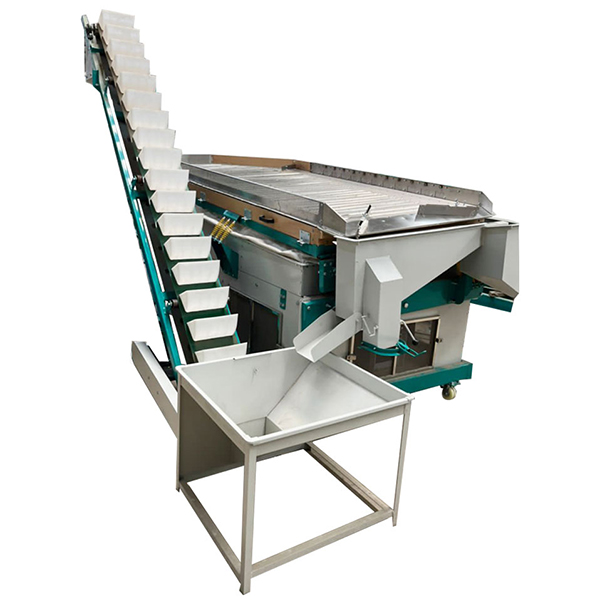
I. Working Principle of the Gravity Separator for Soybean Impurity Removal
The gravity separator primarily relies on a combination of material specific gravity differences, vibration, an inclined air bed, and airflow to stratify and separate various impurities—ranging in weight and quality—from the soybeans.
1. Uniform Feeding
Soybeans fall from the feed inlet onto a porous, vibrating air bed, forming a uniform, thin layer.
Upward Airflow: Fluidizing the Material
A fan located beneath the air bed blows air upward through the perforations in the bed surface, causing the soybean layer to become suspended, loosened, and fluidized, thereby preventing compaction and clumping.
2. Vibration + Airflow: Achieving Automatic Stratification
Under the combined action of vibration and the upward airflow, the materials automatically stratify according to their specific gravity:
Highest Specific Gravity: Stones, clods of soil, metal fragments, and heavy moldy beans → Sink to the bottom layer, resting directly against the bed surface.
Medium Specific Gravity: Plump, healthy soybeans → Occupy the middle layer.
Lighter Specific Gravity: Insect-damaged grains, shriveled beans, broken beans, immature beans, grass seeds, and bean hulls → Float in the top layer.
Lightest Impurities: Dust, leaf fragments, and straw → Directly drawn away by the suction system.
Graded Discharge Along the Inclined Air Bed
The air bed is tilted both longitudinally and laterally; in conjunction with the vibration, materials of different specific gravities automatically migrate toward different discharge outlets:
Heavy Impurities (stones, soil clods) → Discharged toward the rear end.
Plump, High-Quality Soybeans → Discharged through the central main outlet.
Light Impurities, Shriveled Beans, and Insect-Damaged Beans → Discharged toward the front end.
Airborne Impurities → Collected by the fan-driven dust removal system.
Ultimately, this achieves a multi-functional result: destoning + removal of light impurities + precise grading.
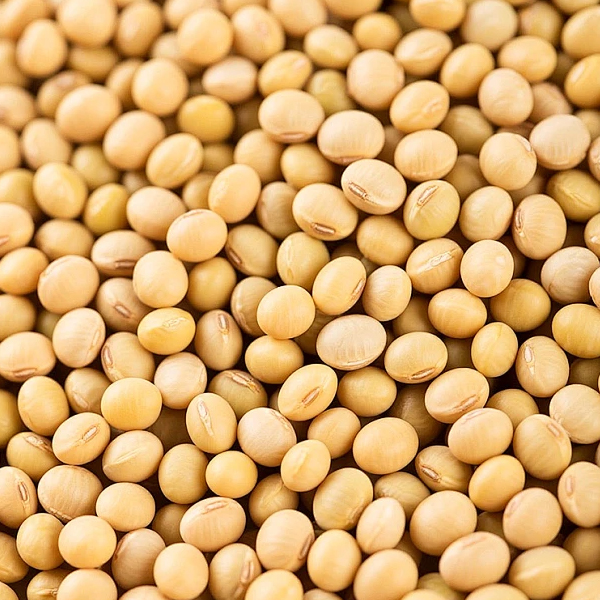
II. Core Advantages of Using a Gravity Separator for Soybean Processing
1. Capable of removing “invisible impurities” that standard screens and destoners miss.
The gravity separator does more than just remove stones; it precisely eliminates:
Shriveled grains, insect-damaged beans, moldy beans, sprouted beans, broken beans, immature beans, weed seeds, and soil particles.
These impurities are similar in size to soybeans—making them impossible to remove via standard screening—but differ in specific gravity, allowing the gravity separator to separate them with ease.
2. Significantly enhances soybean purity and commercial grade.
After processing, the soybeans exhibit uniform grain size and consistent plumpness,
making them ideal for high-demand applications such as export, oil extraction, bean product manufacturing, and seed propagation.
3. Causes no damage to the beans, resulting in excellent product appearance.
Utilizing a gentle sorting process based on airflow and vibration, the machine avoids squeezing or impact,
minimizing the risk of bean breakage or hulling, and ensuring a high rate of whole, intact beans.
4. Multi-functional and highly cost-effective.
One gravity separator performs the work of multiple machines: impurity removal + destoning + grading + precision sorting.
This eliminates the need for multiple pieces of equipment, resulting in a smaller footprint, a streamlined workflow, and lower energy consumption.
5. High processing capacity, suitable for large-scale production.
A single unit can process several tons per hour—far exceeding the output of manual sorting—
making it ideal for grain storage facilities, purchasing depots, processing plants, and export processing lines.
6. Extends the service life of downstream equipment and reduces wear and tear.
By removing stones and hard objects, the machine protects subsequent equipment—such as crushers, hullers, grinders, and oil presses—
thereby reducing blade wear, screen damage, and machine blockages.
7. Highly adjustable to accommodate various types of soybeans.
Airflow volume, vibration frequency, and deck inclination are all fully adjustable,
enabling stable and effective sorting regardless of whether the beans are wet or dry, domestic (e.g., Northeast China varieties) or imported, or of uneven size.
8. Enhances food safety and export compliance rates.
It effectively eliminates moldy and insect-damaged beans, thereby mitigating the risk of toxin contamination,
and helps meet the stringent standards required by domestic and international inspection agencies, food manufacturers, and canning facilities.
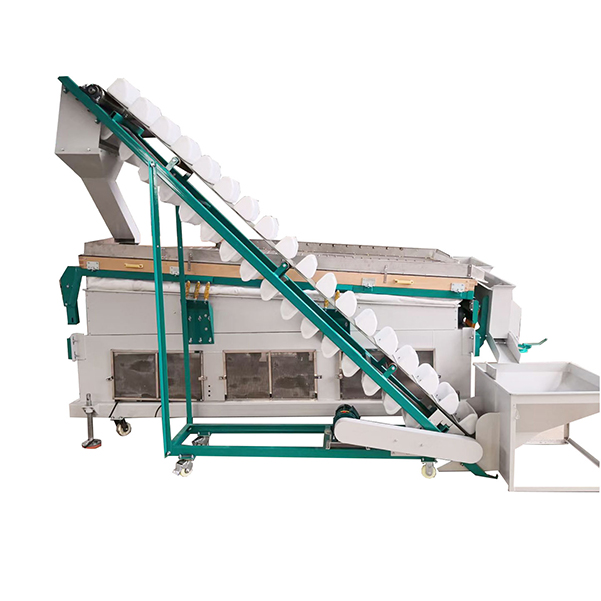
Gravity separators (specific gravity sorters) have an extremely wide range of applications; they are capable of processing any granular material—including grains, oilseeds, miscellaneous cereals, and seeds—provided the material is free-flowing and exhibits differences in specific gravity. This covers virtually all common cereals and legumes found on the market.
I. Common Cereals
Wheat (removes shriveled grains, sprouted grains, moldy grains, and weed seeds)
Corn (removes broken kernels, insect-damaged kernels, stones, and moldy grains)
Rice / Paddy (removes empty hulls, immature grains, weed seeds, and mud lumps)
Sorghum (for precision sorting, grading, and removal of impurities and stones)
Barley, Oats, Buckwheat
Millet, Yellow Millet, Proso Millet
II. Common Legumes
Soybeans, Black Beans, Green Soybeans
Mung Beans, Red Beans (Adzuki Beans)
Pinto Beans, Kidney Beans, Common Beans, Cannellini Beans
Chickpeas
Lentils, Garden Peas, Broad Beans (Fava Beans)
Cowpeas, Black-eyed Peas, Bamboo Beans
III. Oilseeds and Cash Crops
Peanuts (removes small pods, immature pods, and soil lumps)
Sesame Seeds (removes weed seeds, shriveled seeds, and stones)
Rapeseed, Sunflower Seeds, Flaxseed
Castor Beans, Cottonseed
Post time: Apr-10-2026