
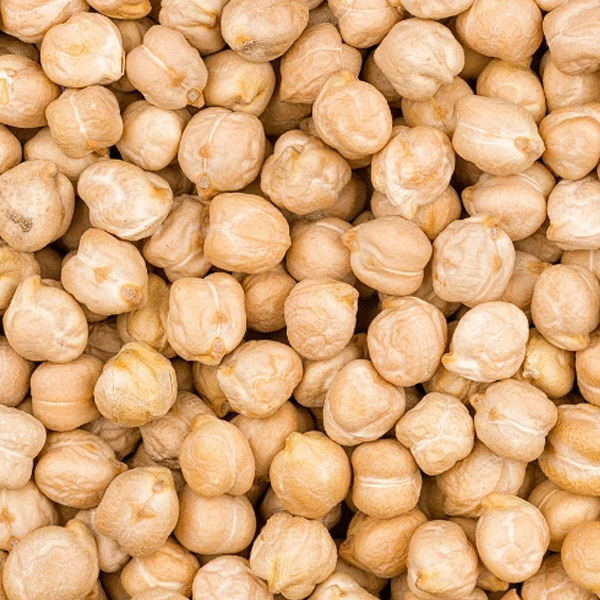
Working Principle of the Air-Screen Cleaner
The air-screen cleaner integrates vibratory screening and pneumatic separation systems. It separates various impurities from grains—such as chickpeas—based on two key parameters: particle size and specific gravity (weight), thereby achieving both grading and impurity removal.
1. Screening Section Principle
A motor drives the screen frame to oscillate reciprocally. The frame houses multiple layers of screens with varying aperture sizes; both the installation angle and the vibration amplitude are adjustable.
Once the material lands on the screen surface, the vibration causes it to flow downward along the screen.
Material larger than the screen apertures remains on the screen and is discharged through the coarse impurity outlet, while material smaller than the apertures passes through to the next screen layer.
Taking the upper screen as an example: its apertures are larger than the chickpeas, so large impurities—such as stalks, soil clods, and pods—cannot pass through and are separated out. The lower screen has apertures smaller than the chickpeas; fine sand, broken seeds, and small weed seeds fall through for discharge, while the high-quality chickpeas remain on the screen surface and continue moving forward.
Screens with different aperture sizes can be swapped to accommodate various materials, such as chickpeas, kidney beans, and sorghum.
2. Pneumatic Separation Section Principle
The equipment features a circulating air system (with dual air ducts—front and rear) that generates an airflow passing through the moving layer of material.
Lightweight materials—such as shriveled grains, insect-damaged beans, dust, and pod fragments—are carried away by the airflow into a settling chamber, where these light impurities settle and are collected for discharge. Heavier, intact chickpeas are unaffected by the airflow and fall directly downward due to gravity.
The airflow volume is adjustable; excessive airflow risks sucking away good beans, while insufficient airflow fails to effectively remove light impurities.
3. Overall Material Flow
Raw material is evenly fed into the inlet and lands on the vibrating screen surface, forming a uniform layer.
Simultaneously, the vibrating screen removes large and small impurities based on particle size, while a transverse or longitudinal airflow passes through the material layer to extract light and shriveled impurities. Screens handle impurities of varying sizes, while airflow addresses impurities of differing weights; working in tandem, they perform preliminary cleaning, allowing the acceptable material to flow out through the main discharge outlet.
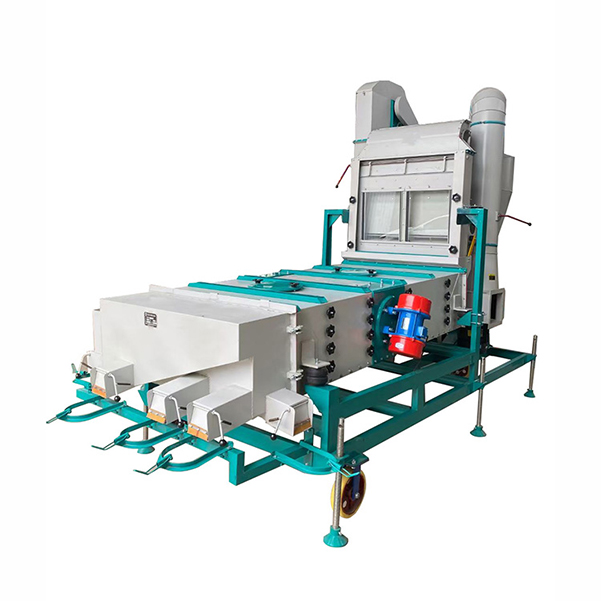
Cleaning Chickpeas with an Air-Screen Cleaner
Raw chickpeas contain a complex mix of impurities, including large debris (pods, stalks, soil clods), small debris (fine sand, broken seeds, small weed seeds), and light impurities (shriveled beans, insect-damaged grains, dust, shell fragments). The air-screen cleaner performs primary cleaning by combining vibrating screening with circulating air separation—targeting both particle size and material specific gravity—making it a core piece of equipment in the initial stage of chickpea processing.
Working Process
Raw material is evenly distributed onto the vibrating screen surface via the feeding mechanism, forming a stable material layer. The screen frame undergoes reciprocating vibration; combined with an adjustable screen inclination angle, this causes the chickpeas to continuously tumble and loosen as they flow forward.
The upper screen, featuring large apertures, traps bulky impurities such as pods, stalks, and large soil clods, directing them along the screen surface to the large-debris outlet; meanwhile, the chickpeas and smaller impurities pass through the upper screen onto the lower screen. The lower screen has apertures smaller than whole chickpea grains, allowing fine sand, broken bean fragments, and tiny weed seeds to pass through and be discharged, while plump, intact chickpeas are retained on the screen surface and conveyed forward.
Simultaneously, an airflow generated by the circulating air duct passes vertically through the flowing layer of chickpeas. Lightweight materials—such as shriveled grains, insect-damaged beans, seed coat fragments, and dust—are carried away by the airflow into a settling chamber, where they settle and are discharged. Denser, intact chickpeas remain unaffected by the airflow and continue moving downward. Airflow volume is adjustable to prevent intact beans from being carried away (if the airflow is too strong) or to ensure shriveled grains and dust are not left behind (if the airflow is too weak).
After processing by the air-screen cleaner, the vast majority of large, small, and light/shriveled impurities are removed; however, stones similar in size to the chickpeas (often called “side-by-side” stones) cannot be eliminated at this stage and require subsequent processing by a gravity destoner.
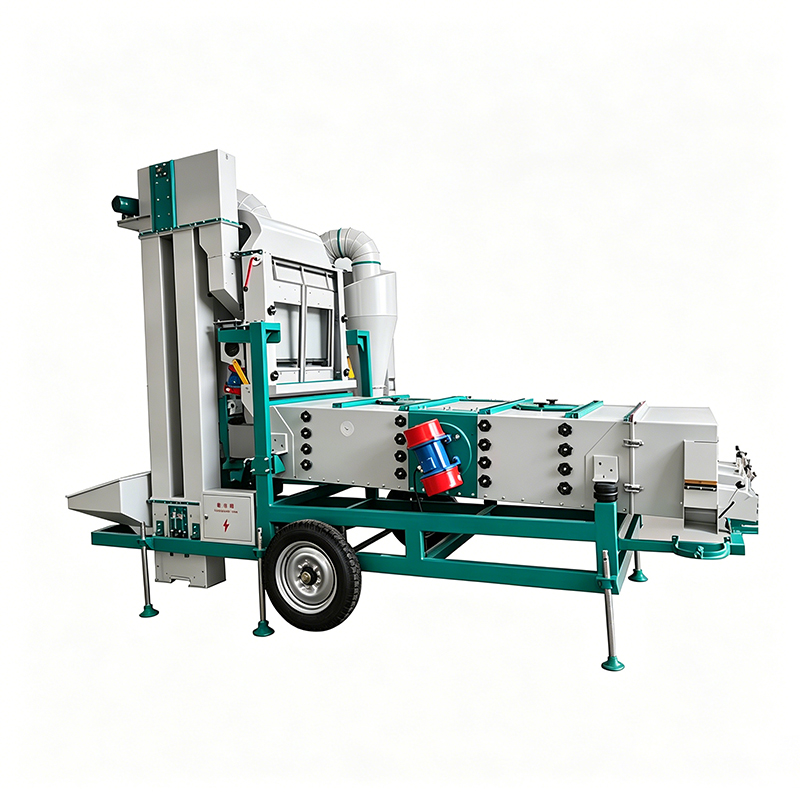
Key Parameters Optimized for Chickpea Processing
1. – Screens: The upper screen features large apertures to catch stalks and pods, while the lower screen is sized to match the chickpea diameter; screens are designed for quick replacement.
2. – Screen Inclination: Reducing the angle slightly extends material retention time, enhancing impurity removal; increasing the angle boosts processing throughput.
- Amplitude: Controlled within an optimal range to ensure material looseness and minimize chickpea breakage.
- Feed Rate: Maintain a uniform feed; the material layer should not be too thick, as excessive thickness hinders screening and leads to residual impurities.
- Airflow: Adjusted based on the quantity of shriveled beans and husks/debris to prioritize the extraction of light impurities.
Cleaning Performance
A single pass removes over 90% of stalks, pods, dust, broken seeds, shriveled beans, and insect-damaged grains, achieving a high level of initial purity.
When paired with downstream gravity destoners and magnetic separators, finished product purity exceeds 99%; for high-standard export requirements, adding polishing and color sorting stages can achieve 99.5% purity.
Air-Screen Cleaner Applications
Air-screen cleaners utilize a combination of vibrating screens and circulating air separation to sort impurities based on particle size and specific gravity. They are widely used for the primary cleaning and grading of grains, legumes, oilseeds, and planting seeds. They primarily remove large, small, and light/shriveled impurities but cannot separate stones of similar size to the product (stones requiring gravity destoners).
1. Legumes
Chickpeas, white kidney beans, pinto beans, adzuki beans, mung beans, soybeans, fava beans, lentils, pigeon peas, etc.
Removes pods, stalks, broken beans, soil debris, shriveled beans, insect-damaged grains, and weed seeds. Suitable for cleaning commercial-grade beans and pre-cleaning seed stock.
2. Grains
Wheat, corn, sorghum, barley, oats, millet, buckwheat. Removal of wheat awns, straw, husks, dust, broken grains, and shriveled grains; preliminary cleaning of raw grain at grain procurement stations and warehouses; seed grading.
3. Oil crops
Sesame, rapeseed, flaxseed, sunflower seeds.
Removal of stems, leaves, dust, shriveled seeds, and husks. For small-grain oil crops, the setup can be adjusted by using finer mesh screens and reducing airflow.
4. Seeds
Various vegetable seeds, forage seeds, flower seeds (e.g., hibiscus seeds), etc.
Seed impurity removal and grading; screening out residual husks, debris, and empty or shriveled seeds. For small seeds, the vibration amplitude is reduced, and the feed rate is controlled to prevent material spillage.
Post time: Sep-15-2026