
Coffee Bean Cultivation Situation
Variety and Yield: Vietnam is the world’s second-largest coffee producer and the world’s largest producer of Robusta beans. The total coffee production for the 2024/25 season was 29 million bags (including 28 million bags of Robusta beans). Due to rising coffee prices, farmers increased their investment, and the production for the 2025/26 season is expected to increase to 31 million bags, of which 30 million bags are Robusta beans and only 1 million bags are Arabica beans, representing a very small proportion. However, the 2024/25 season experienced a 5%-7% reduction in production compared to the previous season due to drought at the beginning of the year and typhoons in the second half.
Core Growing Regions: 92% of the coffee planting area is concentrated in the Central Highlands, covering provinces such as Dak Lak, Lam Dong, and Ta Nong. The altitude, volcanic soil, and distinct wet and dry seasons in this region are particularly suitable for Robusta bean cultivation. In addition, there are northern production areas (such as Son La province), primarily growing Arabica beans, accounting for about 10% of the national output; and extended production areas along the central and southeastern coasts, which mainly grow Robusta beans.
Planting Techniques and Planning: Vietnam is promoting technological optimization and infrastructure development in coffee cultivation. For example, drip irrigation technology is being promoted in Lam Dong province, increasing water use efficiency to over 80%. The planting area of the rust-resistant Robusta variety “Vietnam Robusta 3″ has expanded to 150,000 hectares, with a 15% increase in yield per unit area. The government also plans to invest US$1 billion over the next five years to build the Mekong Delta Water Conservancy Project, covering 80% of coffee-growing areas to address drought risks.
Soybean Cultivation Situation
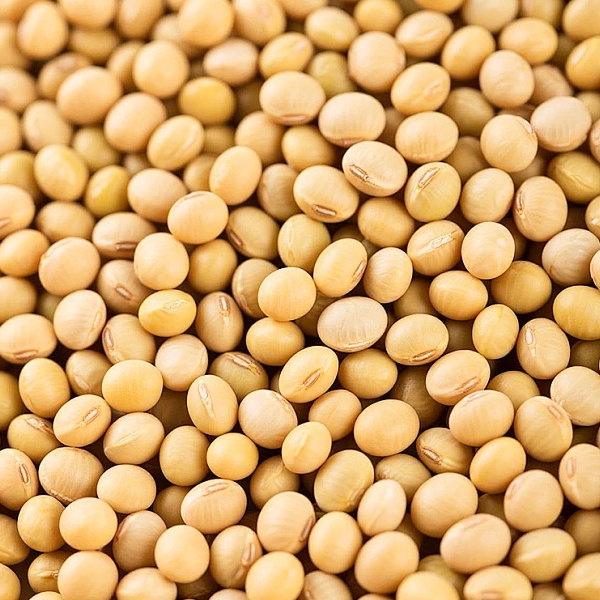
Area and Yield: Soybean cultivation in Vietnam started late, experiencing rapid growth in the early 21st century, reaching approximately 3 million hectares in 2019. However, it has since shown a continuous decline. The harvested area for the 2024/25 season was 27,000 hectares, with a yield of 45,000 tons; the projected harvested area for the 2025/26 season is expected to decrease to 26,000 hectares, with a further reduction in yield to 42,000 tons. Soybean yields have remained stable at 1.6 tons/hectare annually, without significant growth.
Main Production Areas: Soybean cultivation is concentrated in the Red River Delta and the North-Central Highlands. Previously, the winter fallow paddy fields of the Red River Delta were a major soybean growing area, while the North-Central Highlands, with their large diurnal temperature range and abundant sunshine, are also suitable for soybean growth. In terms of yield share, the Red River Delta accounts for 49% of the national soybean production, while the North-Central Highlands account for 27%.
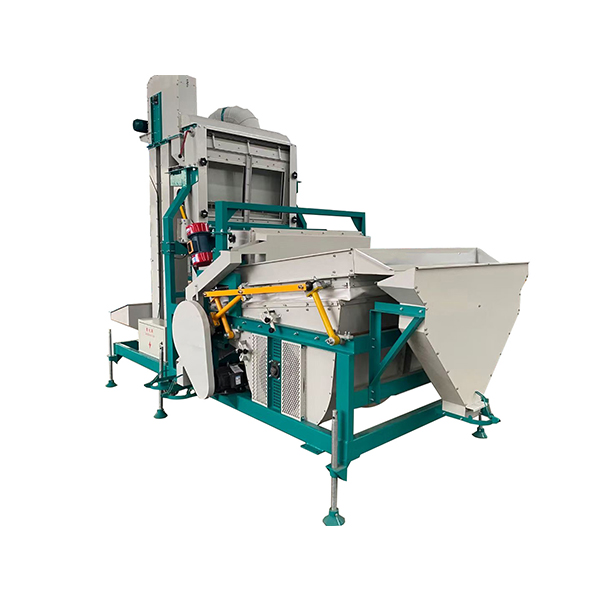
The air-screen gravity separator combines three core principles: air cleaning, screening cleaning, and gravity cleaning. It is a device that separates impurities from coffee beans and soybeans based on their different physical properties.
I. Core Working Principle and General Cleaning Process The cleaning process of the air-screen gravity separator consists of three continuous steps, progressively removing different types of impurities:
Step 1: Air-Powered Cleaning – Removing Light Impurities The built-in fan generates a controllable airflow, evenly scattering the coffee beans or soybeans to be cleaned from the feed inlet.
Coffee beans/soybeans, with their higher density, will overcome airflow resistance and fall due to gravity, entering the next step.
Light impurities (such as dust, shriveled husks, straw fragments, and light, shriveled beans) have a lower density and will be carried away by the airflow, separated by the dust collection device or impurity collection tank at the air outlet.
Adaptability Adjustment: For coffee beans (irregularly shaped particles with wrinkled surfaces), the airflow speed should be lowered to prevent coffee beans from being carried away by the airflow; for soybeans (rounded particles with uniform density), the airflow speed can be appropriately increased to improve the removal efficiency of light impurities.
Step 2: Screening and Cleaning – Removing Impurities Due to Size Differences. The material after air screening falls onto a multi-layer vibrating screen. The screen aperture and number of layers can be customized according to the particle size of the coffee beans and soybeans:
Lower Screen (Small Aperture): Removes impurities smaller than the target material size, such as small stones, broken beans, and sand particles.
Upper Screen (Large Aperture): Retains impurities larger than the target material size, such as large stones, bean pods, coffee bean shells, and hard clumps of straw.
The vibrating device drives the screen in a reciprocating motion, promoting even distribution and rapid grading of the material. Qualified coffee beans/soybeans enter the gravity separation stage through the screen outlet between the upper and lower screen layers.
Adaptability Adjustment: Coffee beans have a larger particle size variation (Arabic beans approximately 9-12mm, Robusta beans approximately 8-10mm), requiring a finer grading screen; soybeans have a relatively uniform particle size (approximately 5-8mm), allowing for the use of a coarser screen to increase throughput.
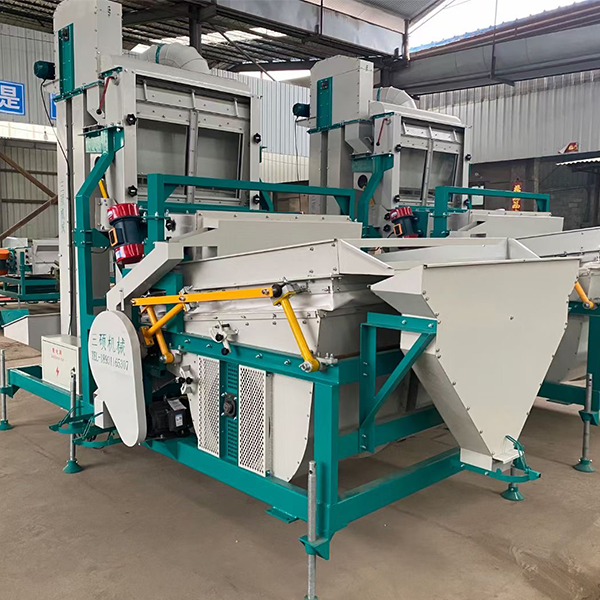
Step 3: Gravity Separation – Removing Impurities with Similar Specific Gravity. This is a crucial step in cleaning impurities that are similar in size to the target material but have different densities. For difficult impurities such as heavy stones in coffee beans and clods of soil in soybeans: The material falls onto an inclined, porous gravity screen. A fan below the screen generates an upward airflow, creating a fluidized bed of suspended material.
Density Difference Driven Separation: Coffee beans/soybeans have a moderate density and, supported by the airflow, move towards the lower slope of the screen, eventually falling into the qualified material bin. Heavy impurities (such as stones, metal shavings, and dense, moldy beans) have a much higher density than the target material and cannot be suspended by the airflow. They penetrate the material layer and are discharged through the impurity outlet at the higher slope of the screen. Some lighter impurities that are not completely removed by the airflow are lifted again and discharged through the secondary dust removal port.
Adaptability adjustment: The density of coffee beans (approximately 1.0-1.2 g/cm³) is lower than that of soybeans (approximately 1.1-1.3 g/cm³), so the airflow intensity of gravity sorting needs to be reduced to prevent excessive suspension of coffee beans from affecting grading.
The air-screen gravity separator boasts a comprehensive cleaning efficiency of over 99% for coffee beans and soybeans. It effectively removes easily separable impurities such as dust and straw, while also handling more difficult impurities like stones of similar size and moldy beans. The entire process involves physical sorting, preserving the quality of the materials and making it suitable for large-scale coffee bean processing and soybean pretreatment. If you are interested in our machines, please inquire online for a product quote!
Post time: Dec-18-2025