
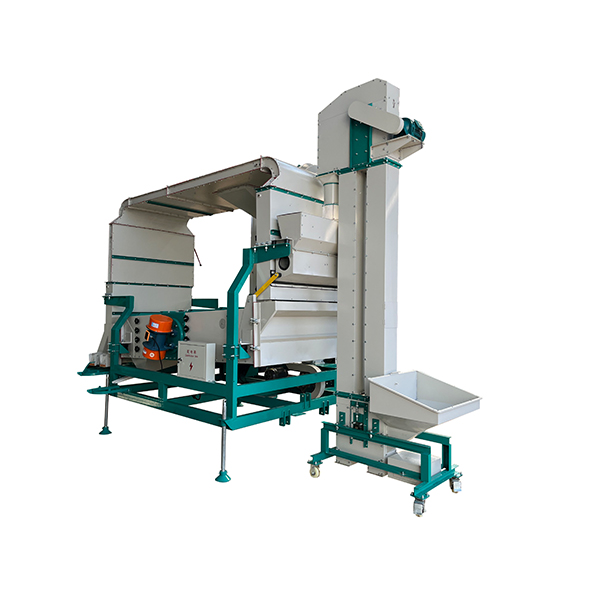
The air screen cleaner is a core piece of pre-cleaning equipment in grain, oilseed, and legume processing lines. Combining air separation and screening principles, it uses screens for size-based classification and airflow to separate light impurities from heavier material. Widely used for the initial and fine cleaning of crops such as soybeans, mung beans, sesame, wheat, and corn, it serves as the primary piece of equipment at the start of agricultural processing lines.
Core Working Principle
Material is fed evenly onto the vibrating screen surface. As the screen body undergoes reciprocating vibration, materials of different sizes are separated by passing through various screen apertures, effectively sorting the input into large impurities, qualified grains, and fine impurities. Simultaneously, an integrated fan generates an adjustable airflow that passes through the material layer; utilizing differences in specific gravity, the airflow blows away lightweight impurities such as chaff, shriveled grains, husks, and dust. Screening addresses impurities differing in size, while air separation addresses those differing in weight; the two methods work in tandem to achieve thorough cleaning.
Key Adjustable Parameters
Number of screen layers: Single-layer setups perform only coarse screening; double-layer setups separate large and fine impurities; triple-layer setups—most common for commercial legumes and oilseeds—can separate large impurities, qualified product, shriveled/broken material, and fine impurities; four-layer setups are typically used for multi-stage seed grading. Higher layer counts offer greater grading capability but result in lower throughput and a higher risk of fine material clogging the screens.
Airflow volume: Airflow is responsible for separating light impurities. Soybeans are heavy, allowing for a wide range of airflow adjustments; sesame seeds are light, requiring a narrow airflow window—excessive airflow causes product loss (blowing away good seeds), while insufficient airflow fails to remove light impurities effectively.
Screen inclination angle: A steep angle accelerates material flow and increases throughput but reduces screening precision; a shallow angle extends material residence time, improving sorting precision but lowering production capacity.
Vibration amplitude and frequency: High amplitude is suitable for large-grained soybeans; low amplitude suits tiny seeds like sesame, minimizing breakage and screen clogging.
Feed flow rate: Feeding must be uniform and stable. Overloading causes material accumulation, preventing air from penetrating the screen layer and drastically reducing cleaning efficiency. Based on actual processing performance for soybeans and sesame:
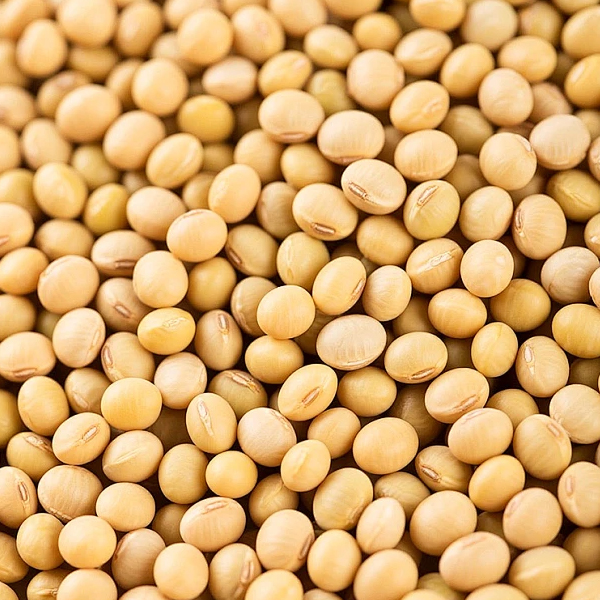
Processing soybeans: Prioritize the use of double- or triple-layer screens and moderately increase airflow. Screens remove pods, soil clumps, broken beans, and sand/dirt; airflow removes shriveled beans, insect-damaged kernels, and husk fragments. Suitable for cleaning commercial soybeans and precision-sorting soybean seeds.
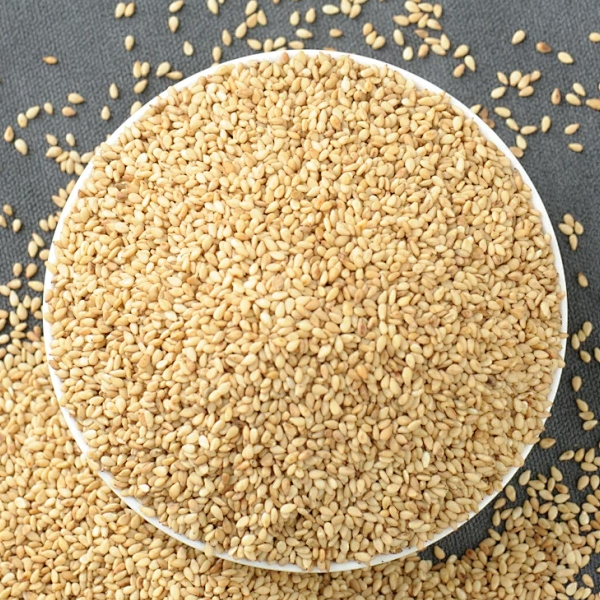
Processing sesame: Prioritize triple-layer screens and strictly maintain low airflow. Screens separate stalks, sand/dirt, and broken seeds; airflow separates shriveled sesame seeds and plant debris. Avoid high airflow, as it would cause significant loss by sucking up plump seeds; also, take measures to prevent screen apertures from becoming clogged or jammed.
Impact of Screen Layer Count on the Cleaning Efficiency of Air-Screen Cleaners for Soybeans and Sesame
The number of screen layers determines the number of grading categories; more layers allow for the simultaneous separation of a wider range of impurities and material sizes. Soybeans are large-grained legumes, whereas sesame seeds are tiny oilseeds; the significant difference in particle size between the two results in distinct cleaning performance outcomes for the same number of screen layers.
Single-Layer Screen
Features only one screening surface, allowing for a single screening pass and the separation of materials into only two categories.
For soybeans: Only large impurities can be screened out; fine fragments, soil particles, and shriveled beans cannot be separated simultaneously. It removes only one size of impurity, resulting in low sorting precision; suitable only for rough pre-cleaning.
For sesame: Sesame seeds are tiny; a single-layer screen can only separate large stalks and stones, failing to remove fine sand, soil, or broken seeds. Screening is incomplete, so it is rarely used for final sesame cleaning.
Drawbacks: Weak grading capability; suitable only for preliminary rough screening; cannot simultaneously remove large and small impurities, resulting in a final product containing mixed impurities.
Double-Layer Screen (Large-aperture top layer, small-aperture bottom layer; a standard industry configuration)
Two screen layers enable three-level material separation: material retained on the top screen consists of large impurities; material between the layers is the qualified product; material passing through the bottom screen consists of fine debris and dust.
Soybeans: The top screen captures large impurities like stalks, pods, and soil clods; the bottom screen removes broken beans, sand, and small stones; intact soybeans remain between the layers. This configuration handles both large and fine impurities, meeting general soybean cleaning needs; however, it cannot separate shriveled or broken beans, leaving good and bad beans mixed together.
Sesame: The top screen removes large impurities like grass stalks and leaves; the bottom screen removes sand, soil, and tiny broken seeds; qualified sesame remains in the middle layer. Suitable for the first stage of rough cleaning; however, it cannot distinguish between plump and light/shriveled sesame seeds, leaving shriveled seeds in the final product. Three-layer screen configuration (a standard commercial setup featuring three screening decks and four material grades):
The three-layer screen arrangement creates four discharge outlets, enabling multi-stage classification by separating large impurities, substandard material, high-quality finished product, and fine debris/dust.
Soybeans: The first screen removes oversized impurities such as pods and large clods of soil; the second screen retains whole, plump soybeans; the third screen separates split and shriveled beans, while sand, soil, and powder pass through the bottom. This setup allows for the separate discharge of premium, shriveled, and broken beans, significantly enhancing the purity of the final product—a common configuration in soybean trading and processing.
Sesame: The first screen catches stalks and large leaves; the second retains plump, whole sesame seeds; the third separates shriveled seeds and small, insect-damaged grains; and the bottom layer discharges sand, soil, and dust. Given the tiny size of sesame seeds, the three-layer screen effectively separates shriveled seeds from whole grains, markedly improving the visual quality of the finished product.
Multi-deck screens (four decks or more)
Screens with more decks allow for fine material classification and the separation of multiple product grades; they are commonly used for seed selection.
Soybeans: Can separate large commercial beans, medium-sized processing beans, and small feed-grade beans simultaneously. Suitable for seed processing plants; however, excessive decks increase the equipment’s dead weight and prolong material residence time on the screen surface, leading to reduced throughput and increased setup complexity. Standard grain processing typically does not require more than four decks.
Sesame: Multi-deck screens enable precise particle size grading for sesame seeds, separating them by diameter—often for seed selection purposes. For sesame used as raw material for edible oil, a three-deck screen suffices; adding too many decks increases the risk of seed breakage, and tiny sesame seeds are prone to clogging the screen apertures.
Summary of key selection differences: Soybeans vs. Sesame
Soybeans have large grains that rarely clog screen apertures; prioritize two- or three-deck screens. Choose four decks if seed grading is the goal, whereas two decks suffice for basic impurity removal in standard processing.
Sesame seeds are tiny and highly prone to clogging apertures; avoid indiscriminately increasing the number of decks. Prioritize three-deck screens, as excessive decks raise the risk of seed breakage and screen clogging. Single-deck screens are suitable only for preliminary coarse cleaning.
While the number of screen decks is fundamental, it must be balanced with aperture size, amplitude, inclination angle, and airflow. Simply adding decks without appropriate aperture selection will not improve screening performance and may actually reduce production capacity.
Post time: Aug-18-2026