
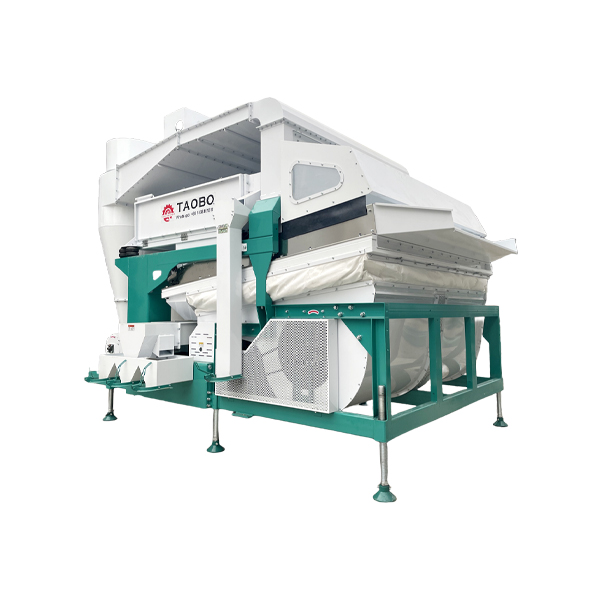
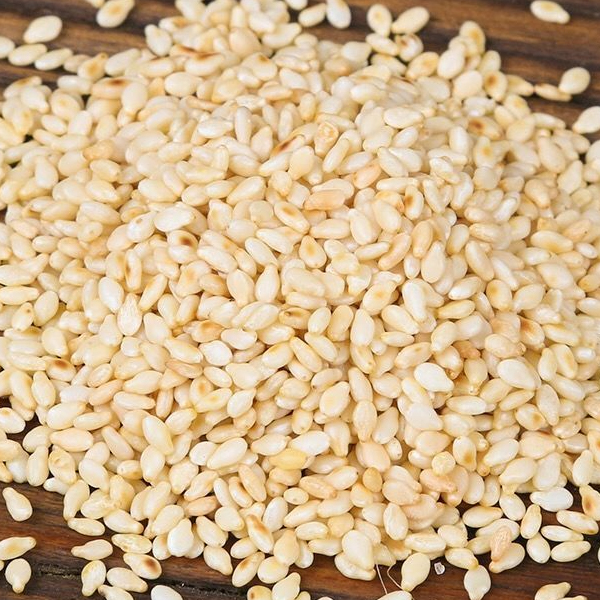
Sesame seeds and rapeseed are small-grained; typical impurities in the raw material include dust, straw fragments, pod husks, weed seeds, fine sand, small stones, soil clods, shriveled seeds, moldy seeds, and insect-damaged seeds. The PLC-controlled air-screen gravity cleaner integrates uniform feeding, two-stage air separation, multi-layer vibrating screening, and gravity separation into a single unit. Its PLC control system utilizes variable-frequency servo drives to digitally manage feed rate, fan airflow, screen box amplitude, screen surface inclination, gravity table tilt, and air pressure. Specific processing parameters for sesame and rapeseed can be saved and recalled with a single touch, enabling a continuous, fully automated process for impurity removal and product purification.
Complete Cleaning Process
1. Automatic Uniform Feeding
Material is conveyed into the feed hopper by an elevator. The PLC controls a variable-frequency feeding mechanism to stabilize the flow, spreading the sesame or rapeseed into a uniform, thin layer to prevent small particles from clumping or bridging. A feed flow sensor provides real-time feedback; the system automatically fine-tunes the feeding speed to compensate for fluctuations in raw material input, ensuring stable downstream sorting and preventing spillage or clogging.
2. Primary Pre-Aspiration (Air Separation) to Remove Light Impurities
As the material falls into the primary aspiration duct, the PLC adjusts the variable-frequency fan to a low airflow speed suitable for small oilseeds. This extracts dust, pod husks, straw fragments, grass clippings, and extremely light shriveled seeds. Dust and debris are collected in a cyclone separator, while plump sesame seeds and rapeseed—possessing higher terminal velocities—fall into the vibrating screen box without being carried away by the airflow.
3. Multi-Layer Vibrating Screening to Remove Oversized and Undersized Impurities Based on Geometric Size
The screen box undergoes reciprocating vibration and is fitted with screens specifically designed for sesame and rapeseed.
Upper Coarse Screen: Retains short straw, large soil clods, and large pod husks, discharging these large impurities through the coarse impurity outlet; sesame seeds, rapeseed, and fine impurities pass through the screen apertures onto the lower screen surface. Lower fine screen: The screen apertures are smaller than the seeds, allowing fine sand, soil, mud particles, and tiny debris to pass through, while qualified seeds remain on the screen surface and are conveyed forward.
The PLC allows for the adjustment of vibration frequency and screen box inclination, enabling control over material flow velocity and reducing issues such as small particles jamming or clogging the screen.
4. Rear secondary air separation (removal of residual light impurities)
The screened material passes through a rear vertical air duct for a second stage of aspiration, removing residual broken shells and light, shriveled seeds. This further reduces the proportion of light impurities, alleviates the load on the downstream gravity separator, and prevents shell fragments from clogging the gravity separator’s fish-scale screen mesh.
5. Gravity separation (core process: removal of stones and defective grains)
Sesame seeds or rapeseed, having undergone air-screen pre-treatment, are fed onto the gravity separation table. A PLC precisely controls the air pressure, vibration frequency, and deck inclination angle. Upward airflow from the bottom fluidizes and stratifies the material: dense stones and soil clods hug the fish-scale screen surface and move toward the high end due to deck vibration, eventually discharging through the heavy impurity outlet; shriveled and moldy grains, being less dense, float in the upper layer; plump, high-quality grains float in the middle layer, flowing down the deck slope toward the low end to exit through the finished product outlet.
Seeds with minor insect damage or partial shriveling are also separated and discharged at this stage based on density differences.
6. Multi-channel discharge
Finished sesame seeds or rapeseed exit through the main discharge port; stones/soil clods, various-sized impurities, and light shells/dust are discharged through separate, independent outlets. The PLC control system enables interlocking start/stop sequences and fault alarms, and allows for one-touch switching between processing parameters for sesame and rapeseed, eliminating the need for repeated manual adjustments of air dampers and deck angles.
Cleaning performance
Processing through the entire machine removes dust, pod shells, straw, sand/soil, stones, shriveled grains, and moldy or insect-damaged grains in a single pass. The purity of the finished sesame or rapeseed can reach 99–99.5%. The PLC system adjusts airflow and vibration amplitude in real-time to accommodate fluctuations in impurity levels within the raw material, thereby minimizing the need for manual intervention.
# Scope of Application: Air-Screen Gravity Separator
The air-screen gravity separator integrates air separation, vibrating screening, and gravity-based sorting into a single unit. It simultaneously removes light impurities, oversized and undersized particles, stones of similar size, and low-density or defective grains. Widely used for cleaning and precision sorting materials such as grains, oilseeds, legumes, and vegetable or flower seeds, it can operate as a standalone machine in a processing line or be integrated into a complete cleaning production line.
## Oilseeds
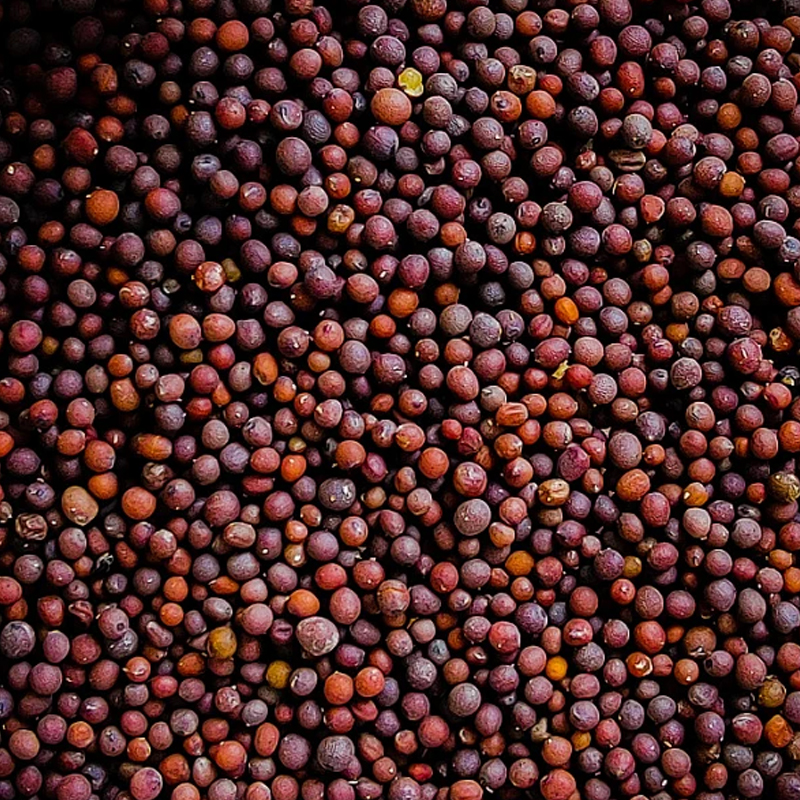
Sesame, rapeseed, flaxseed, sunflower seed, peanuts (in-shell and kernels), soybeans, perilla seed, and chili seed. It removes pods, stalks, dust, fine sand, stones of similar size, shriveled seeds, and moldy or insect-damaged grains. Suitable for the pre-treatment of oil-pressing raw materials and the precision sorting of oilseeds.
## Legumes and Coarse Grains
Mung beans, adzuki beans, white kidney beans, pinto beans, pigeon peas, black-eyed peas, chickpeas, sorghum, millet, brown rice, and buckwheat. It removes pods, broken stalks, soil clods, sand/gravel, and insect-damaged beans. Suitable for processing commercial grain and sorting seeds.
## Cereal and Other Seeds
Wheat, corn, barley, oats, as well as various vegetable, flower, and forage grass seeds. Used in the seed processing industry to remove impurities and shriveled grains, thereby improving seed germination rates.
## Cash Crops and Specialty Materials
Coffee beans (green beans) and cocoa beans; capable of removing fruit skin fragments, stones, and soil clods. It can also process certain types of uniformly sized traditional Chinese medicinal granules.
Post time: Aug-28-2026