Cleaning Performance of the Air-Screen Cleaner
I. Overall Cleaning Capability
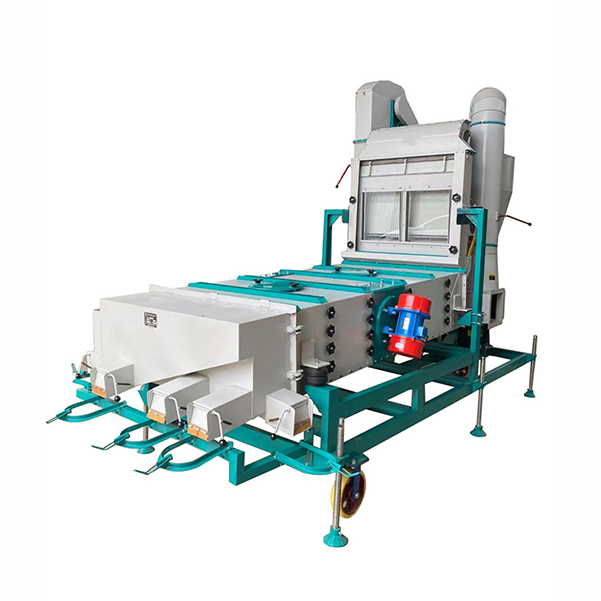
Serving as the primary cleaning equipment in legume processing, a single unit can remove over 90% of lightweight and size-based impurities in one pass. It significantly reduces the workload for downstream gravity separators and color sorters, acting as a core component of the entire production line.
II. Impurities Removed and Corresponding Results
Light Impurities (Air Separation System)
Removal rate exceeds 95% for lightweight debris such as dust, husks, straw fragments, grass leaves, shriveled beans, insect-damaged hollow grains, light weed seeds, and broken bean skins;
Surface dust is effectively blown away, leaving no residual floating light impurities.
Large Impurities (Upper Coarse Screen)
Large-particle impurities—such as large clods of soil, twigs, long grass stalks, soil clumps, and large weed roots/rhizomes—are completely separated without carryover.
Fine Impurities and Fragments (Lower Fine Screen)
Fine sand/soil, broken bean cotyledons, small seed fragments, and tiny grass scraps pass through the screen, reducing the dust content in the raw material.
III. Limitations
Air-screen cleaning relies solely on weight, volume, and airflow; it cannot distinguish between:
Stones or soil pellets that match the size and weight of the beans;
Normal beans versus moldy or discolored beans;
Mixed metal filings.
These types of impurities require further deep cleaning using gravity destoners, magnetic separators, and color sorters.
IV. Performance Under Different Operating Conditions
Small-scale single unit: After a single pass, a visible reduction in straw, dust, and shriveled beans is observed; suitable for preliminary processing by small-scale growers;
Widened multi-layer industrial model (export-grade): Features dual-channel airflow and multi-layer screens with adjustable airflow; offers high throughput and finer separation layering; extremely low impurity carryover rate; cleaning performance remains stable during continuous feeding;
Handling damp, muddy beans: Paired with a dust-extraction fan to prevent screen clogging, ensuring stable screening even for raw materials with moderate soil content.
Comprehensive Working Principle of the Air-Screen Cleaning Machine
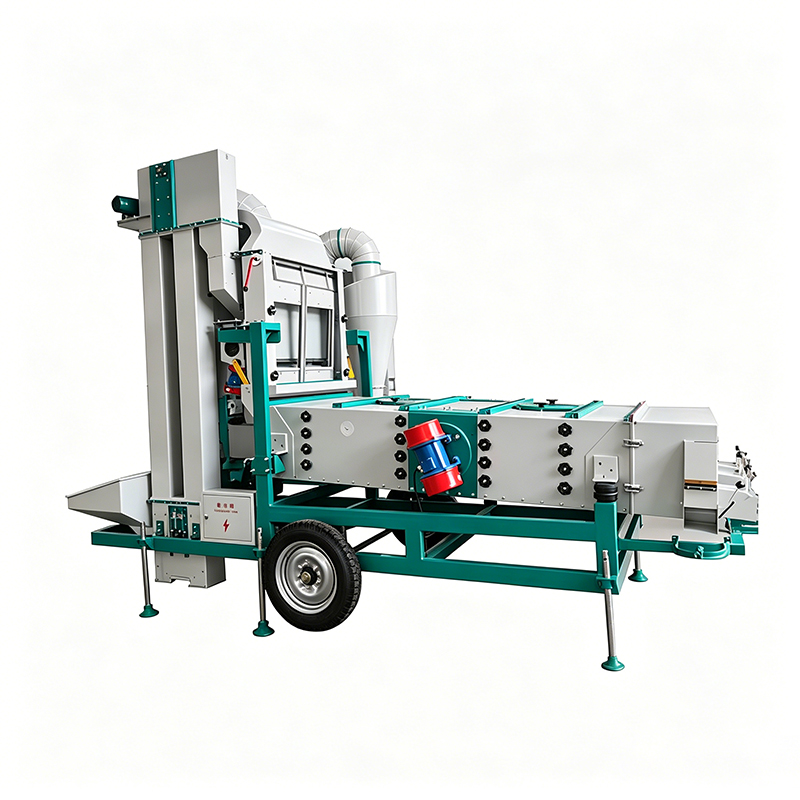
The machine operates through the synergy of two systems—vibratory screening and vertical airflow separation—utilizing differences in physical properties (size and specific gravity) between the material and impurities to achieve separation. The process comprises four stages: feeding, screening, air separation, and discharging.
1. Feeding and Conveying
Raw material enters the screening chamber evenly through the top inlet. An internal material-spreading buffer ensures the material is distributed in a thin, uniform layer, preventing clumping or piling and ensuring effective impurity separation during the subsequent screening and air separation stages.
2. Vibratory Screening (Separating Impurities by Size)
A vibration motor at the base drives multi-layered screens (with varying aperture sizes) to perform small-amplitude reciprocating vibrations:
Upper coarse screen: Features large apertures to catch oversized impurities—such as clods of soil, stalks, twigs, pods, and corn cobs—that are larger than the finished product.
Middle precision screen: Apertures match the size of the finished granules; qualified material passes through, while material of the correct specification moves forward normally.
Lower fine screen: Features fine apertures to sift out small, powdery debris such as sand, grain fragments, broken bean pieces, and fine grass clippings.
Independent outlets are provided for different screen levels, allowing coarse and fine impurities to be discharged via separate channels.
3. Airflow Separation (Separating Impurities by Weight/Density)
A fan generates a continuous, adjustable vertical airflow that passes upward through the material layer from beneath the screens:
Low-density impurities: Dust, husks, straw fragments, shriveled grains, empty shells, weed seeds, and bean skins are lifted by the airflow, drawn into the air duct, and conveyed to a settling/dust collection chamber for centralized disposal.
High-density, intact grains: Heavier and unaffected by the airflow, these continue moving forward along the screen surface without being blown away.
Airflow volume can be manually adjusted based on material moisture content and particle size, making the machine suitable for various raw materials such as sesame seeds, legumes, and grains. 4. Finished Product Discharge
The clean, intact material—having undergone stratified screening and pneumatic dust removal—flows out from the finished product discharge outlet at the end of the equipment and proceeds to the next stages, such as gravity-based destoning and magnetic separation.
II. Classification of Processable Materials
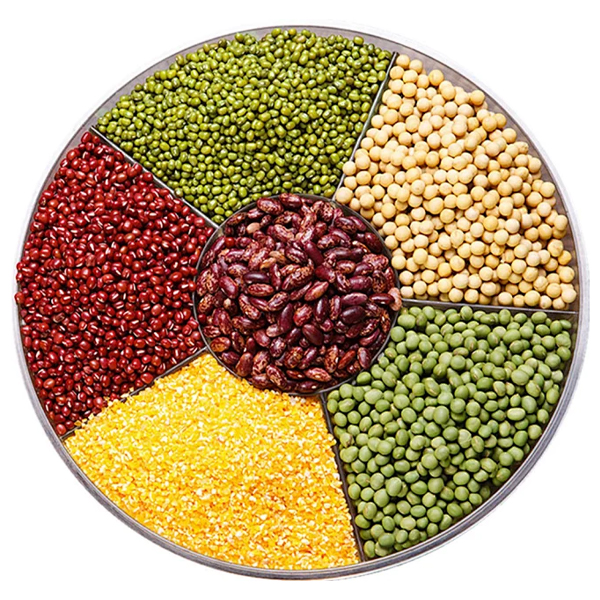
1. Various Legumes (Primary Application)
Soybeans, mung beans, adzuki beans, chickpeas, pigeon peas, pinto beans, kidney beans, peanuts, fava beans, lentils, etc.; removes stalks, soil debris, shriveled beans, and broken cotyledons.
2. Grains and Cereals
Wheat, corn, rice, sorghum, millet, buckwheat, barley; removes husks, awns, stalk fragments, sand/soil, and shriveled grains.
3. Oil Crops
Sesame, rapeseed, sunflower seeds, flaxseeds, cottonseed; removes empty shells, weed seeds, and soil debris.
4. Seeds
Vegetable seeds, forage seeds, flower seeds, and high-quality grain/oil crop seeds; screens out empty/shriveled seeds, plant matter (twigs/leaves), and fine sand/soil for preliminary grading.
5. Other Specialty Crops/Grains
Job’s tears, quinoa, perilla seeds, pumpkin seeds, chili seeds, and other small-grain dry commodities.
Post time: Jun-23-2026