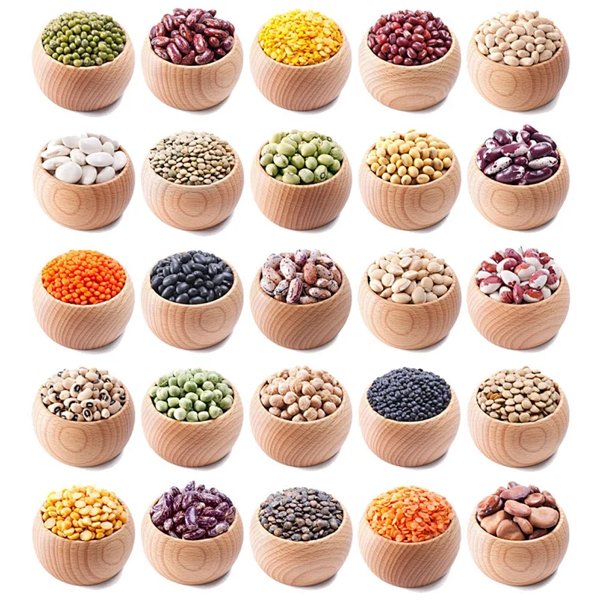
Common types of legumes include soybeans, mung beans, adzuki beans, kidney beans, pigeon peas, pinto beans, chickpeas, and black-eyed peas. Impurities are generally categorized into light impurities (dust, shriveled beans, broken skins, stems, and leaves), heavy impurities (stones, clods of soil, and metal), size-based impurities (large soil clods, fine fragments, and weed seeds), and “co-sized stones” (stones similar in size to the beans, which are the most difficult to remove).
I. Determine Four Key Parameters First
1. Bean Variety and Raw Material Condition
Bean varieties differ significantly in grain size, specific gravity, and skin characteristics. Small grains like mung beans and adzuki beans often contain fine weed seeds; large grains like kidney beans and peanuts frequently contain large clods of soil; pigeon peas and pinto beans are prone to “co-sized stones” (stones similar in size and weight to the beans). If the raw material is uncleaned, harvested grain that is damp or clumped, the system design must prioritize mechanisms for breaking up clumps, dust control, and preventing blockages; damp material cannot be fed directly into a gravity separator.
2. Processing Capacity Requirements
Base calculations on hourly throughput rather than rough daily estimates: small-scale (0.5–1 t/h), medium-scale (2–5 t/h), and large-scale (over 5 t/h). Capacity determines the specifications for the main equipment, bucket elevators, storage silos, and packaging machinery; the capacities of all line components must be balanced to avoid bottlenecks at any single machine.
3. Finished Product Purity Standards
Standard commercial beans: ~98% purity. Export-grade or seed beans: requires high purity (99.5%), necessitating a combination of multi-stage cleaning and gravity separation/destoning; high-end orders require an additional color sorting step to remove discolored or insect-damaged beans.
4. Impurity Composition
Contains only dust, shriveled grains, and straw fragments: an air-screen cleaner suffices.
Contains stones and soil clods (especially co-sized stones): a gravity destoner is essential.
Contains moldy, insect-damaged, or off-colored beans: integrate a color sorter into the downstream process.
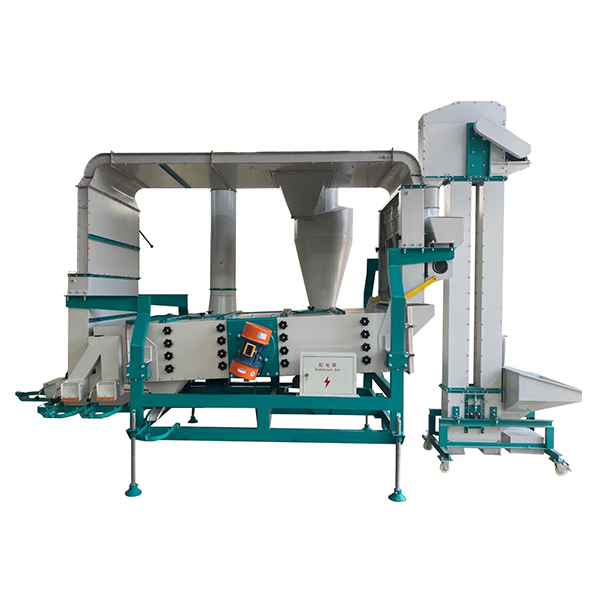
II. Core Standalone Equipment and Applications
Air-Screen Cleaner (Essential Basic Equipment)
Working Principle: Uses airflow to remove light impurities and multi-layer screens with varying aperture sizes for graded separation (removing impurities larger or smaller than the beans); airflow volume, screen inclination, and vibration frequency are adjustable.
Applications: Primary cleaning for the vast majority of bean varieties; removes stems, leaves, dust, broken beans, large soil clods, and tiny weed seeds. Dual-stage air-screen models offer superior cleaning performance compared to standard single-stage models, making them suitable for high-standard export processing.
Gravity Destoner (Core Equipment for Removing Stones of Similar Size)
Working Principle: Leverages the difference in specific gravity between beans and stones; uses an inclined vibrating deck combined with directional airflow to stratify the material, allowing stones to rise and be discharged separately.
Applications: Essential for raw materials containing stones; deck screens can be swapped to accommodate different bean sizes, and airflow pressure and amplitude are adjustable. Specifically designed to remove stones of similar size to the beans—impurities that standard screens cannot separate.
Bean Polisher (Optional)
Principle: Friction-based polishing; removes surface dust, mold spots, and dirt to enhance the bean’s appearance.
Applications: Improves the market appeal of commercial beans; generally not used for seed processing to avoid damaging the seed coat and compromising germination rates.
Color Sorter (High-End Optional Equipment)
Principle: High-speed image recognition; rejects moldy beans, insect-damaged beans, and off-colored grains based on color.
Applications: Used in the final finishing stage for exports, premium-grade beans, and high-quality seed processing.
Auxiliary Equipment
Z-Type Bucket Elevator: Enclosed material handling to minimize breakage and dust; 304 stainless steel is the preferred choice for food-grade processing. Buffer Hopper: Ensures uniform material supply and stable feeding to the main processing unit. Packaging Machine: Used for quantitative bagging of the finished product.
III. Design Options for Bean Cleaning Equipment (Select Based on Needs)
Simple Standalone Solution (For individual farmers, small processing plants, low budgets, and standard domestic sales)
Configuration: Single-stage air-screen cleaner + simple elevator
Suitable for: Raw material with minimal stones; removes only stalks, dust, and broken fragments; purity requirement ≤98%; capacity 0.5–2 t/h
Limitations: Cannot remove stones of similar size/weight to the beans (“co-sized stones”); does not meet export standards
Standard Production Line (For mainstream export-oriented plants; purity 99.5%)
Configuration: Dual-stage air-screen cleaner + gravity destoner + stainless steel Z-type elevator + buffer hopper
Process: Raw material loading → Air-screen pre-cleaning (removes light, large, and small impurities) → Gravity destoning (separates co-sized stones) → Finished product discharge; optional polisher available to enhance appearance. This is the most common configuration for export orders, meeting the phytosanitary standards of many countries.
High-End Precision Processing Line (For premium beans and seed processing; high standards)
Adds to the standard line: Bean polisher + color sorter; optional seed coater (for seed processing). Enables a complete process of impurity removal, sorting, polishing, and rejection of discolored beans.
IV. Key Considerations for Equipment Selection (Avoiding Pitfalls)
Material Selection: For food exports, prioritize 304 stainless steel for parts contacting the product; carbon steel with spray coating is acceptable for standard domestic sales. Stainless steel prevents rust, complies with food safety regulations, and avoids heavy metal contamination.
Adjustment Flexibility: Prioritize models with independently adjustable airflow, vibration amplitude, and screen inclination. This facilitates switching between varieties (e.g., mung beans, kidney beans, pigeon peas) and supports quick screen changes.
Breakage Rate Control: Bean skins are fragile; avoid high-speed belt elevators. Opt for low-speed bucket elevators and ensure the machine has effective buffering structures to minimize impact damage.
Space and Energy Consumption: Dual-stage cleaning + gravity destoning units require significant floor space; verify factory ceiling height in advance. For equipment with multiple fans, ensure adequate dust collection systems to meet environmental and dust control standards. After-sales Service and Customization: Prioritize manufacturers that offer complete line layout, on-site commissioning, and custom screen fabrication; if processing multiple types of beans in rotation, request a set of spare screens in various specifications.
Special Requirements for Seed Processing: Avoid aggressive polishing for seed-grade beans; the equipment should operate with reduced vibration intensity to protect the seed coat and maintain germination rates, and include provisions for seed coating if necessary.
Post time: Aug-21-2026