
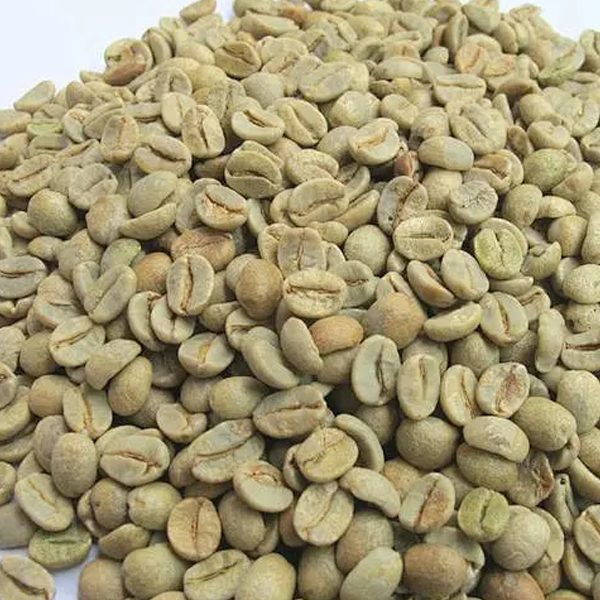
After green coffee beans undergo harvesting, depulping, fermentation, drying, and hulling, they contain various impurities that can be categorized into five main types: heavy stones and grit; light stems, leaves, and husks; irregularly shaped defective beans; fine dust and foreign particles; and miscellaneous debris. Different equipment is used to remove these specific impurities, with the gravity destoner primarily targeting heavy stones and grit:
I. Heavy, High-Density Impurities
These impurities have densities similar to or greater than green coffee beans, making separation via standard screening or air classification difficult; they are the primary targets for the destoner:
Stones and grit
Round pebbles, crushed rock, and sand grains similar in size to green beans (often introduced from soil during drying at the origin); these cause the most wear on roasters and grinders and create a gritty mouthfeel after roasting;
Clumps of dried mud or soil
Hardened soil aggregates that can scratch the inner walls of the equipment;
High-density moldy/hardened beans and carbonized beans
Beans that have hardened after molding due to moisture, or beans burnt during processing; their density far exceeds that of normal green beans, and they taste sour and bitter—classifying them as defective;
Fine metal fragments and gravel
Trace metal particles and tiny stone fragments introduced from harvesting or drying areas.
II. Light, Floating Impurities
These are much lighter than coffee beans and are removed first via air suction (dedusting) to reduce the load and ensure stable stratification within the destoner:
Coffee husks, pulp residue, and silver skin fragments;
Twigs, leaves, coffee vine fragments, and small stalks;
Shriveled empty shells, extremely light/flat beans, dust, and fine soil particles;
Flocculent dust and fibrous debris.
III. Irregularly Shaped Particles
Separated based on screen aperture size during the screening process:
Oversized bean clumps and fused “twin” beans;
Undersized bean fragments, broken bean halves, and bean dust;
Incompletely hulled dried coffee fruit pods.

Setting the Feed Rate for Coffee Bean Gravity Destoners
I. Core Principles for Setting Feed Rates
Coffee beans are brittle, have smooth surfaces, and are relatively light and uniform in size; therefore, the feed rate should be slow rather than fast. An excessive feed rate compresses the time available for gravity-based separation; stones and grit may flow out with the beans before they have time to sink, drastically reducing destoning efficiency. Conversely, a feed rate that is too slow results in an overly thin material layer; airflow can easily scatter the beans and increase damage from collisions, while capacity utilization remains low. The feed rate must be carefully coordinated with airflow volume, vibration amplitude, and the inclination angle of the deck.
II. Reference Standards for Feed Rate and Material Layer Thickness
Standard Commercial Models (Small-to-Medium Standalone Units)
Rated processing capacity range: 300–800 kg/h
Optimal stable feed rate: 400–600 kg/h
Material layer specifications: Spread a thin, even layer of coffee beans across the screen surface—approximately 2–3 beans deep. The entire screen surface should be covered with no exposed mesh; beans should not be piled up or compacted, ensuring airflow can penetrate the layer evenly and create a clear fluidization and separation boundary.
Large-Scale Production Line Models
Rated capacity: 1000–2000 kg/h
Preferred feed rate: 1000–1500 kg/h
Maintain a thin material layer; strictly avoid overloading or overfilling the feed.
III. Fine-Tuning Strategies for Different Operating Conditions
1. High stone content or excessive impurities in raw material
Reduce the feed rate to 60%–70% of the rated capacity.
Slowing the feed rate extends the material’s residence time on the screen, allowing small stones and clumps of dirt to fully settle to the bottom of the mesh. This ensures high destoning purity and is suitable for raw beans (often imported) that contain a high level of impurities. 2. Coffee beans with high moisture content and sticky surfaces
Slightly reduce the flow rate.
Damp beans tend to clump together; a slower flow rate allows the airflow to break up these clusters, preventing clumps from blocking the airflow and causing stratification failure, while also reducing bean cracking caused by mutual compression.
3. High raw material purity with minimal grit or stones
Flow rate can be moderately increased to 80% of the rated capacity.
This boosts processing efficiency while maintaining stable stratification, eliminating the need for unnecessarily slow operation.
4. Specialty coffee bean processing (strict control over breakage and appearance)
Reduce flow rate to 55%–65% of the rated capacity.
Low-speed, gentle operation minimizes bean tumbling and impact, effectively preventing cracked beans or damaged skins and preserving the integrity of the green beans to meet export standards for specialty coffee.
IV. Rules for Coordinated Feed Flow Rate Adjustments
Slower flow rate: Slightly increase airflow volume to ensure proper fluidization of the thin material layer; keep vibration amplitude at a low setting.
Faster flow rate: Must simultaneously increase air pressure slightly and raise the screen inclination angle slightly to prevent material accumulation and ensure smooth downward flow.
If significant amounts of coffee beans are discharged through the stone outlet or losses are high: Immediately reduce flow rate and partially close the air damper.
If the finished product still contains grit: Prioritize reducing the flow rate, then fine-tune air pressure and vibration amplitude.
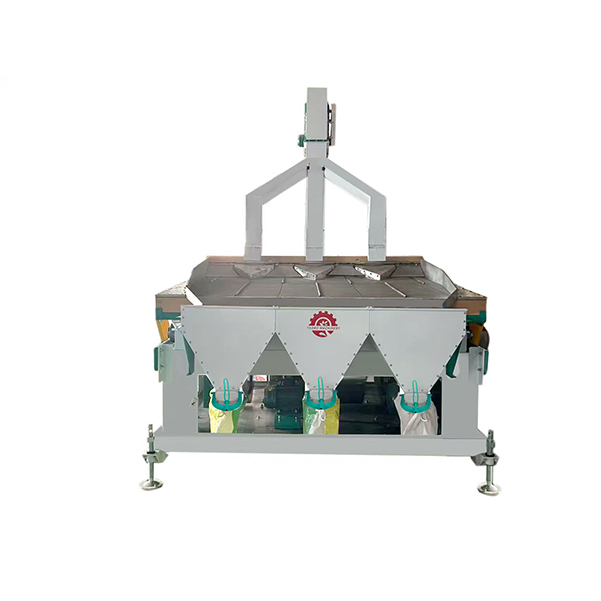
Airflow Setting Standards for Specific-Gravity Destoners (Green Coffee Beans)
I. Core Setting Logic
Coffee beans are relatively brittle, round and smooth, and have a low bulk density; they are easily lifted and tumbled by strong air currents, leading to skin damage or bean cracking. The airflow needs only to gently lift the bean layer to create stable fluidization and stratification, allowing stones and grit to sink and settle against the screen mesh. Low-to-medium air pressure must be used throughout; high airflow is strictly prohibited. Airflow settings must be coordinated with feed rate, vibration amplitude, and deck inclination.
II. Standard Damper Opening Ranges
Reference settings for centrifugal fan dampers on standard specific-gravity destoners:
General Standard Conditions (Raw material with moderate moisture; normal stone content)
Damper opening: 55%–65%
Airflow effect: The entire bean layer is slightly suspended; beans are loosely arranged rather than compacted; the screen mesh is not exposed; stones/grit settle steadily at the bottom; beans do not tumble violently or scatter; destoning is effective and consistent; breakage rate is minimized.
Specialty-Grade Coffee Beans (Strict appearance control; very low breakage tolerance)
Damper adjusted down to: 50%–55%
Airflow is gentler, minimizing bean impact and cracking; suitable for processing specialty green beans for export.
Damp Raw Material (Beans slightly clumping or sticking together)
Damper adjusted slightly up to: 65%–68%
Damp beans tend to clump and compact; moderately increasing airflow breaks up clumps and ensures air penetration for effective gravity-based stratification; do not increase further, or beans may shatter.
III. Fine-Tuning Airflow for Specific Conditions
Finished beans contain stones/grit; destoning is incomplete
Cause: Airflow is too low; the bean layer is compacted and cannot fluidize properly, preventing stones from sinking.
Adjustment: Increase damper opening by small increments of 3%–5% until the stratification boundary on the screen becomes distinct; do not open the damper wide all at once. Excessive coffee beans are being carried out through the stone discharge outlet, resulting in high product loss.
Cause: Air pressure is too high; beans in the upper layer are being swept by the airflow into the stone collection zone.
Adjustment: Gradually close the air damper to reduce airflow buoyancy, allowing the coffee beans to remain stably suspended in the upper layer while only the stones and grit move up the slope.
Increased bean breakage and skin damage.
Immediately reduce the air damper setting to the 50%–55% range and slow down the feed rate; airflow impact is the primary cause of bean damage.
High proportion of shriveled or lightweight, empty beans in the raw material.
Appropriately reduce airflow; shriveled beans are lighter, and strong airflow easily scatters and mixes them with the good beans.
IV. Visual on-site assessment of airflow suitability (most practical for operations)
✅ Standard state (normal airflow):
The bean layer floats gently as a whole, flowing steadily from top to bottom; the upper layer of coffee beans is loose and fluid, while a layer of dark stones and grit moves slowly upward against the screen; the boundary between the bean zone and the stone zone is distinct; no bean scattering or violent turbulence.
❌ Excessive airflow:
Coffee beans tumble and surge, scattering everywhere; the stone zone becomes contaminated with a large number of good beans; broken beans increase significantly.
❌ Insufficient airflow:
Material compacts and clumps together with no sense of suspension; stones and grit remain buried within the bean layer, preventing separation; the finished product contains significant grit.
Post time: Aug-12-2026