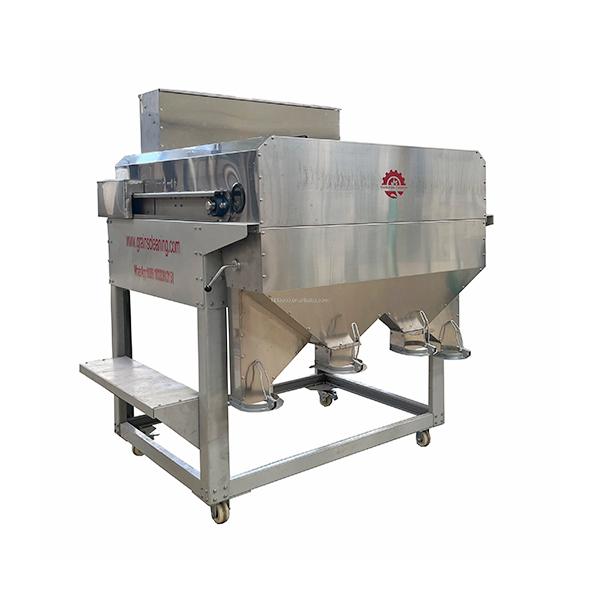
Magnetic separators (magnetic soil removers) clean kidney beans and remove hard clumps (soil) and dirt. The core principle is to utilize the property that soil clumps containing trace amounts of iron are attracted by a high-strength magnetic field, while kidney beans are non-magnetic. Separation is achieved through a combination of magnetic field and parabolic trajectory. It cannot remove pure stones or dust; it needs to be combined with air separation, screening, and gravity separation processes for thorough cleaning.
Kidney beans: Generally refers to white kidney beans, red kidney beans, pinto beans, etc. They are large, plump, and nearly round, often used in stews, porridge, and red bean paste.
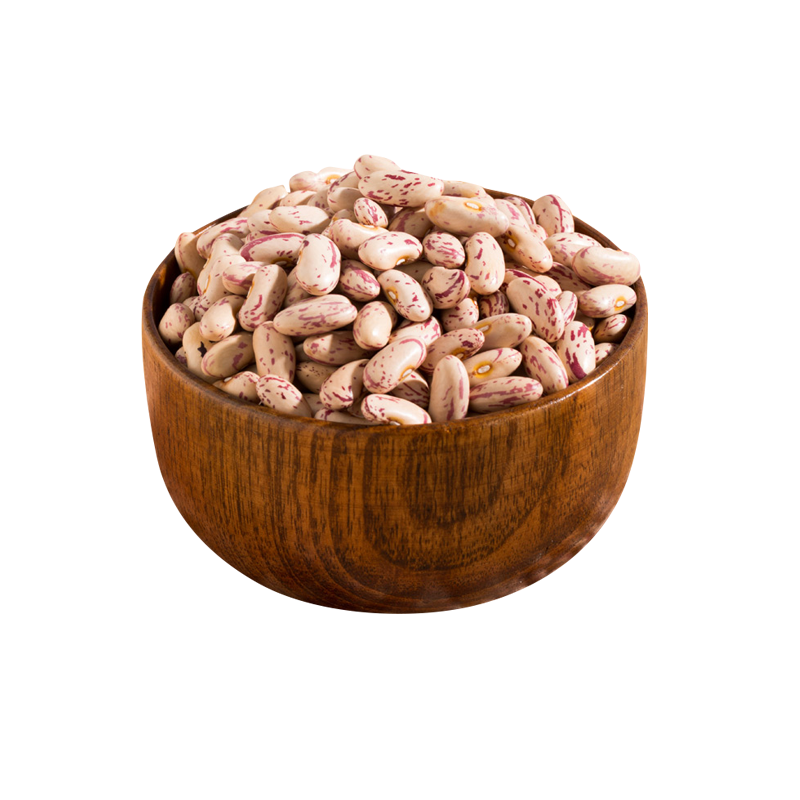
Pinto beans: Also called spotted beans or pinto beans, they have reddish-brown markings on the surface and are roughly oval in shape. The markings fade after cooking. They are a commonly used bean in Western and Mexican cuisine.
I. Working Principle
Material Conveying: Kidney beans are evenly spread on a conveyor belt via an elevator and vibrating feeder, passing at a constant speed through the high-strength magnetic roller area.
Magnetic Field Action: The magnetic roller (rare-earth permanent magnet, magnetic field strength typically ≥15000 Gauss) generates a strong magnetic field, attracting soil clumps, hard clumps, and iron filings containing trace amounts of iron.
Trajectory Separation: The belt rotates around the magnetic roller, and the material falls freely in a parabolic trajectory at the end. Kidney beans, being non-magnetic, fall along a normal trajectory into the main discharge port; soil clumps are magnetically pulled, their trajectory deviates, and they fall into the side waste trough, completing the separation.
Impurity removal: The adsorbed soil clods automatically fall off after leaving the magnetic field area with the conveyor belt and are cleaned by scrapers or airflow, enabling continuous operation.
Complete Cleaning Process (Magnetic Separator + Supporting Equipment)
1. Pre-treatment (Essential before magnetic separation)
Primary cleaning screen:Removes straw, large impurities, and excessively long/short debris to prevent clogging of the magnetic separator.
Air separation: Blows away light impurities (dust, shriveled beans, broken leaves), reducing the magnetic separation load.
Grading screen:Grades beans according to particle size, ensuring uniform material distribution and no overlap during magnetic separation, improving impurity removal accuracy.
2. Core Step of Magnetic Separator: Soil Removal (Crucial Step)
Equipment Selection: Use a dedicated magnetic soil removal machine for beans (e.g., 5CX series), with magnetic roller width matching production capacity and magnetic field strength ≥15000 Gauss.
Parameter Settings:
Belt speed: 0.5–1.2 m/s (ensuring beans do not break and the falling trajectory is stable).
Magnetic roller height/spacing:** Adjusted according to bean particle size to ensure the magnetic field covers the material layer.
Feed rate: Uniform, thin-layer feeding to avoid accumulation and missed selection.
Operating Points: Before starting the machine, check the magnetic roller’s magnetic force, belt tension, and ensure the waste chute is unobstructed.
During operation, observe the falling trajectory and fine-tune the speed/magnetic field to ensure complete separation of soil clods.
Regularly clean the magnetic roller surface, belt, and waste chute to prevent material accumulation from affecting the magnetic force.
3. Post-processing (Deep purification after magnetic separation)
Gravity destoner: Removes pure stones, glass, and heavy impurities (that magnetic separation cannot handle).
Fine screen/polishing machine: Removes broken beans and discolored beans, brightening the surface of the beans.
Color sorter: Removes moldy, insect-damaged, discolored beans and small impurities, improving the purity of the finished product.
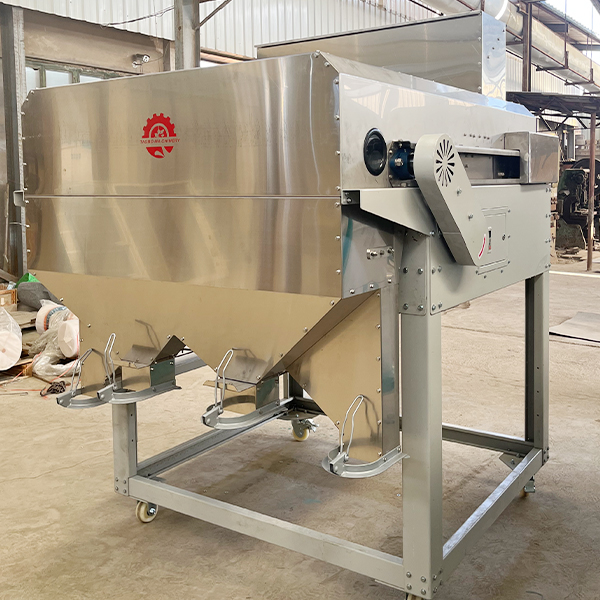
Equipment Selection and Parameters
Model: Magnetic Soil Remover, Permanent Magnet Drum Separator (suitable for beans).
Magnetic Field Strength: 15000–20000 Gauss (ensures soil clod adsorption, not bean adsorption).
Processing Capacity: 1–10 t/h (matched to production capacity).
Material: Food-grade 304 stainless steel, meeting hygiene standards.
Key Components: Rare earth permanent magnet roller, wear-resistant PU belt, variable frequency speed control system, grain dispersing device.
IV. Common Problems and Solutions
Incomplete Soil Removal
Causes: Overly thick feed, excessive belt speed, insufficient magnetic field strength, material accumulation on the magnetic roller.
Solutions: Thin and uniform feeding, reduce speed, check/enhance magnetic force, clean the magnetic roller regularly.
High Bean Breakage Rate
Causes: Excessive drop height, excessive belt speed, large feeding impact.
Solutions: Reduce drop height, slow down speed, add a buffer hopper.
Equipment blockage
Causes: Inadequate pretreatment, large impurities entering, material accumulation in the waste trough.
Solutions: Strengthen initial cleaning, regularly clean the waste trough, optimize feeding.
Pure stones cannot be removed.
Solutions: A gravity separator must be added after magnetic separation to separate materials using density differences.
V. Maintenance and Upkeep
Daily: Clean the magnetic rollers, belts, and waste trough every shift; check belt misalignment and tension; observe magnetic force attenuation.
Periodic: Verify magnetic field strength weekly; inspect bearings, motors, and transmission components monthly; perform thorough cleaning, lubrication, and maintenance quarterly.
Post time: Mar-12-2026