
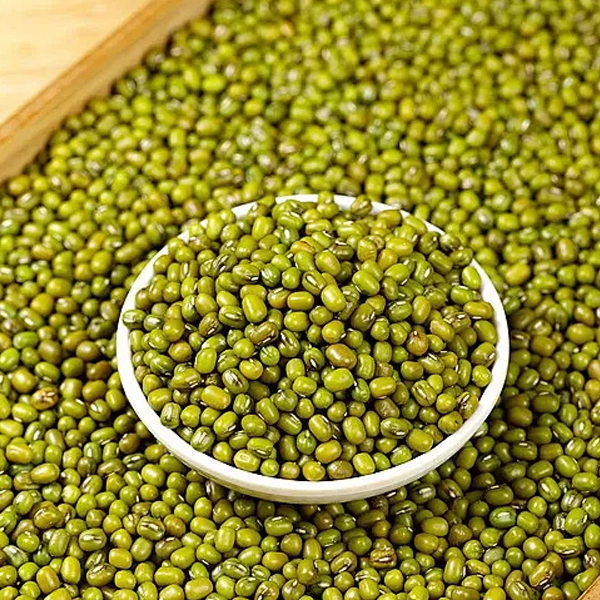
Common impurities found in mung beans include large debris—such as straw, soil clods, and withered leaves—introduced during field drying and harvesting; lightweight contaminants like dust, grass clippings, bean hulls, and shriveled grains; fine particles such as fine sand and grain fragments; and “companion” heavy impurities—specifically gravel and mud pellets—that are similar in size to the beans themselves. Additionally, the beans may contain irregular or deteriorated kernels, including insect-damaged grains, moldy grains, discolored beans, and broken or undersized beans of varying dimensions.
Based on the specific types of impurities present in the mung beans—specifically, if the batch contains significant amounts of straw or soil clods, a primary cleaning screen should be prioritized. If dust, bean hulls, or shriveled grains are prevalent, an air-screen cleaner is essential. For batches containing sand or gravel, a gravity destoner should be installed. To remove moldy grains, discolored or defective beans, and foreign bean varieties, a color sorter is required. Finally, to separate particles by size or remove broken beans, a grading screen should be added; furthermore, a comprehensive dust collection system should be integrated throughout the entire processing line to control airborne dust.
I. Complete Workflow + Function of Each Individual Unit
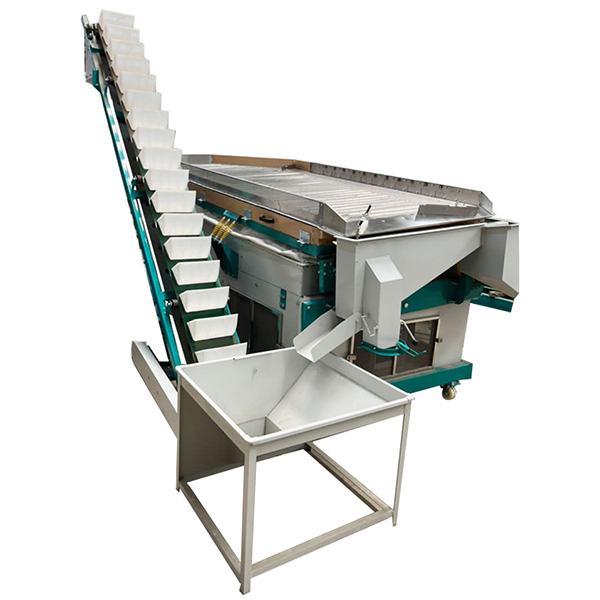
1. Bucket Elevator
Position in Workflow: At the raw material inlet, serving as the connecting link between all upstream and downstream equipment.
Function: Vertically conveys mung beans, enabling automated, continuous feeding for the production line; it minimizes manual handling while reducing material spillage and airborne dust. The transfer of materials between multiple processing stages relies entirely on this device.
2. Primary Cleaning Screen (First-Stage Coarse Cleaning)
Position in Workflow: The initial stage of raw material cleaning.
Function: Processes large impurities, screening out items such as straw, twine, soil clumps, leaves, and large masses of debris, while simultaneously filtering out the majority of coarse dust. It serves to pre-sort the material, thereby preventing large impurities from clogging the fine screens in subsequent stages and protecting downstream equipment.
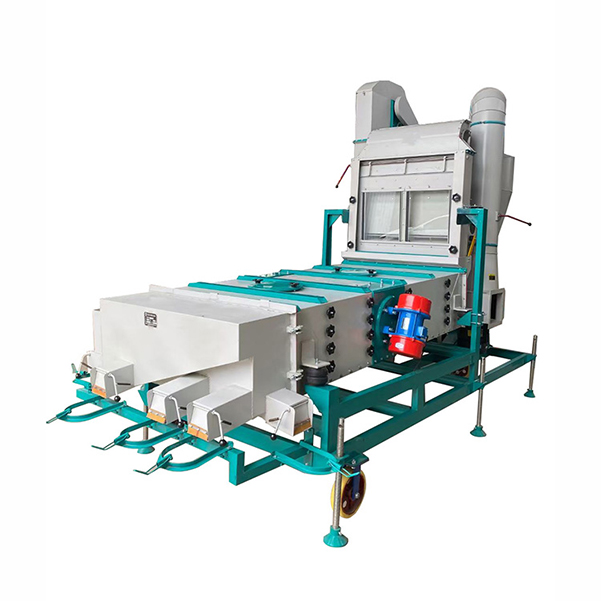
3. Air-Screen Cleaner
Process Position: After preliminary cleaning, before destoning.
Function: Integrates the dual functions of air separation and multi-layer screening.
Air Separation: Utilizes airflow to blow away lightweight impurities such as dust, bean husks, broken cotyledons, shriveled beans, and empty shells.
Screening: Relies on screens with varying mesh sizes to separate fine grit and small miscellaneous debris, while simultaneously standardizing the size of the mung bean kernels and performing a preliminary separation of sound grains from defective ones.
4. Gravity Destoner
Process Position: After air-screen cleaning.
Function: Specifically targets “companion stones”—stones, mud granules, and heavy sand that are similar in size to the mung beans and difficult to remove via screening alone. By leveraging the difference in specific gravity between the beans and the stones, and utilizing a combination of airflow and vibration, it thoroughly removes heavy, hard impurities; this constitutes a critical step for food safety.
5. Grading Sieve
Process Position: After destoning, before color sorting.
Function: Performs fine grading based on kernel size, separating large, intact mung beans from smaller beans and broken fragments. Depending on specific requirements, the output can be divided into various product specifications to facilitate tiered sales and cater to different processing applications.
6. Color Sorter
Process Position: After grading, before final product packaging.
Function: Through optical recognition, it precisely rejects moldy kernels, insect-damaged beans, discolored beans, off-color foreign beans, and deteriorated particles. This significantly enhances the visual appearance and overall quality of the finished product, ensuring compliance with commercial and export standards.
7. Centralized Dust Collection System (Integrated Across the Entire Line)
Process Position: Operates synchronously throughout the entire processing workflow.
Function: Collects dust and lightweight airborne debris generated by the various processing machines, thereby improving the workshop environment and minimizing material loss and dust pollution.
II. Applicable Scenarios for Mung Bean Cleaning Equipment
Raw Material Procurement and Storage: Grain and oil depots, as well as grain collection stations, utilize this equipment to remove impurities prior to receiving and warehousing stock, thereby preventing spoilage caused by contaminants and protecting storage facilities from damage.
Bulk and Bagged Packaging: Specialty grain shops and trading companies employ this equipment for sorting and packaging operations to ensure the superior appearance and purity of their finished products.
Advanced Food Processing: Manufacturers producing items such as mung bean cakes, bean paste, mung bean beverages, and vermicelli use this equipment to purify raw materials, thereby guaranteeing the quality and safety of their final products.
Agricultural Product Export: Products destined for international markets undergo rigorous cleaning, sorting, and color-sorting—in strict compliance with commercial inspection standards—to ensure they meet the specific quality requirements of overseas markets.
Seed Selection: Agricultural breeding centers and high-quality seed production bases utilize this equipment to eliminate shriveled grains, diseased seeds, and impurities, thereby selecting only the most viable and qualified seeds for cultivation.
Local Markets and Small-Scale Processing: Individual workshops and small-scale producers use this equipment for cleaning small batches of grain, catering to the needs of local retail markets and in-house processing operations.
Post time: May-28-2026