

TAOBO Sesame Cleaning Production Line: Primary Cleaning Sieve, Destoner, and Gravity Separator — Functions + Complete Workflow
I. Core Functions of Each Equipment Unit
1. Primary Cleaning Screen (Pre-cleaning & Coarse Sorting)
Removes large impurities: Large foreign objects such as straw, grass stalks, large soil clumps, twine, and leaves found in the sesame seeds;
Eliminates light impurities and dust: Removes dust, grass fragments, empty hulls, and light floating debris; features an integrated air-separation dust removal system;
Screens by particle size: Sifts out fine sand and small fragments while retaining the intact sesame seeds;
Protects downstream equipment: Intercepts large, hard objects in advance to prevent clogging and abrasive wear on the screens of the destoner and gravity separator.
2. Destoner (Specialized Stone Removal)
Specifically designed to remove “companion stones”—stones, small soil clumps, sand grains, and heavy mineral impurities that are similar in size to the sesame seeds and are difficult to remove via standard screening;
Utilizes a combination of vibration, airflow, and specific gravity stratification: Sesame seeds remain suspended and flow forward, while heavier stones sink and travel upward along the incline for discharge; effectively resolves the issue of grit in the final product and serves as a critical piece of equipment for sesame destoning.
3. Gravity Separator (Fine Sorting & Quality Enhancement)
Performs fine sorting based on differences in specific gravity—grading the seeds by weight rather than size:
Removes shriveled seeds, immature seeds, insect-damaged seeds, moldy seeds, and broken sesame seeds;
Further cleans out residual fine sand, heavy soil particles, and other trace heavy impurities;
Separates high-quality, plump sesame seeds from inferior seeds and waste particles, thereby elevating the commercial grade and oil extraction quality of the product.
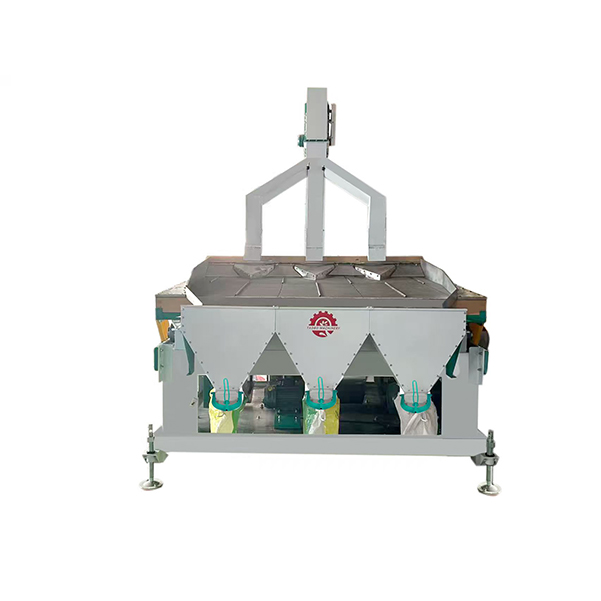
Sesame Cleaning Production Line: Factors Affecting the Stone Removal Efficiency of Destoners
I. Factors Related to Feeding
Feed Rate
Excessive Feed Rate: The material layer becomes too thick; airflow and vibration are unable to effectively stratify the layers, causing stones to be entrained within the sesame seeds, resulting in a drastic decline in destoning efficiency.
Insufficient Feed Rate: The material layer is too thin; airflow easily blows through the layer, leading to material carryover (loss) and stones escaping into the clean product stream, thereby compromising operational stability.
Feed Uniformity
Fluctuations between high and low feed rates, interruptions in the feed stream, or sudden surges result in an uneven material layer (alternating between thick and thin). This disrupts specific-gravity stratification, making it impossible to consistently separate stones that are intermingled with the seeds.
Raw Material Impurity and Moisture Content
If sesame seeds are damp, they become sticky and prone to clumping, reducing material flowability. Consequently, stones cannot freely settle and stratify; instead, they easily become trapped within the sesame seeds and exit through the clean product outlet. The higher the moisture content, the poorer the destoning performance.
II. Factors Related to Airflow Regulation (Most Critical)
Air Volume
Excessive Air Volume: Sesame seeds are blown upward and suspended in the air, drifting along with the stones; this results in stones contaminating the clean product stream and leads to severe material carryover (loss).
Insufficient Air Volume: The airflow lacks the lift to suspend the sesame seeds, causing the material to become dense and compacted. Consequently, stones cannot float upward or “climb” toward the stone discharge end, resulting in a high residual stone content in the clean product.
Uniformity of Air Duct Pressure
Uneven adjustment of baffles or dampers, as well as dust accumulation and blockages within the air ducts, create localized variations in airflow strength. This leads to unbalanced stratification and localized instances of stones escaping into the clean product stream.
III. Factors Related to the Sieve Surface and Mechanical Structure
Sieve Surface Inclination Angle
Excessive Angle: The material flow rate is too fast, resulting in a short residence time; stones flow out before they have sufficient time to separate.
Insufficient Angle: Material flow is sluggish, leading to accumulation and blockages; specific-gravity stratification remains incomplete.
Vibration Frequency and Amplitude
Excessive Vibration: The material bounces excessively, disrupting the specific-gravity stratification process.
Insufficient Vibration:Material fluidization is poor, preventing stones from effectively “climbing” toward and accumulating at the stone discharge end.
Sieve Mesh Condition
Clogged sieve apertures, wear or deformation of the sieve surface, and the accumulation of mud or dust on the screen result in uneven airflow penetration. This degrades the fluidization effect and directly reduces the destoning efficiency.
IV. Characteristics of the Material Itself
Similarity to Stones
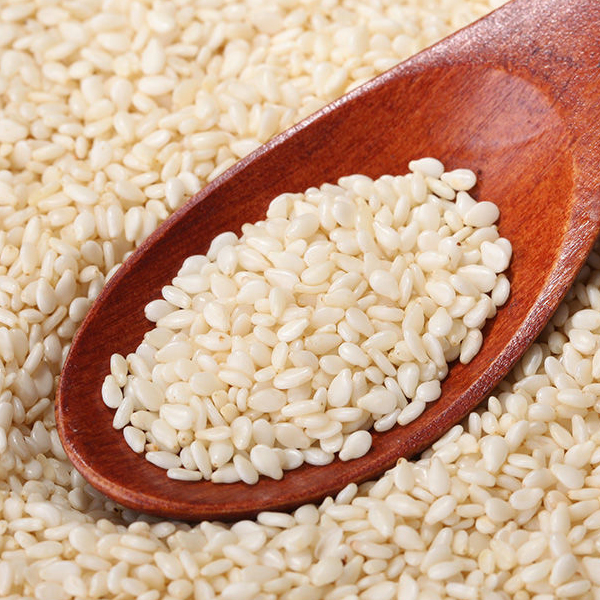
The closer the size, shape, and specific gravity of the stones resemble those of the sesame seeds, the more difficult separation becomes; even slight, improper adjustments can easily result in stones being carried over into the cleaned product.
Types of Impurities
A high presence of soil clods, mud lumps, or fine sand makes it easy for impurities to adhere to the surface of the sesame seeds or clump together, thereby disrupting the stratification process and increasing the difficulty of stone removal.
V. Installation and Maintenance Factors
Equipment Levelness
If the machine body is not level—tilting either forward/backward or left/right—the material flow will deviate; this results in material accumulating on one side while the other side runs empty, leading to inconsistent stone removal performance across the machine’s width.
Sealing and Dust Accumulation
Poor sealing or air leakage at the inlet and outlet ports disrupts the internal air pressure; furthermore, if dust is allowed to accumulate within the machine body and air ducts over extended periods without cleaning, the ducts will narrow, causing a reduction in airflow volume.
Compatibility with Upstream Equipment
If the upstream preliminary cleaning screen performs poorly—failing to remove large pieces of straw or large soil clods in advance—these oversized impurities will enter the destoner, clogging the screen surface and disrupting the material stratification layer, thereby directly compromising the effectiveness of the stone removal process.
Post time: May-13-2026