
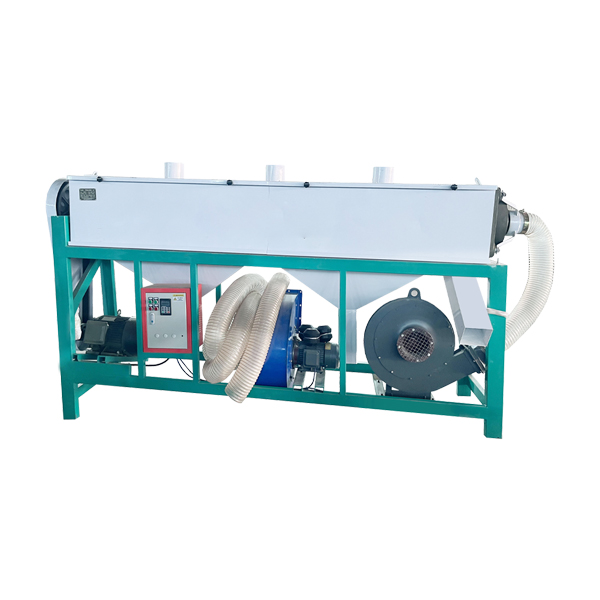
Bean polishing machines are essential processing and quality-enhancing equipment in the bean cleaning process. Their core functions are deep cleaning, brightening, and removing surface imperfections, resulting in cleaner, brighter, and more appealing finished beans, thus increasing their grade and value.
I. Core Functions in Bean Cleaning Equipment
Deep Dust and Impurity Removal: Thoroughly removes floating dust, dirt, bran powder, and fine impurities from the bean surface, solving the “muddy face” problem. This level of fine cleaning is difficult to achieve with air screens and destoners.
Brightening: Through physical friction polishing, the bean skin becomes smooth and bright in color, improving appearance quality and commercial value, especially suitable for export or high-end markets.
Removing Surface Imperfections: Gently rubs away mold spots, insect marks, shallow cracks, and stems from the bean surface, improving appearance and reducing the risk of mold growth.
Reducing Breakage Rate: Using flexible materials such as cotton cloth or canvas for friction, rather than hard contact, the breakage rate is typically ≤0.05%, ensuring the integrity of the beans.
Optimize subsequent processing: Polished beans are more uniform and cleaner, which is beneficial for subsequent grading, packaging, storage or further processing (such as peeling and milling).

II. Standard Workflow (Mainstream Spiral Cotton Cloth Type Machine)
Feeding and Distribution: After preliminary cleaning (air sieving, destoning), the beans are fed into the polishing machine’s feed inlet by an elevator, where they are evenly spread within the feed cylinder to ensure uniform material flow in the subsequent polishing zone.
Spiral Propulsion and Friction Polishing (Core Process): The motor drives the spiral shaft (with cotton cloth/canvas) to rotate, propelling the beans forward along the spiral groove.
Triple friction occurs simultaneously: beans rub against the cotton cloth, beans against each other, and beans against the polishing chamber screen, removing surface dust, dirt, and mold.
The angle and spacing of the spiral blades are designed to ensure continuous friction on the material during flow, while simultaneously conveying it forward slowly.
Impurity Separation and Dust Removal: Dust and fine impurities shed through friction fall through the screen at the bottom of the polishing chamber and enter the dust collection area.
A centrifugal fan removes light dust, while heavier impurities are discharged through the discharge port, achieving simultaneous “polishing + dust removal”. Discharge and Pressure Adjustment: The polished, clean beans are discharged from the outlet. Some models are equipped with a pressure device at the outlet to adjust the material residence time and control the polishing intensity and effect.
Finished Product Collection: The polished beans are directly fed into the next process (grading, packaging) or stored to complete the final processing.
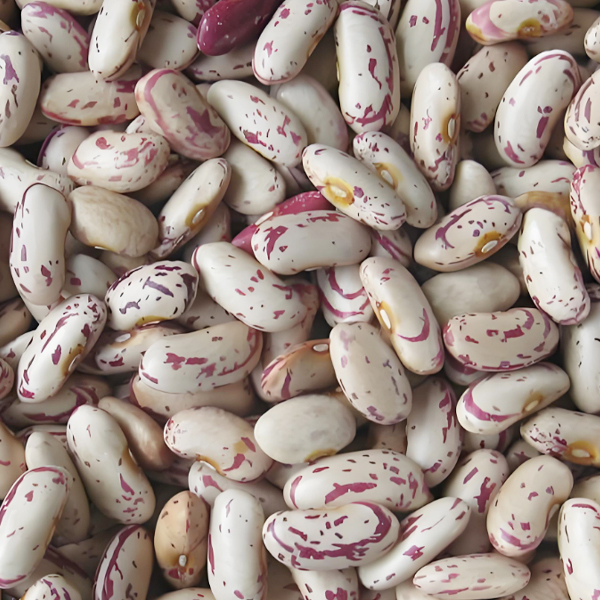
III. Differences and Positioning from Other Cleaning Equipment
Air Screen Cleaner: Removes large impurities, light impurities, and shriveled particles; this is coarse cleaning.
Destoner: Separates adjacent stones and heavy impurities; this is heavy impurity cleaning.
Gravity Meter: Grades particles by density; this is fine grading.
Polishing Machine: Provides surface finishing without altering particle size or density; focuses on cleaning and brightening; it is a key finishing equipment for improving quality.
How to Maintain a Bean Polishing Machine?
I. Daily Maintenance (Per Shift/Daily)
Clean Internal Dust
After each shift, open the observation door and clean the bean chaff and dust from the polishing drum, screen, and spiral to prevent clumping and blockage.
Check Screen Clogs
Lightly brush the screen with a brush to ensure there are no blockages; otherwise, dust cannot be discharged, and the polishing effect will be significantly worse.
Check Fan and Dust Collection Pipes
Check if the airflow is normal, and check for air leaks and dust accumulation in the pipes, ensuring sufficient negative pressure.
Check Feeding and Discharging Smoothly
Avoid bean jamming and material piling up to prevent motor overload.
Listen to Operating Sounds
If abnormal noises or excessive vibration occur, stop the machine immediately for inspection to prevent damage to bearings and the main shaft.
II. Weekly Maintenance
Check Polishing Brush/Polishing Cloth Wear
When the cotton cloth and brush become thin and the friction decreases, replace them promptly; otherwise, the polishing effect will be poor and efficiency will be low. Tighten all screws. Screws on the frame, motor base, feed hopper, and protective cover are prone to loosening and must be tightened one by one.
Clean dust from the reducer and motor surfaces. Poor heat dissipation will shorten their lifespan.
Check chain/belt tension. Too loose a belt will cause slippage and reduced output; too tight a belt can damage bearings.
Post time: Mar-26-2026