
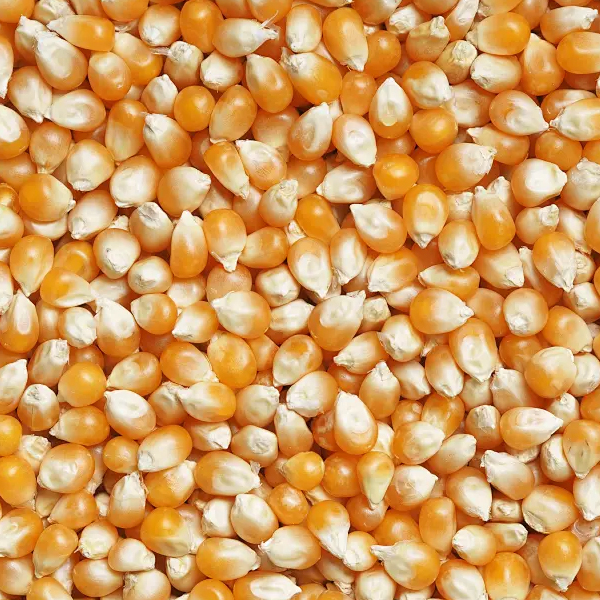
Mexico is the birthplace of maize, and maize is its primary food crop and a cultural symbol. However, in recent years, due to drought and adjustments in planting structure, its yield has fluctuated significantly, and it remains highly dependent on imports.
I. Planting Scale and Status
Planting Area: Approximately 6.6-7 million hectares annually, accounting for nearly 60% of the country’s arable land, making it the most widely planted crop.
Yield: Approximately 23.2-23.7 million tons in 2024/25, the lowest level since 2014.
The USDA forecasts a rebound to 26 million tons in 2025/26, an increase of approximately 12% year-on-year.
Consumption and Self-Sufficiency: Annual consumption exceeds 45 million tons, with a self-sufficiency rate of only about 50%, making it one of the world’s largest maize importers.
II. Distribution of Major Producing Areas
Maize cultivation is widespread throughout Mexico, with the five major producing states accounting for over 52.6% of the national output:
Jalisco: Approximately 3.88 million tons, the core producing region in the west.
Sinaloa: Approximately 3.37 million tons; well-developed irrigated agriculture, high yield (approximately 10 tons/hectare).
Michoacán: Approximately 2.05 million tons.
Guanajuato: Approximately 1.77 million tons.
Estado de México: Approximately 1.72 million tons.
III. Crop System and Seasons
Mexico has two cropping seasons: **summer planting (rainy season) and winter planting (dry season/irrigation):**
Summer maize (70%): Sown from April to August, harvested from October to January of the following year; 85% rainfed, low yield, highly susceptible to climate.
Winter maize (30%): Sown from November to January of the following year, harvested from April to July; mainly irrigated, high yield, concentrated in the northwest (Sinaloa, etc.).
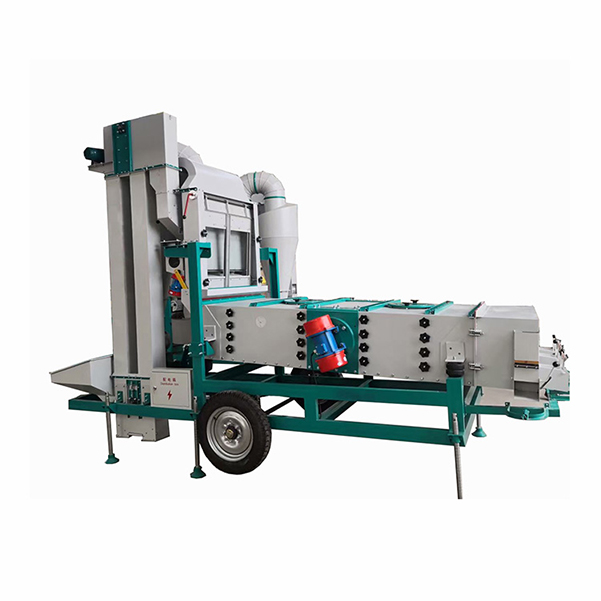
The core principle behind using a wind-and-screen cleaner to remove impurities from corn is a combined process: air separation to remove light impurities, followed by screening to remove oversized and undersized debris. This system can simultaneously eliminate light impurities, large debris, fine particles, and a portion of moldy or shriveled kernels in a single pass, making it the most widely adopted and efficient equipment for the preliminary cleaning of corn.
I. The Complete Process for Cleaning Corn Impurities (Synergy of Wind and Screens)
1. Air Separation: Removing Light Impurities (Step 1: Dust Removal and Light Debris Extraction)
Principle: This stage utilizes the difference in suspension velocity between corn kernels and light impurities. A fan generates a vertical or horizontal airflow; since corn kernels are relatively heavy and possess a high suspension velocity, they settle downward, whereas light impurities—having a lower suspension velocity—are lifted and carried away by the airflow.
Target Impurities: Corn husks, broken cob fragments, straw, dust, shriveled kernels, insect-damaged kernels, and moldy kernels (which typically have a lower density).
Process:
Corn feeds uniformly through the inlet, forming a thin, even layer of material.
A main fan (with an adjustable wind speed of 3–8 m/s) generates an airflow that passes through this layer of material.
Light impurities are drawn into the air duct, collected in a settling chamber or dust collector, and then discharged; the cleaned corn proceeds to the screening stage.
2. Screening: Removing Oversized and Undersized Debris (Step 2: Sizing and Heavy Impurity Removal)
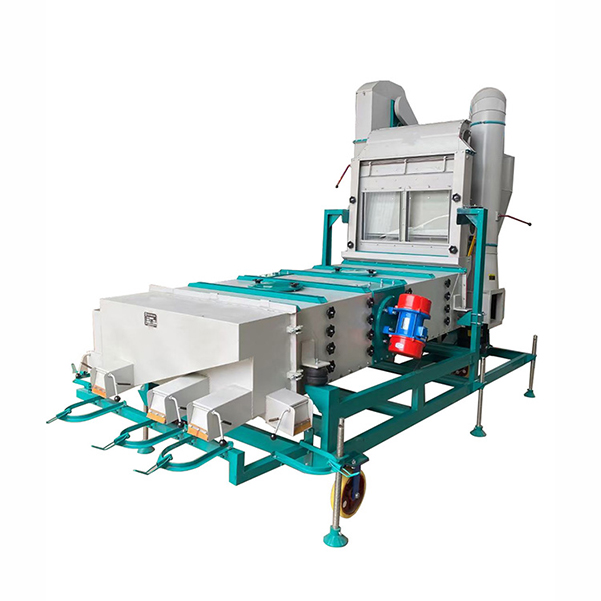
The cleaning machine is typically equipped with 2–3 layers of vibrating screens. These screens separate materials based on particle size, utilizing a reciprocating or linear vibration motion that causes the material to bounce and advance across the screen surface.
Upper Screen (Coarse Screen; Mesh Size ≈ 10–12 mm): Retains large impurities (such as stones, clods of soil, whole stalks of straw, and large cob fragments), which are then discharged through the large-impurity outlet.
Middle Screen (Sizing Screen; Mesh Size ≈ 5–6 mm): Corn kernels pass through the mesh openings and fall to the layer below; smaller impurities (such as sand grains, broken corn fragments, and small soil particles) sift through the mesh and are directed into a collection trough for fine impurities.
Lower Screen (Fine Screen; Mesh Size ≈ 2–3 mm): Provides a final filtration step to remove any remaining fine debris, thereby ensuring the purity of the cleaned grain. 3. Discharge: Separation of Clean Grain and Impurities
The cleaned maize is discharged from the outlet beneath the middle-layer screen, constituting the finished product following the cleaning process.
Light impurities, coarse impurities, and fine impurities are discharged through separate outlets, allowing for their centralized collection and disposal.
II. Cleaning Performance (for Corn)
1. Standard Metrics (Standard Air-Screen Cleaner)
Total Impurity Removal Rate: 95%–98%.
Light Impurity Removal Rate: >98% (Hulls, cobs, dust, and shriveled kernels are virtually eliminated).
Coarse/Fine Impurity Removal Rate: 95%–99% (Stones, soil clumps, and broken kernels are virtually eliminated).
Clean Grain Impurity Content: ≤1% (can reach 0.5%–0.8%).
Cleaning Loss Rate: ≤1.5% (High-quality models can keep this within 1%).
2. Cleaning Capability for Various Impurities
✅ Highly Effective Removal: Corn hulls, cobs, stalks, dust, shriveled kernels, insect-damaged kernels, and most moldy kernels.
✅ Good Removal: Large stones, large soil clumps, fine sand, and broken corn kernels.
⚠️ Requires Auxiliary Equipment: “Companion stones”—stones similar in size and specific gravity to corn kernels—are difficult for an air-screen cleaner to separate completely; a gravity separator is required to handle these.
3. Key Factors Affecting Performance
Fan Air Speed: If the air speed is too low, light impurities will not be fully removed; if too high, it may carry away intact corn kernels, increasing losses.
Sieve Aperture Size: Must be matched to the size of the corn kernels (e.g., 5–6 mm slotted sieves for corn); an incorrect aperture size will result in grain leakage or incomplete impurity removal.
Vibration Frequency/Amplitude: If the frequency is too low, the material will not disperse properly, leading to insufficient screening; if too high, it may easily cause the corn kernels to break.
Feeding Rate: A uniform and stable feeding rate yields the best results; overloading will lead to incomplete screening and an increased impurity content in the clean grain.
Post time: Mar-14-2026