
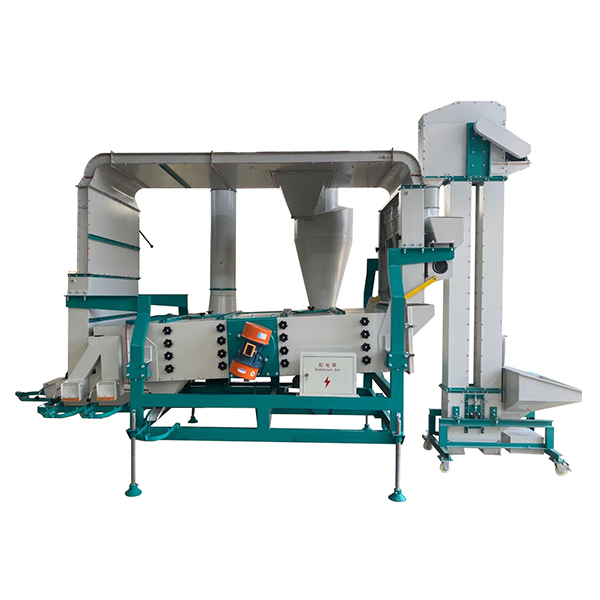
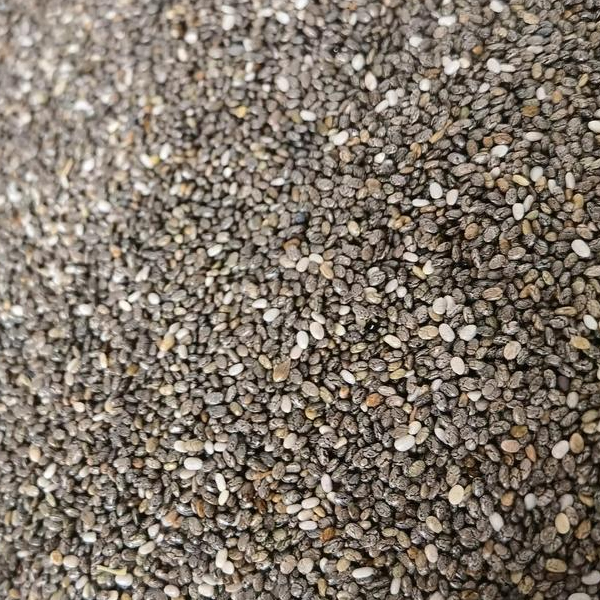
As the world’s largest producer of chia seeds, Paraguay holds a central position in the global chia seed market thanks to its suitable natural environment, mature cultivation methods, and strong export capabilities.
Basic Cultivation Conditions
Suitable Production Areas and Environment: Chia seed cultivation is concentrated in highland and open field areas such as Alto Paraguay and San Pedro provinces. These areas have subtropical climates, fertile soils, ample sunshine, and suitable rainfall, meeting the requirements of chia seed growth for dry periods and mild temperatures, laying a natural foundation for high-quality and high-yield chia seeds.
Significant Cultivation Scale: The estimated chia seed cultivation area in Paraguay in 2025 is as high as 220,000 hectares. However, the crop was damaged by high temperatures and drought during the initial sowing in February of that year. Farmers subsequently replanted new plants, which are susceptible to low temperatures from June to August. Fortunately, subsequent climate conditions are suitable, and if frost damage is not severe, the yield is expected to reach 70,000 to 100,000 tons.
Industry and Market Performance
Exports Continue to Surge: Paraguay’s chia seed industry is export-oriented. Export markets cover 73 countries worldwide, with the United States, Germany, and Japan being major destinations. High-quality organic chia seeds are highly sought after in these health food markets.
Industry Drives Economic Development: Chia seed cultivation is low-cost and has high export value, making it a mainstay of many rural communities’ economies. Simultaneously, the government and private sector, through agricultural development projects and incentive policies, encourage farmers to expand cultivation, further strengthening the chia seed industry and making it increasingly important in the country’s agricultural exports. Even Bolivian exporters purchase chia seeds from Paraguay for re-export, indirectly demonstrating Paraguay’s advantages in production and supply capacity.
In response to the processing needs of chia seeds, the air-screen cleaner plays a crucial role as a core piece of equipment for post-harvest cleaning of grains/seeds.
I. Core Working Principle of the Air Screen Cleaner The air screen cleaner, based on the differences in the physical properties of materials (specific gravity, particle size, shape), achieves efficient separation of seeds and impurities through a combination of “air force separation + vibrating screen grading.” The core process is as follows: **Feed Pre-treatment:** Chia seeds (containing straw, broken shells, weed seeds, soil, and other impurities) enter the equipment evenly through the feed inlet. After being dispersed by the guide plate, local accumulation is avoided, preventing it from affecting the cleaning effect.
**Air Force Separation (Specific Gravity Separation):** A blower generates a stable airflow (adjustable wind speed), which passes vertically or horizontally through the material layer.
Lighter impurities (such as straw, empty shells, and dust) are carried away by the airflow and fall into the impurity collection bin.
Chia seed particles, due to their higher specific gravity, overcome airflow resistance and continue to fall, entering the vibrating screen grading stage.
**Vibrating Screen Grading (Particle Size Separation):** The screen body is driven by an eccentric shaft or a vibrating motor to perform reciprocating vibration (amplitude and frequency are adjustable). The screen adopts a multi-layer design (usually 2-3 layers). The system consists of three layers, each with a different mesh size: Upper layer: Mesh size larger than the chia seed diameter, removing large impurities (such as stones, large straw pieces, and broken seed clumps); Middle layer: Mesh size matched to the chia seed diameter, allowing qualified chia seeds to pass through while retaining medium-sized impurities; Lower layer (optional): Mesh size smaller than the chia seed diameter, filtering out fine impurities (such as soil, debris, and small weed seeds); Finished product and impurity separation: Qualified chia seeds are discharged from the finished product outlet, while various impurities are collected from their respective impurity outlets, achieving a closed-loop cleaning process.
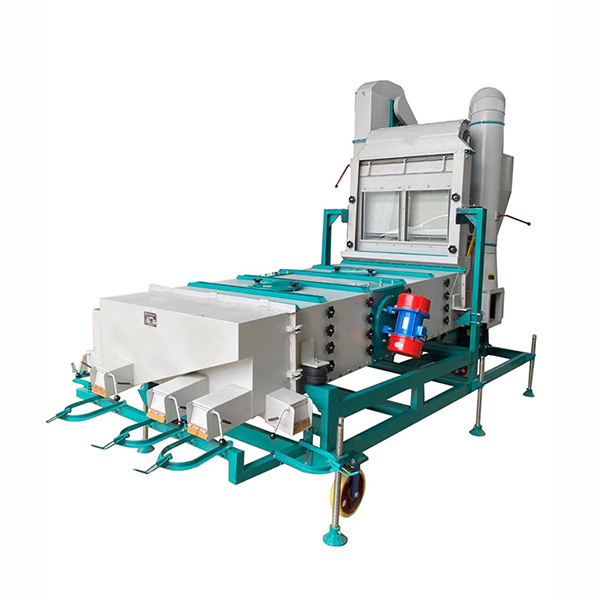
Chia seeds are characterized by their small size, light weight, and thin, brittle shell. The design of the air-screen cleaner needs to be specifically tailored to this need. Its core functions include: Precisely removing various impurities:
Light impurities: straw, empty shells, weeds, dust;
Heavy impurities: clods of soil, small stones, metal fragments (introduced during harvesting);
Improperly sized seeds: excessively small shriveled seeds, excessively large broken seeds, or other impurities;
After cleaning, the impurity rate of chia seeds can be reduced to below 0.5%, meeting organic food export standards (such as EU and US organic certification requirements);
Ensuring seed purity and quality:
Avoiding mixing of different batches and varieties of chia seeds (easy machine cleaning, no residue), especially suitable for the dispersed planting and centralized processing model of Paraguayan smallholder farmers;
Removing shriveled and broken seeds, improving the thousand-seed weight and germination rate of chia seeds (if used for seed propagation), or ensuring the uniformity of commercial seeds (for food processing);
Reducing losses and improving processing efficiency:
Air speed and amplitude can be precisely adjusted, with a loss rate controlled to 1%; Within; Single machine processing capacity can reach 1-10 tons/hour (depending on the model), far exceeding manual cleaning, and is suitable for Paraguay’s large-scale export processing needs;
Our air screen cleaner can also process grains, beans, sesame seeds, coffee beans and other crops. If you are interested in our air screen cleaner, please contact us as soon as possible for a quote!
Post time: Nov-26-2025