
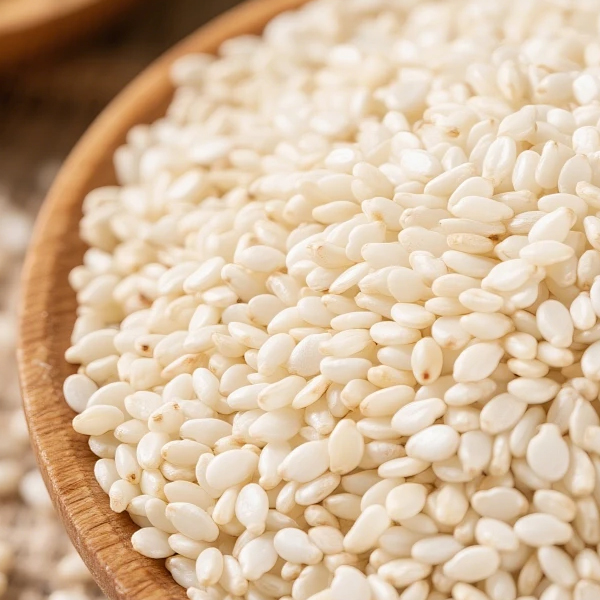
The air-sieve cleaner serves as the core primary cleaning equipment at the beginning of a sesame processing line. It utilizes a dual-mechanism approach—combining vibration screening (based on size differences) and air separation (based on aerodynamic differences)—to remove impurities. It is specifically designed to handle the unique characteristics of sesame seeds: small grain size, high levels of light impurities, and a tendency to trap dust.
I. Working Principle of Sesame Cleaning
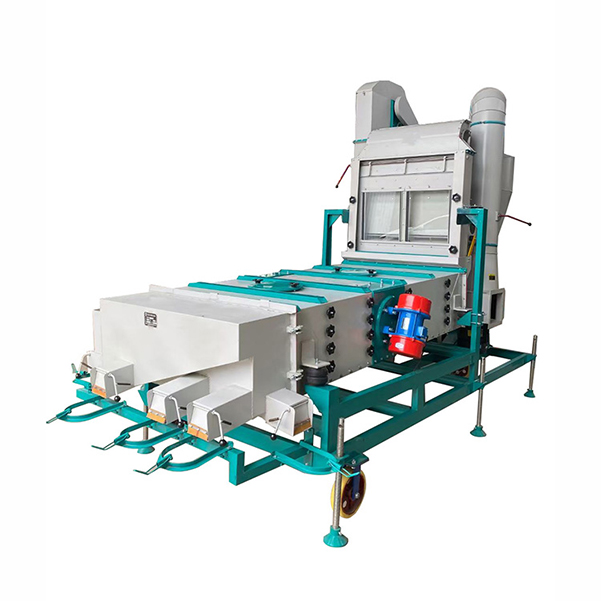
The machine operates through two stages: a vertical air separation system and a multi-layer vibrating sieve system. Most models employ a configuration featuring initial air separation followed by secondary air separation at the sieve surface:
1. Air Separation Principle (Separation based on terminal velocity/specific gravity)
Plump sesame seeds, shriveled seeds, hulls, plant debris, and airborne dust possess different critical terminal velocities.
An adjustable fan generates a directional airflow:
Materials with low specific gravity and low terminal velocity—such as sesame skins, straw fragments, dust, empty/shriveled seeds, and broken hulls—are entrained by the airflow and conveyed to the dust collection unit for discharge.
Plump sesame seeds, having higher specific gravity and greater resistance to the airflow, pass through the airflow zone and fall into the vibrating sieve.
Given the tiny size of sesame seeds, precise control of wind speed is essential; excessive airflow risks carrying away intact seeds, while insufficient airflow fails to remove thin hulls and shriveled seeds.
2. Vibration Screening Principle (Separation based on geometric dimensions)
The sieve box undergoes reciprocating linear vibration and is fitted with elongated punched-hole screens tailored for sesame (which are less prone to clogging than round-hole screens). A double-layer sieve configuration is typically used:
Upper sieve (large-aperture screen): Retains large impurities—such as straw, clods of soil, and large weed seeds—and discharges them through the large-impurity outlet.
Lower sieve (apertures matched to sesame grain size): Retains intact sesame seeds, conveying them forward; fine sand, broken sesame fragments, and fine dust pass through the apertures and are discharged as small impurities.
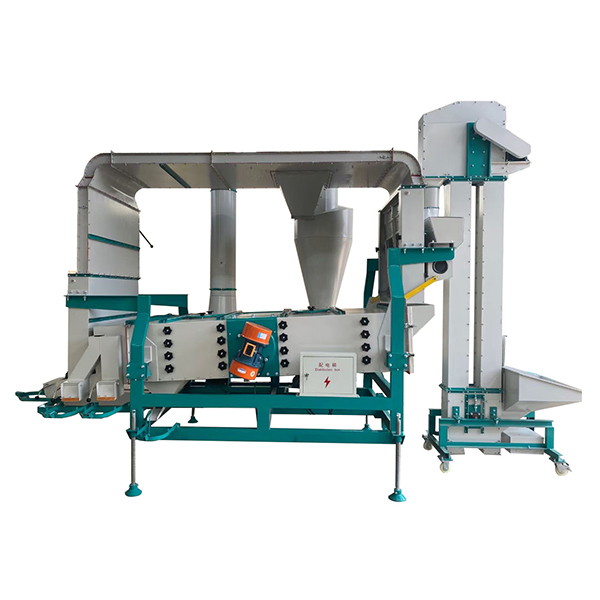
3. Complete Material Flow
Raw sesame → Elevator feeding → Preliminary removal of light impurities via vertical air separator → Layered separation on vibrating screen → Secondary removal of residual hulls/shells via auxiliary airflow across the screen surface → Discharge of qualified sesame.
II. Process Significance of Air-Screen Cleaning Machines for Sesame
1. Efficient upstream impurity removal to reduce the load on downstream equipment
Newly procured raw sesame contains significant amounts of stalks, dust, pod fragments, and shriveled or empty grains. Removing the majority of light and oversized/undersized impurities early on prevents dust from clogging elevators, causing wear on gravity separators, or contaminating color sorter lenses; this extends the service life of the entire production line and ensures stable, continuous operation.
2. Enhancing raw material quality and stabilizing finished product purity
Removing shriveled grains, broken kernels, and hull fragments improves sesame uniformity. Sesame pre-treated via air-screening is better prepared for subsequent gravity-based destoning and color sorting, making it easier to achieve a finished product purity of over 99.5%—meeting standards for food-grade and export-quality sesame.
3. Reducing processing losses and increasing oil yield/commercial value
Empty/shriveled sesame and broken hulls have negligible commercial value and very low oil content. Separating them early prevents non-productive material from consuming processing capacity. Plump, intact sesame seeds proceed to subsequent roasting, oil extraction, and dehulling stages, thereby increasing oil yield and reducing energy consumption.
4. Improving the production environment through eco-friendly dust removal
The system is equipped with cyclone dust collection to gather dust and debris, eliminating the airborne dust associated with open winnowing methods and ensuring compliance with environmental and safety standards for food processing plants.
Summary of Materials Suitable for Air-Screen Cleaners
Core Sorting Logic: Combines size-based screening with airflow separation (winnowing). It is suitable for granular crops and short-grain produce where impurities can be separated based on differences in terminal velocity and particle size. Commonly used in raw grain procurement, seed processing, and the pretreatment of oilseed raw materials.
I. Oil Crops (Most Widely Used)
Sesame, rapeseed, flaxseed, sunflower seeds, safflower seeds, castor seeds
Soybeans, peanuts (kernels), cottonseed, perilla seeds
II. Cereal Grains
Wheat, corn, rice, sorghum, barley, oats, buckwheat
Millet, rye
III. Legumes and Specialty Grains
Mung beans, adzuki beans, kidney beans, pinto beans, chickpeas, lentils, pigeon peas
Cowpeas, black soybeans, fava beans
IV. Vegetable, Flower, and Forage Seeds
Seeds for vegetables such as Chinese cabbage, radish, cilantro, spinach, onion, and Chinese chives
Forage seeds (e.g., alfalfa, ryegrass), flower seeds
V. Cash Crops and Specialty Materials
Coffee beans, cocoa beans
Spice granules (e.g., Sichuan pepper, fennel seeds)
Melon/gourd seed raw materials (e.g., pine nuts, pumpkin seeds, watermelon seeds)
Post time: Jul-27-2026