
.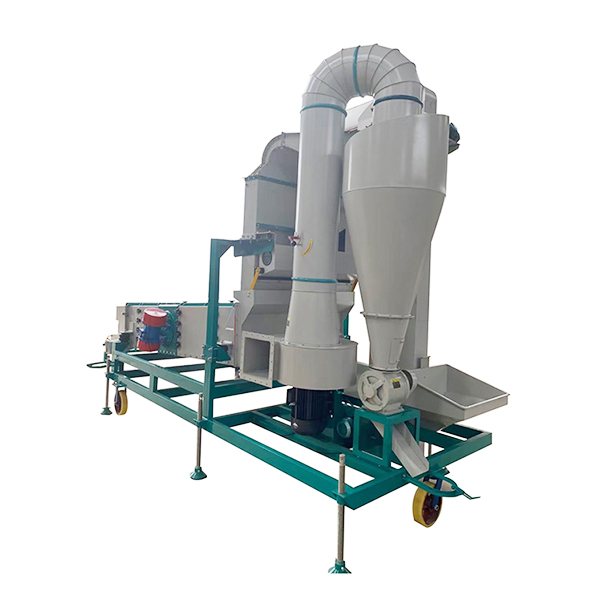
Air Screen Cleaner
The air-screen cleaner is a core piece of equipment for the preliminary and coarse cleaning of grains and oilseeds. It integrates air separation with multi-layer vibrating screening, utilizing differences in particle size, specific gravity, and terminal velocity to physically remove impurities. Widely used for the pre-cleaning and coarse cleaning of crops such as rapeseed, sesame, pinto beans, mung beans, soybeans, and wheat, it serves as the critical first stage in a complete cleaning production line.
Core Working Principle
Material is evenly fed into the inlet by a conveyor and spreads out to flow across the multi-layer screens under the action of vibration. The top screen captures large impurities, the middle screen allows the target material to pass through, and the bottom screen removes fine debris like sand and soil. An integrated air suction system carries away light impurities to a settling chamber for separation and discharge, while the heavy, qualified material moves down the screen surface to the outlet; large, fine, and light impurities are discharged through their respective outlets. Built-in rubber cleaning balls strike the screens repeatedly to minimize mesh clogging.
Core Functions
1. Pneumatic removal of light impurities: Uses an airflow channel to separate empty hulls, shriveled seeds, grass clippings, straw fragments, and dust from the rapeseed; low-density, substandard seeds and debris are suctioned out, settled, and discharged, effectively eliminating underdeveloped seeds at an early stage.
2. Multi-layer vibrating screen grading and impurity removal: The top screen captures large impurities such as straw, clods of earth, weed clumps, and large foreign beans; the middle screen allows high-quality rapeseed to pass through while blocking oversized weed seeds; the bottom fine screen removes fine sand, mud powder, and tiny broken seeds, completing the separation of both coarse and fine impurities.
3. Front-end coarse cleaning and load reduction: Serving as the primary initial processing unit, it removes the majority of foreign impurities beforehand. This prevents stones and straw from entering destoners or oil presses, reduces wear and clogging of screens and press components, alleviates the processing burden on downstream gravity and color-sorting stages, and ensures a continuous, stable feed for the entire production line.
4. Material loosening and spreading: Uses screen vibration to break up damp, clumped rapeseed, spreading the material into a uniform layer to facilitate subsequent stratified sorting.
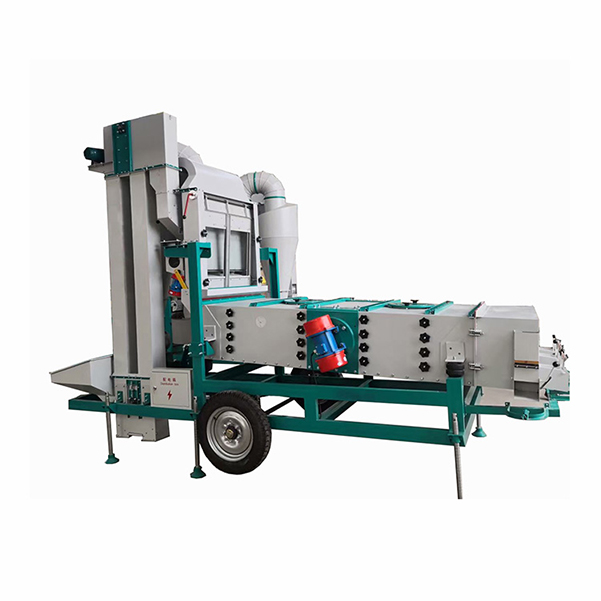
During the harvesting, drying, and transport of raw rapeseed, various impurities become mixed in. Based on their physical characteristics, these can be classified as light impurities, large impurities, fine impurities, heavy impurities of similar size (co-sized heavy impurities), and diseased or deteriorated seeds. These impurities compromise oil quality and cause wear on processing equipment; specialized removal methods—such as air-screen cleaning, destoning, magnetic separation, and color sorting—are required to eliminate them.
Light Impurities
Empty hulls, shriveled seeds, straw fragments, grass clippings, plant debris, weed seeds, and dust. These impurities have low specific gravity and are primarily removed by the airflow system of air-screen cleaners. Shriveled seeds and empty hulls have very low oil content; if left in large quantities, they reduce the oil yield. Dust creates a dusty workshop environment and can interfere with subsequent pressing operations.
Large Impurities
Straw, clumps of grass, soil clods, mud lumps, weed roots, and large foreign legumes. These particles are significantly larger than rapeseed and are intercepted and discharged by the upper, coarse-mesh screen of the cleaner. Large soil clods and straw can easily jam the inlets of elevators and oil presses, damaging components such as the press screw and pressing chamber.
Fine Impurities
Fine sand, mud powder, tiny rapeseed fragments, and minute weed seeds. These particles are smaller than rapeseed and are separated via the lower, fine-mesh screen. If fine sand enters the oil pressing equipment, it accelerates wear on the press screw and press rings, increases sludge formation, and causes the oil to become cloudy.
Heavy Impurities of Similar Size (Most Difficult to Remove)
Stones and small soil pellets of a size similar to rapeseed; these are difficult to separate using standard air-screen cleaners or airflow. Separation requires a gravity-based destoner, which utilizes differences in specific gravity. Stones entering the oil press can easily cause impact damage to the equipment.
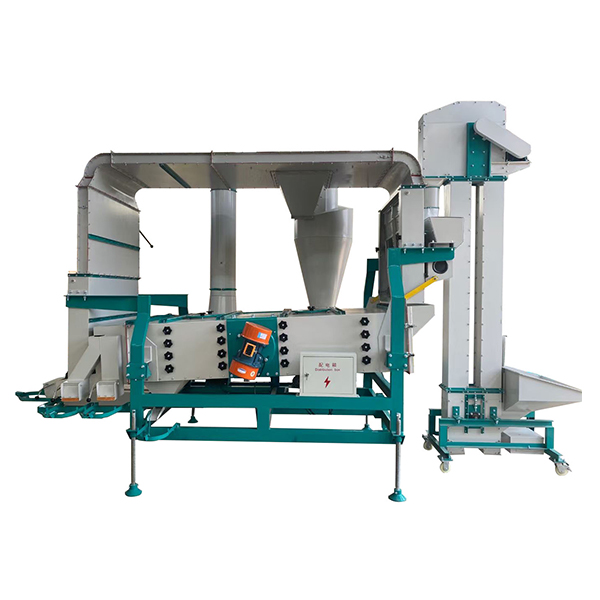
The air screen cleaner processes rapeseed by combining airflow with a multi-layer vibrating screen system, separating impurities based on differences in weight, particle size, and terminal velocity (suspension speed). The machine conveys material via vibration while a fan generates a continuous vertical airflow to facilitate grading and impurity removal.
Upon feeding, the rapeseed is evenly distributed across the screen surface. The top layer, featuring a large-aperture vibrating screen, captures coarse impurities—such as stalks, stems, soil clods, foreign beans, and weed clumps—and discharges them off the screen surface. The middle screen layer is sized to match the rapeseed diameter, allowing qualified seeds to pass through while blocking larger weed particles and seed clusters. The bottom fine-mesh screen sifts out fine soil, sand, tiny weed seeds, and broken seed fragments.
An air suction duct positioned above the screen surface utilizes airflow for separation: lightweight impurities—including shriveled seeds, stem/leaf fragments, dust, empty hulls, and grass clippings—are drawn away by the airflow into a settling chamber for collection and discharge. Plump rapeseed, being heavier, remains unaffected by the airflow and continues to flow downward along the screen surface.
Throughout the process, the material is continuously vibrated and spread into a thin layer to prevent clumping or piling, ensuring airflow can penetrate the material bed for effective removal of light impurities. Following multi-layer screening and pneumatic cleaning, the majority of coarse impurities, fine debris, and shriveled seeds are removed. This completes the pre-cleaning and rough cleaning stages, thereby reducing the processing load on downstream destoners and color sorters, minimizing equipment wear, and enhancing the purity of the final product.
Key Advantages
1. Combines air separation and screening into a single operation; one machine simultaneously handles large impurities, fine impurities, and light/shriveled seeds, offering high process integration and a compact footprint.
2. Designed for small oilseeds like rapeseed; both vibration intensity and airflow are adjustable, allowing for operational tuning based on impurity levels and ensuring strong adaptability to fluctuations in raw material quality.
3. Wide processing capacity range, suitable for everything from small-scale oil workshops to large oil processing plants; supports continuous feeding for uninterrupted industrial production, with low energy consumption and cost-effective operation.
4. Uses physical separation without chemical contact; preserves the integrity of the rapeseed coat and oil quality, ensuring no negative impact on subsequent oil extraction processes.
5. Features a built-in screen cleaning mechanism to minimize clogging of screen apertures by small seeds, reducing the frequency of manual cleaning and simplifying maintenance.
Post time: Aug-06-2026