
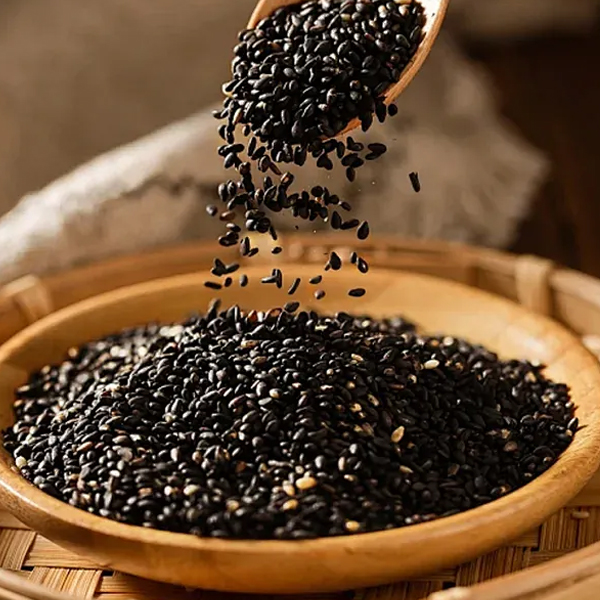
Sesame is notoriously “difficult to handle” as an oilseed. Its seeds are tiny—only a few millimeters in size—with a low thousand-kernel weight, high oil content, and thin, brittle hulls. After harvest, the raw crop is a chaotic mixture of broken pods, stalk fragments, shriveled or moldy seeds, soil, sand, gravel, foreign matter, discolored seeds, and even metal scraps. Because these impurities vary significantly in weight yet are similar in size to the sesame seeds themselves, they remain tightly intermingled. This combination of small size and complex contamination makes the cleaning process the most demanding stage in sesame oil processing. Manual winnowing and sieving are inefficient—yielding only a few tons per day—and the final purity depends entirely on the subjective “feel” of an experienced operator. In contrast, the air-and-screen cleaner has become the indispensable core equipment for sesame processing; it transforms a task once reliant on human eyes, hands, and experience into a precise, repeatable physical process where airflow and mechanical screening work in tandem, with fully adjustable parameters.
The primary function of an air-and-screen cleaner is to break down a jumbled mass of raw material into distinct, controllable sorting streams. At the intake, a uniform feeding mechanism spreads the sesame into a thin, stable layer. While this step may seem minor, it serves as the foundation for the entire cleaning process: if the material layer varies in thickness, the airflow cannot penetrate it evenly, and the screens cannot perform effectively—rendering even the best-engineered machinery unable to reach its full potential. Once the material is spread evenly, it enters the air-separation stage, which leverages the differences in “suspension velocity” between the sesame seeds and the lighter impurities. An adjustable upward airflow passes through the curtain of material, lifting away light debris—such as pod fragments, leaf bits, shriveled seeds, and dust—while the plump, high-quality seeds fall steadily downward. The airflow is not static; it can be adjusted in real-time based on the moisture content and impurity levels of the raw material. If the airflow is too weak, light impurities remain; if it is too strong, good seeds are blown away. The true mastery lies in achieving that perfect, precise balance. The screening process that follows air separation serves as the definitive stage for grading and quality control in an air-and-screen cleaner. Given the fine nature of sesame seeds, the screen mesh size, number of layers, vibration amplitude, and tilt angle must all be precisely tailored to the crop. The top layer traps large impurities—such as pod fragments, stalk segments, and clusters of weed seeds. The middle layer—the most critical and challenging stage—separates the sesame seeds from fine impurities of similar size. The bottom layer acts as a final check, removing any remaining small debris or broken kernels that may have slipped through. The screen assembly employs a low-speed, high-amplitude, flexible reciprocating motion; this causes the material to advance across the screen surface in a series of “leaps” rather than being dragged or scraped forward. This approach ensures high penetration with minimal friction—the seeds effectively “walk” across the surface rather than being “rubbed” or abraded, which is the key to achieving a low damage rate. By combining air separation with mechanical screening—addressing both weight and size differences—the system creates complementary pathways: light impurities are removed via the airflow, while coarse and fine debris are separated by the screens. Raw material enters and clean seeds emerge; the process is designed to prevent backflow, material accumulation, or clogging, allowing a single machine to handle the entire transformation from raw, uncleaned stock to a finished, high-quality product.
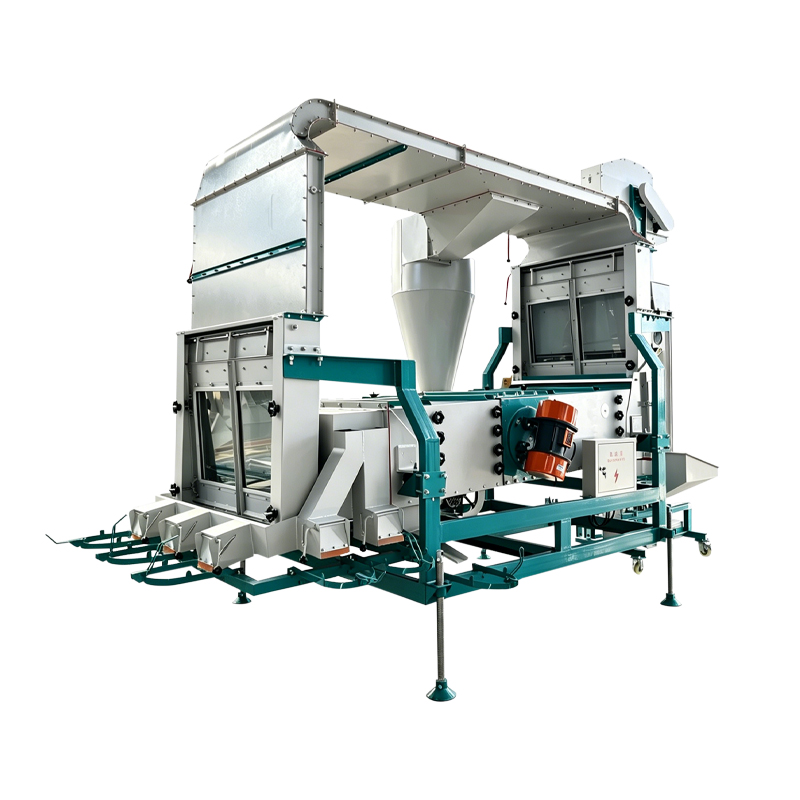
The primary advantage of air-screen cleaning machines in the context of sesame processing is a significant leap in capacity and efficiency. A single unit can process several tons per hour—with models available for capacities ranging from two or three tons up to five tons or more per hour. Through variable-frequency speed control and adjustable feed rates, the machine offers flexible operation: it can run at lower speeds for precise processing of small, diverse batches, or operate at full capacity for high-efficiency, continuous production—all within one unit. Where previously dozens of workers were needed in shifts to process just a few tons, now one or two operators can oversee the entire line, leading to reductions in labor costs, space requirements, and losses from rework.
A second advantage is the ability to achieve a balance between “thorough cleaning” and “minimizing breakage.” Sesame seeds are thin, brittle, and oil-rich, making them highly sensitive to rough handling. Air-screen cleaning machines rely on airflow and gentle screen oscillation for separation; there is no harsh mechanical compression or high-speed abrasion. Furthermore, drop heights and conveyor speeds are kept to a minimum, effectively controlling breakage and preventing further damage. For oilseed processing, this is critical: purity determines pressing efficiency and oil flavor, while the breakage rate dictates the final yield. By optimizing both, the full value of every ton of raw material is preserved.
A third advantage is the flexibility and customizability of operational parameters. Airflow, vibration amplitude, screen inclination, mesh aperture, and the number of screen layers are all adjustable rather than being fixed at the factory. Since the composition of impurities varies significantly based on the sesame’s origin, variety, and moisture content, the equipment is designed to adapt to the material—not the other way around. This versatility means that the same air-screen technology—by simply swapping screens or adjusting airflow—can be applied to a wide range of other small-grain oilseeds and specialty crops, such as rapeseed, chia seeds, quinoa, chili seeds, and white kidney beans. A single machine can support production lines for multiple product categories, providing the flexibility needed to adapt to changes in raw material composition.
A fourth advantage is operational stability and ease of maintenance. The design contains no complex, fragile, or high-precision components; parts such as screens, dampers, and drive mechanisms are standard, easily replaceable items. Routine maintenance consists primarily of cleaning the screens, inspecting air ducts, and tightening fasteners, and operators can be trained to run the equipment in just half a day. The system delivers consistent, reliable performance during continuous operation—ensuring quality remains stable regardless of which individual is on duty—a level of consistency that manual sorting can never provide.
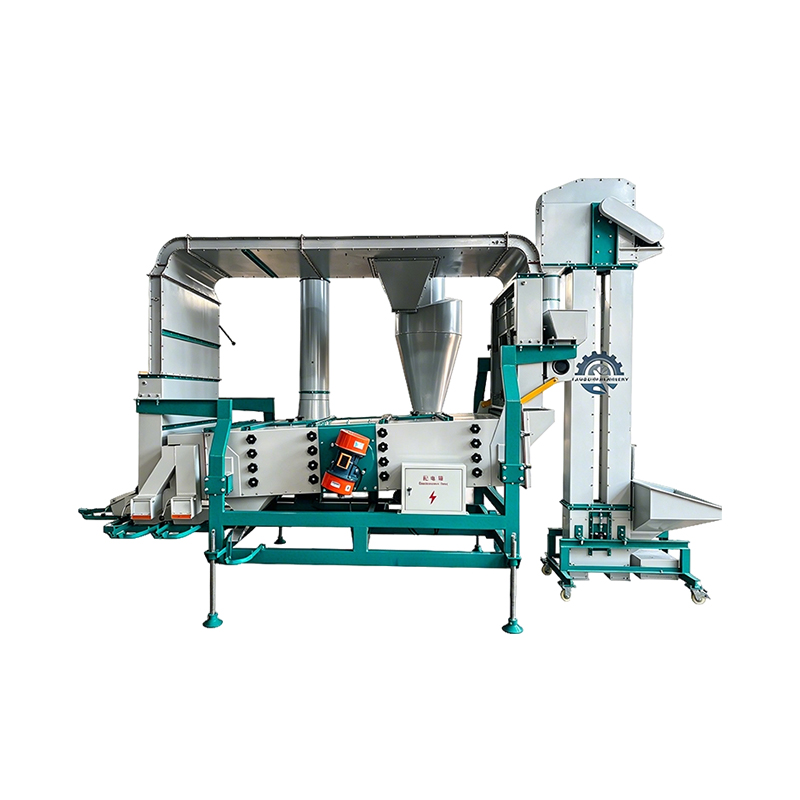
In terms of performance, three key metrics stand out: product purity, breakage rate, and processing capacity. Through the precise integration of air-based separation and mechanical screening, the final product achieves a stable purity level of 99.5%, with contaminants—such as soil, sand, stones of similar size, light debris, and discolored grains—reduced to a negligible minimum. Low linear speeds and gentle screening motions minimize mechanical damage and breakage, effectively boosting both yield and oil extraction rates. With a processing capacity reaching several tons per hour, the need to rely on overtime to meet order deadlines becomes a thing of the past. Furthermore, the benefits are clearly reflected in the bottom line: lower labor costs, reduced rework and waste, higher product purity, better market pricing, and improved storage stability. The return on investment for a cleaning line often becomes apparent as early as the first processing season.
Behind the equipment lies a foundation of manufacturing expertise. Hebei Taobo Machinery has long specialized in agricultural product cleaning and processing equipment. The company operates a 10,000-square-meter production facility, employs a research and manufacturing team of over 100 people, holds more than a dozen technical patents, and exports its products to over 50 countries and regions worldwide. Whether for individual machines or complete processing lines—ranging from standard models to customized solutions tailored to specific material characteristics—the company provides comprehensive support. This includes everything from screen selection, airflow calibration, and process layout to installation, commissioning, and operational training, ensuring that the equipment is ready for stable, immediate use upon arrival.
Though sesame seeds are small, the cleaning stage is a critical factor that determines the value of the entire processing chain. By delivering a capacity of several tons per hour, 99.5% purity, and gentle handling that minimizes damage, air-screen cleaning machines empower processors to ensure that every step of a sesame seed’s journey—from the field to the oil mill—is cleaner, more efficient, and more profitable. Move beyond the need to boost output simply by adding more manual labor; the next phase of modern grain and oil processing begins with choosing the right air screen cleaner.
Post time: Nov-16-2026