
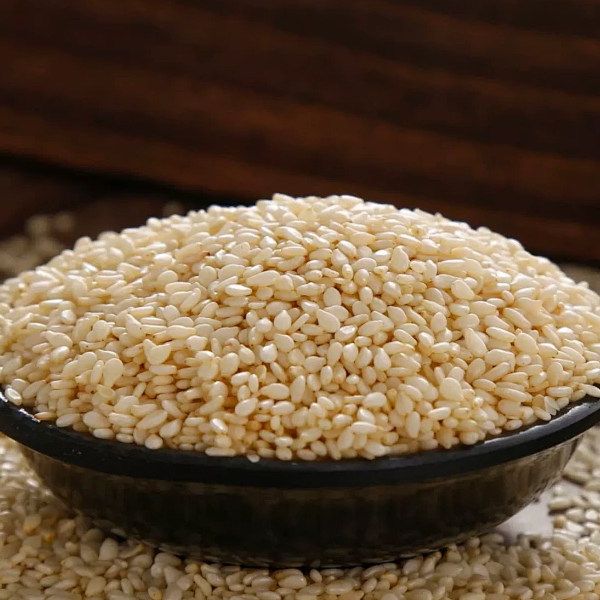
Sesame-Specific Air-Screen Cleaner: Core Advantages
Tailored to the specific characteristics of sesame—including small grain size, high dust content, abundance of light impurities and shriveled grains, susceptibility to contamination, and diverse origins—this air-screen cleaner serves as the core workhorse of any sesame cleaning production line. Its key advantages are as follows:
I. Multifunctional, Integrated Impurity Removal: Powerful Comprehensive Cleaning Capability
Combining vibrating sieving with multi-stage air separation in a single unit, this machine simultaneously separates various types of impurities:
By Particle Size: Separates large impurities (such as grass stems and soil clods), small impurities, fine sand, and broken grains;
By Weight/Bulk Density: Utilizes airflow to separate light impurities, shriveled grains, shell fragments, dust, and moldy or lightweight grains;
Effectively handles the common mixed impurities found in imported sesame, performing initial purification in a single pass to minimize the need for multiple machines in series.
II. Layered, Multi-Stage Sieving: High Precision and Flexible Grading
Features a multi-layer composite sieve deck with customizable mesh sizes specifically designed for sesame. The upper and lower sieve layers perform distinct functions:
The upper layer removes large impurities; the middle layer retains the intact sesame grains; and the lower layer sifts out fine soil and sand;
The sieve deck angle and vibration frequency are adjustable, allowing for rapid adaptation to the varying grain sizes and impurity profiles of sesame sourced from different regions across Africa, the Middle East, and Southeast Asia, ensuring stable and consistent sorting performance.
III. Independent, Multi-Channel Air Separation: Low Grain Loss and Thorough Removal of Light Impurities
Equipped with multiple sets of adjustable fans for air intake, air recirculation, and dust extraction, allowing for independent control of airflow volume:
Gentle airflow removes floating dust, shriveled grains, and shell fragments without blowing away the plump, intact sesame grains;
Effectively resolves critical issues associated with imported sesame, such as high dust levels, excessive fibrous/hairy impurities, and an abundance of floating contaminants;
Features a closed-loop air duct system with dedicated dust extraction ports to prevent dust leakage, ensuring a clean and tidy workshop environment that meets both environmental protection standards and port processing regulatory requirements.
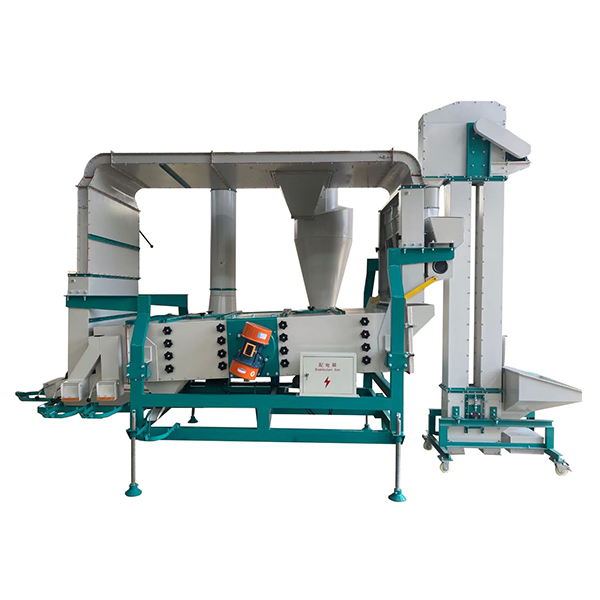
IV. Integrated Self-Cleaning Mechanism: Robust Continuous Operation
The screen surface is equipped with bouncing balls and an automatic cleaning mechanism. This design effectively prevents screen blinding, clogging, and material adhesion—issues commonly encountered when processing sesame seeds that have reabsorbed moisture during sea transport, carry surface soil, or are slightly damp. Consequently, there is no need for frequent shutdowns for manual cleaning, making the machine ideal for high-volume, container-load-scale, centralized, and continuous processing operations.
V. Low Material Damage Rate: Preserving Sesame Quality
Utilizing a design featuring gentle vibration and smooth material conveyance, the machine ensures a steady flow of material without subjecting it to forceful compression or violent impact.
Given that sesame seeds are rich in oil and possess thin seed coats, this machine operates gently to minimize the risk of skin breakage, kernel fragmentation, oil exudation, and oxidation. This safeguards the commercial appearance and storage stability of the product, thereby reducing losses associated with quality downgrading.
VI. Uniform Feeding & Stable Operation: Seamless Integration into Production Lines
The unit can be seamlessly integrated with upstream preliminary cleaning screens and downstream destoners, ensuring a uniform, thin-layer distribution of material without accumulation or flow deviation.
Its stable and uniform discharge significantly enhances the sorting precision of subsequent gravity destoners and color sorters, serving as a critical transfer point that ensures the stable and efficient operation of the entire cleaning line.
VII. Practical Design, Simple Maintenance, and High Cost-Effectiveness
Featuring a fully modular design, the machine occupies a moderate footprint, making it easily adaptable to various warehouse and transit yard layouts.
Screen replacement is simple and straightforward, while wear parts are standardized and widely available, resulting in low costs for routine maintenance and repairs.
With its low energy consumption and low failure rate, the machine is an ideal choice for importers requiring long-term, high-frequency processing capabilities.
VIII. High Versatility: A Single Machine for Multiple Applications
By simply changing the screen mesh and adjusting airflow parameters, the machine can be adapted to clean a wide variety of crops—including both black and white sesame seeds, as well as various grains and legumes. This versatility makes it an excellent investment for importers dealing in diverse agricultural products, ensuring high equipment utilization rates.
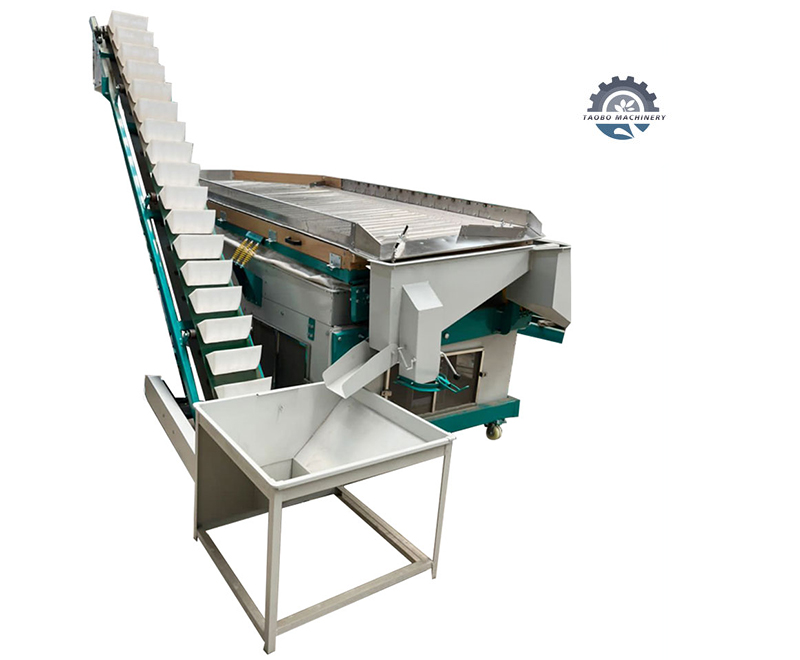
Core Advantages of the Sesame-Specific Gravity Separator (Gravity Sorter)
Unlike standard destoners, the gravity separator focuses on precise sorting based on density and plumpness. It is a critical piece of equipment for enhancing sesame quality and eliminating defective grains, offering the following advantages:
Precise Sorting Based on Specific Gravity: A Unique Sorting Dimension
It does not rely on size or shape, but separates solely based on differences in density and bulk density. It can easily distinguish between plump, high-quality grains versus shriveled, insect-damaged, moldy, hollow, wrinkled, or broken grains—thereby filling the sorting gaps left by air-screen separators and destoners.
Thorough Removal of Inferior Grains: Elevating Product Grade
It effectively eliminates lightweight, inferior sesame grains—including those with internal deterioration—that are often invisible to the naked eye. This significantly improves the plumpness and uniformity of the finished product. With powerful grading capabilities, it can separate premium-grade stock from lower-grade stock, thereby boosting selling prices and product premiums.
Secondary Removal of Fine, Heavy Impurities
It provides a further cleaning stage to remove residual fine sand, minute soil particles, and trace amounts of heavy impurities that may have slipped through previous stages. Acting as a reinforcement for fine impurity removal, it ensures overall purity levels that far exceed the results of destoning alone, meeting the stringent quality standards required by food processing plants.
Minimal Material Damage: Preserving Sesame Quality
Utilizing gentle, continuous vibration combined with uniform, low-pressure airflow, the machine fluidizes and stratifies the material smoothly without crushing or forceful impact. Specifically designed for sesame—known for its thin skin and high oil content—the process prevents skin breakage, grain fragmentation, and oil exudation, resulting in enhanced storage stability.
Adjustable Parameters: Adaptable to Sesame from Diverse Origins
The deck inclination, vibration frequency, air pressure, and feed rate can all be independently adjusted. This allows for rapid switching between sesame batches from various regions—such as Africa, Southeast Asia, and the Middle East—accommodating differences in bulk density, moisture content, and impurity profiles to ensure strong batch-to-batch consistency.
Continuous, Automated Production: Seamless Integration into Full Production Lines
Post time: Apr-28-2026