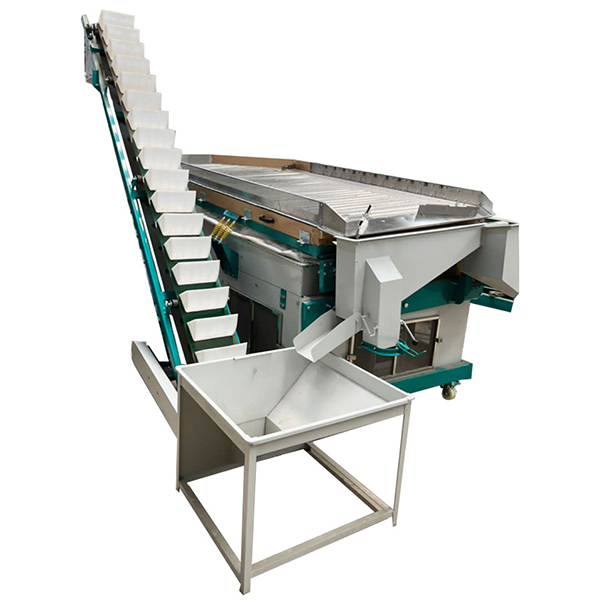
I. Core Definition of the Equipment
The gravity separator is a specialized precision sorting machine that utilizes differences in material density (specific gravity), a vibrating deck, and vertical airflow to perform separation. Unaffected by particle size, it is designed to separate materials of similar dimensions but differing weights. It serves as a key piece of equipment for advanced sorting following air-screen and grading-screen processes, effectively resolving industry challenges where standard screens fail to remove shriveled beans, moldy beans, or stones of similar size to the beans. It is widely used in export processing plants for miscellaneous grains such as mung beans, black beans, red beans, sesame seeds, and pigeon peas.
II. Core Working Principle
Uniform Material Distribution and Fluidized Layering
Material is evenly spread across an inclined vibrating deck. A fan at the base continuously delivers a uniform, low-pressure upward airflow, causing the entire layer of material to enter a state of slight suspension and fluidization.
Denser, plump, and intact seeds possess greater weight and remain in close contact with the bottom layer of the deck; insect-damaged, moldy, shriveled, or hollow seeds have lower specific gravity and remain suspended in the upper layer.
Vibration-Induced Counter-Flow Separation
The deck undergoes small-amplitude reciprocating vibration and features a non-slip “fish-scale” surface pattern:
Plump, heavy beans in the bottom layer flow downward along the incline and are discharged through the finished product outlet;
Light, defective seeds in the upper layer move upward against the flow, guided by the deck’s surface pattern, and are separated through the reject outlet;
Stones and high-density soil clods—which are similar in size to the beans but possess the highest density—cling tightly to the deck surface, climb upward against the flow, and are discharged through the heavy impurity outlet.
Adjustable Airflow Settings
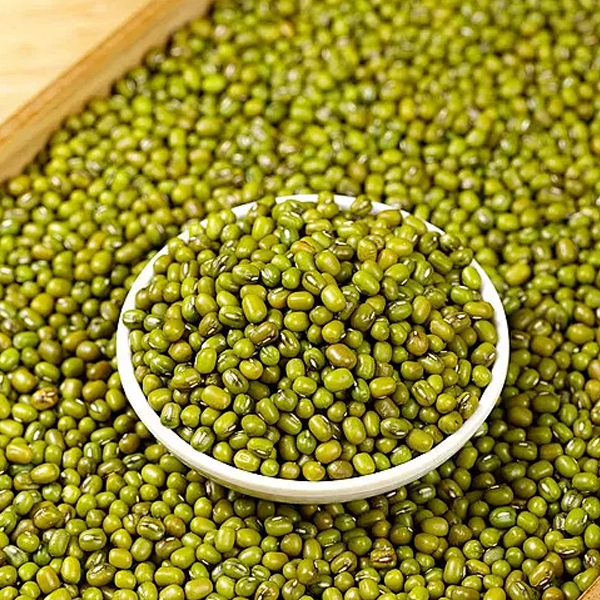
Airflow can be reduced for small-grain Vietnamese mung beans or tiny Korean black beans, and increased for large-grain pigeon peas or red kidney beans. This ensures stable layering performance and prevents the loss of good beans into the reject stream.
III. Key Structural Components
Feeding & Distribution Hopper: Ensures uniform material distribution, preventing uneven piling or stratification;
Variable-Frequency Centrifugal Fan: Stepless airflow adjustment to suit various types and sizes of grains;
Wear-Resistant Stainless Steel Gravity Deck: Features a non-slip “fish-scale” pattern; corrosion-resistant and prevents material buildup;
Vibration System (Springs + Motor): Ensures stable, low-noise operation without excessive shaking during prolonged processing;
Three-Way Independent Discharge: Automatically separates premium grain, defective/moldy/shriveled beans, and stones/clods;
Adjustment Mechanisms: Three-way adjustability for deck tilt angle, vibration frequency, and airflow;
Dust Extraction Port: Connects to a dust collection fan to capture dust, maintaining a clean, dust-free workshop environment.
IV. Key Advantages
Solves separation challenges that standard screeners cannot handle
Grading screens sort only by size, failing to separate same-sized moldy beans, insect-damaged beans, and small stones; gravity separators sort by density, precisely removing defective grains and similarly sized stones/grit, significantly enhancing product purity.
Removes moldy grains to mitigate food safety risks in export markets
Moldy, insect-damaged, and hollow beans have lower density and can be completely separated; this reduces issues with excessive aflatoxin levels, meets import inspection standards for China, South Korea, the Middle East, and India, and prevents shipment rejection or price devaluation.
Simultaneous light de-stoning reduces the load on dedicated de-stoners
Simultaneously separates fine sand and small stones that are similar in size to the beans; this pre-processing step relieves pressure on downstream de-stoners and protects polishing, peeling, and milling equipment from wear caused by hard objects.
Low-impact, gentle sorting minimizes raw material loss
Combines low-pressure fluidizing airflow with gentle vibration to minimize collision and friction; preserves the skin integrity and color of mung beans and black beans, ensuring a high yield of whole grains and increasing the premium value of the product.
Versatile crop compatibility with easy switching
Simple adjustments to airflow and deck tilt allow for the processing of mung beans, small black beans, red beans, pigeon peas, sesame seeds, kidney beans, and more; a single machine serves multiple purposes, reducing equipment procurement costs. Can be integrated into a complete production line
Pairs with air-screen gravity separators, grading screens, destoners, and polishers to form a comprehensive cleaning line, suitable for various coarse grain processing plants in Vietnam, Mozambique, and South Korea.
High level of automation; saves on labor
Automatically separates premium products, rejects, and debris (such as stones and sand), eliminating the need for manual sorting; a single unit requires only one operator, significantly reducing labor costs.
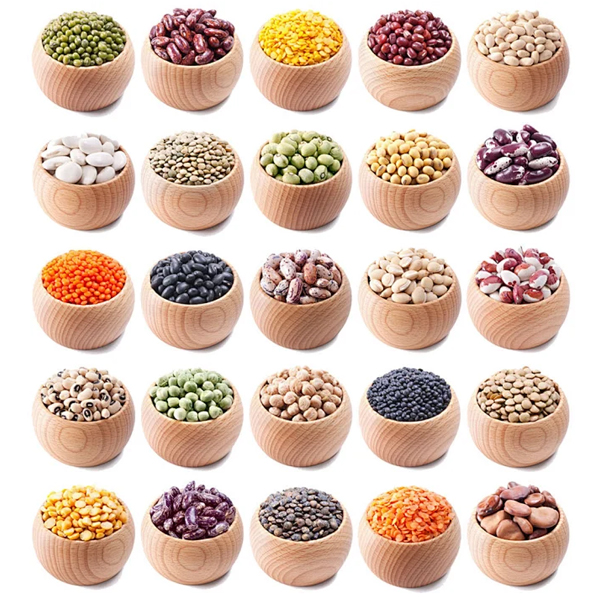
Vietnamese small-grain mung beans are characterized by their diminutive size and often contain impurities such as shriveled or immature beans, insect-damaged grains, and fine red sandy soil; the raw material is also prone to mold during the rainy season. A gravity separator utilizes precise density-based stratification to remove light, moldy grains and fine grit, ensuring the mung beans remain vibrant green and intact. This process guarantees high quality for applications such as starch extraction and bean sprout cultivation, meeting export standards for China, Japan, and South Korea, thereby increasing the export value of the product.
Relying on density differences, the gravity separator performs deep, precise sorting of specialty grains, effectively removing insect-damaged, moldy, and shriveled beans—as well as grit of similar particle size—that standard grading screens cannot eliminate. Its low-breakage operation preserves the integrity of the grain, effectively reducing the risk of excessive aflatoxin levels and ensuring the finished product complies with international export quality standards. With adjustable airflow and deck inclination, a single machine can handle various crops such as mung beans, black beans, and pigeon peas; it can also be integrated into a complete grain cleaning production line, making it an essential piece of precision sorting equipment for export-oriented processing plants.
Post time: Jul-07-2026