
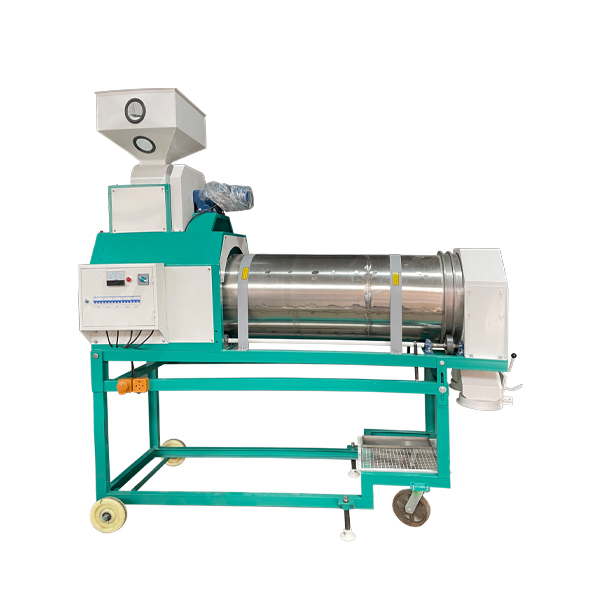
In the processing and pre-planting treatment of grains and legumes, cleaning equipment is the core of basic pre-treatment, while coating machines are the core of pre-planting functional treatment. The combined use of both can significantly improve the sowing quality, germination rate, and later yield of grains and legumes. They are key equipment for high-quality grain and legume seed processing and large-scale planting, each with its own focus and strong complementarity.
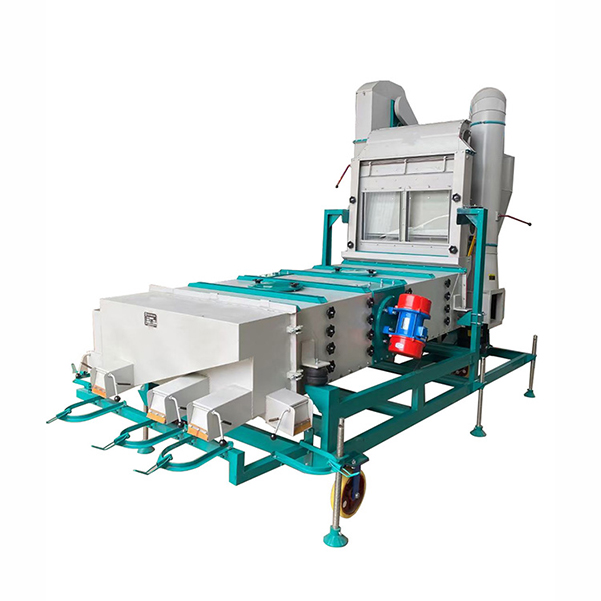
I. Cleaning Equipment: “Removing impurities, purifying, and grading” grains and legumes, laying the foundation for high quality.
The core function of cleaning equipment (such as air screen cleaners, gravity separators, drum screens, color sorters, etc.) is to remove impurities from grains/leaves. Impurities in legume raw materials are removed and graded according to quality and specifications. This treatment applies to both commercially grown legumes awaiting processing and seed legumes awaiting sowing. It is a necessary pre-processing step before all subsequent treatments (coating, drying, storage, and processing), and its core value lies in two aspects:
Impurification: This removes impurities such as straw, weeds, soil, sand, shriveled grains, insect-damaged grains, broken grains, and grains of different varieties from the raw materials. This reduces wear and tear on subsequent equipment (such as coating machine nozzles and mixing components), prevents impurities from consuming coating agents and reducing coating effectiveness, and also improves the appearance and storage stability of the commercially grown legumes.
Selection and Grading: Grading is done according to indicators such as grain size, plumpness, specific gravity, and color. Uniform, plump, and undamaged high-quality grains are selected as seeds—the core raw material for coating. Uniform grains ensure consistent agent adhesion during subsequent coating, avoiding problems such as uneven coating or missed coating due to differences in grain size, thus improving the uniformity of germination after sowing from the source.
Simply put, the function of cleaning equipment is to “select good materials” to ensure the quality of raw materials for subsequent coating or processing, which is a prerequisite for improving the overall processing effect.
II. Seed Coating Machine: “Coating Functional Layers for Grain and Bean Seeds, Enhancing Quality and Resistance,” Empowering Sowing and Planting
The core processing target of the seed coating machine is high-quality grain and bean seeds after cleaning (rarely used for commercial grains and beans). Its core function is to mechanically and evenly coat the seed surface with a coating agent (composed of fungicides, insecticides, trace elements, plant growth regulators, film-forming agents, etc.), forming a dense “functional film,” ultimately producing coated seeds. Its core value focuses on improving seed resistance, germination rate, and seedling growth quality. Specific effects include:
Pest and Disease Control: The fungicides and insecticides in the coating agent form a “protective ring” around the seed, effectively resisting soil pathogens (such as damping-off and root rot), underground pests (such as mole crickets and grubs), and above-ground pests during the seedling stage (such as aphids and planthoppers). This reduces seed rot, bud rot, and seedling damage, lowering the amount of pesticides needed during the seedling stage, achieving “one-time protection through seed coating.”
Supplementing nutrition and promoting robust seedling growth: The trace elements (such as boron, zinc, and molybdenum) and plant growth regulators (such as brassinolide and gibberellin) in seed coating agents provide precise nutrition for seed germination and seedling growth, promoting the development of the radicle and plumule, resulting in earlier seedling emergence, stronger root systems, uniform growth, and enhanced seedling resistance to cold, drought, and other adverse conditions.
Enhancing seed physical properties: The film-forming agents in seed coating agents ensure firm adhesion and prevent peeling. Some coating agents can also regulate the water absorption rate of seeds, preventing seed rot caused by excessive water absorption. For small-grain grain and bean seeds, coating can also moderately increase seed volume and improve uniformity, facilitating mechanized precision sowing and reducing seed usage.
Reducing environmental pollution: The pesticides in seed coatings act directly on the seeds and seedling roots. Compared to traditional large-scale field spraying of pesticides, pesticide utilization is higher and loss is less, significantly reducing pollution to soil, water sources, and the surrounding ecosystem.
Simply put, the coating machine’s function is to **”produce good seeds”. Based on high-quality cleaned grains, it achieves “disease prevention, insect prevention, growth promotion, and saving on pesticides and seeds” through functional coating. It is a key link in large-scale, modernized grain and bean cultivation.
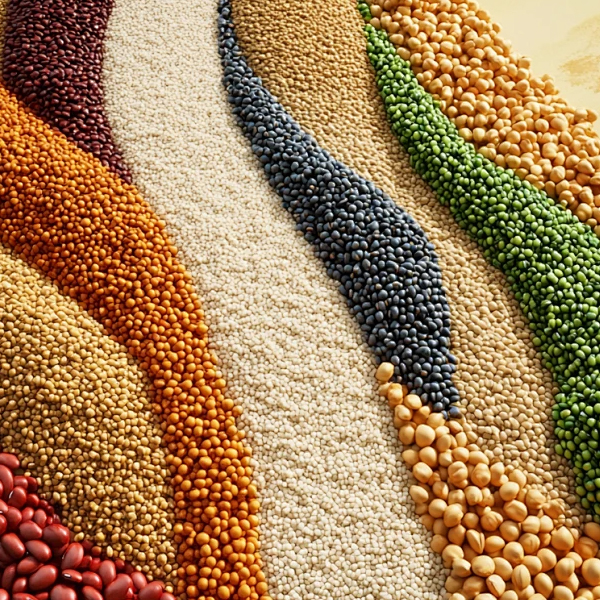
III. The Core Connection Between the Two Cleaning is the prerequisite for coating: Uncleaned seeds contain many impurities and are uneven in size, leading to wasted pesticides, uneven coating, missed coatings, and even clogging of coating machine pipes and wear and tear on equipment, severely affecting coating quality. Only high-quality, uniform seeds after cleaning can guarantee consistent coating results.
Coating is an extension of the value of cleaning: Cleaning only achieves the “purification and grading” of seeds, while coating transforms high-quality seeds into high-value functional seeds, allowing the value of cleaning to be realized at the planting end, truly achieving “good seeds produce good seedlings, and good seedlings produce high yields.”
Supplement: Differences in Applicable Scenarios
Cleaning Equipment: Universal for all scenarios, essential for both the processing and storage of commercial grains and beans, and the pretreatment of seed grains and beans;
Coating Machine: Primarily used for pre-planting treatment of seed grains and beans; commercial grains and beans (for consumption and processing) generally do not undergo coating.
Post time: Feb-06-2026