
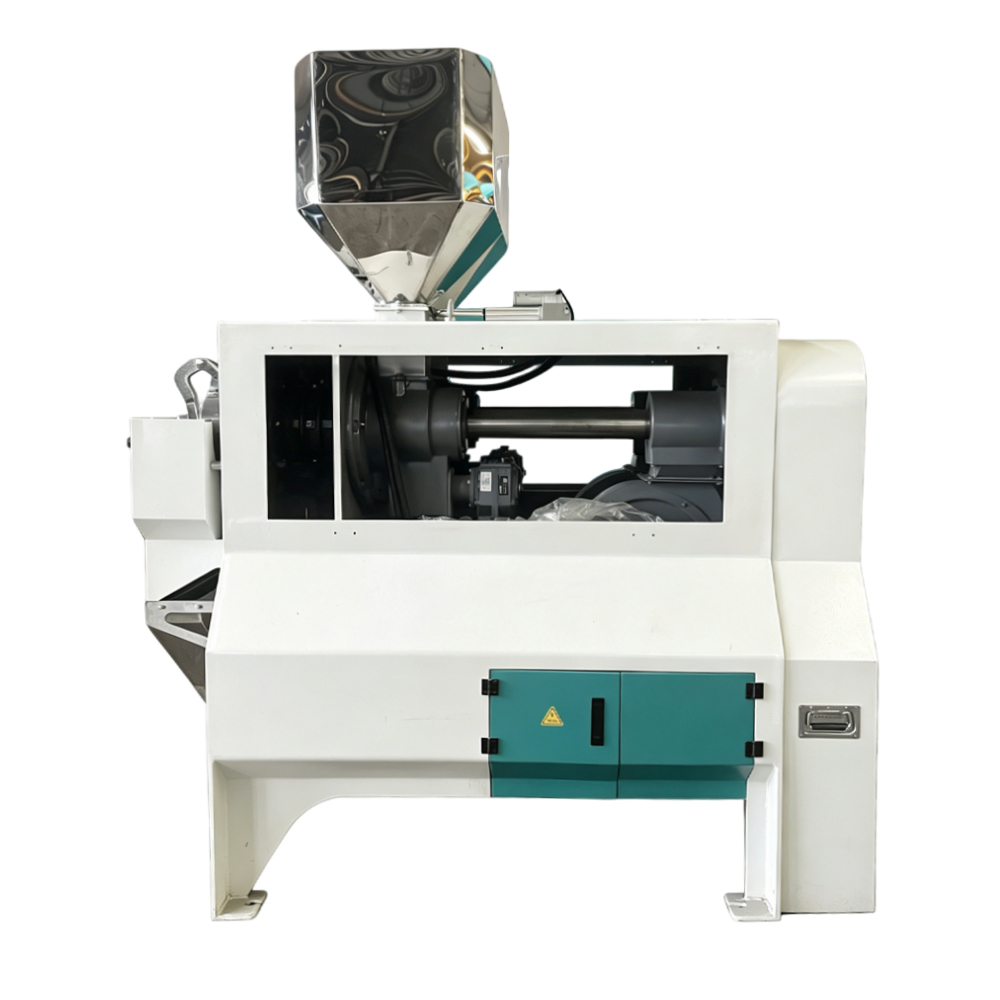
The coffee bean huller (also known as a parchment remover) operates on a core mechanism of mechanical friction and compression to crack the shell, followed by air-screen gravity separation. It separates parchment-covered beans (featuring dried parchment shells) into clean green beans, shell fragments, and broken beans, ensuring minimal breakage and high efficiency throughout the entire process.
I. Working Principle
Parchment coffee consists of green coffee beans encased within a dry, tough outer layer known as the “parchment hull.” The hulling machine achieves separation through a combination of mechanical force, air classification, and screening.
1. Hulling Principle (Mechanical Shell Breaking)
There are two primary structural designs currently in use, both featuring adjustable gaps and a “low-breakage” design:
Dual-Roller Compression Type (Most Common): This system utilizes two counter-rotating rollers—either toothed or threaded—set with a gap slightly narrower than the diameter of the coffee beans. As the beans are drawn into this gap, they are subjected to compression, shearing, and rubbing forces; this causes the parchment hull to crack and detach, while the intact green bean is expelled.
Dual-Roller Compression Type
Spiral Impact Type: This system employs internal spiral blades paired with fixed toothed plates. The beans are propelled forward in a spiral motion, undergoing repeated impacts and friction against the plates, which causes the parchment hull to be scraped open and shed.
2. Separation Principle (Air-Screen + Specific Gravity)
Air Separation (Specific Gravity Difference): A fan generates an adjustable airflow (3–6 m/s); lighter materials—such as husks and broken beans (whose suspension velocity is lower than the wind speed)—are blown away, while heavier materials—specifically intact green beans (whose suspension velocity exceeds the wind speed)—fall.
Vibratory Screening (Size Difference): Multi-layered screens (with larger perforations on the upper layers and smaller ones on the lower layers) separate large husks, fine debris, intact beans, and broken beans.

II. Complete Workflow (Standard Industrial Line)
1. Feeding and Material Distribution
Shelled beans are fed into the hopper via a bucket elevator or conveyor belt. An adjustable gate combined with a vibrating feeder controls the flow rate, ensuring uniform material spreading and preventing uneven flow or blockages.
2. Pre-processing (Optional; Enhances Shelling Efficiency)
Air Separation (Removal of Light Impurities): Removes dust, leaf fragments, and empty or shriveled beans.
Grading Sieves: Classifies beans into large, medium, and small grades based on diameter; beans of the same grade are shelled together to minimize breakage.
3. Core Shelling (Cracking and Separation)
Material enters the dual-roller or spiral shelling chamber; the roller gap and rotational speed are finely tuned according to the bean diameter (achieving a breakage rate of <1%).
The shells and beans undergo preliminary separation, and the resulting mixture falls into the air separation chamber.
4. Air Separation (Shell/Bean Separation)
Horizontal or vertical airflow passes through the material stream:
Light Impurities (Shells, fine fragments, broken beans): Drawn into a cyclone dust collector for collection.
Whole Raw Beans: Fall by gravity onto the vibrating sieve.
5. Vibrating Sieving (Grading and Refinement)
Upper Sieve (8–10 mm): Retains large shell pieces and unshelled beans, which are then recirculated to the shelling chamber.
Middle Sieve (5–7 mm): Allows whole raw beans to pass through into the finished product bin.
Lower Sieve (3–4 mm): Collects broken beans and fine fragments for separate collection.
6. Secondary Air Separation (Optional; Removes Residual Shells)
The finished beans undergo a secondary air separation process to remove trace shell fragments, achieving a purity level of ≥99%.
7. Discharge and Packaging
Clean raw beans are discharged from the finished product outlet and conveyed via chute or conveyor belt into storage bins, or packaged directly.
Shells, broken beans, and impurities are discharged separately through dedicated outlets for centralized processing.
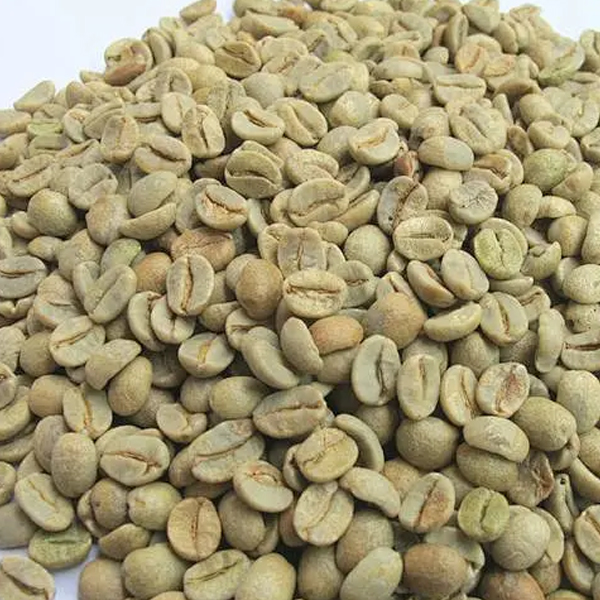
Coffee Bean Huller: Comprehensive Guide to Routine Maintenance
I. Pre-Shift Daily Maintenance (Before Startup)
Verify that the machine is level, the anchor bolts are secure, and the machine body shows no signs of wobbling or tilting.
Inspect the surface of the hulling rollers to ensure it is free of debris, caked-on residue, and visible wear.
Clear any residual coffee beans and hulls from the feed hopper and feed chute.
Check the fan outlet and air ducts for blockages, and ensure the air damper adjusts smoothly.
Verify that the sieves are intact and undamaged, the mesh holes are clear, and all self-cleaning rubber balls are present.
Check that the drive belts have appropriate tension—neither too loose nor too tight—and show no signs of cracking or misalignment.
Apply a small amount of lubricating grease to all bearings and rotating components.
Perform a brief “jog” test run (momentary start-stop) and listen for any abnormal noises or sounds.
II. In-Shift Operational Maintenance (During Production)
Strictly control the moisture content of raw materials within the 10%–12% range; strictly prohibit feeding beans that are excessively wet or dry into the machine.
Maintain a steady, uniform feed rate; strictly avoid sudden surges of material or overfilling the hopper during feeding.
Continuously monitor the hulling efficiency, bean breakage rate, and residual hull content; make timely micro-adjustments to the roller gap and airflow as needed.
If a material jam or abnormal noise occurs, immediately stop the machine and cut the power before troubleshooting; strictly prohibit attempting to clear jams while the machine is running.
Periodically clear the light-impurity discharge port and the hull outlet to prevent material buildup and blockages.
Ensure the dust collection system is functioning correctly to minimize airborne dust in the workshop.
III. Post-Shift Shutdown Maintenance (Daily Requirement)
Empty the machine of all remaining coffee beans, hulls, and broken beans.
Thoroughly clean the interior of the feed hopper, hulling chamber, air separation chamber, and vibrating sieves.
Clean the dust filter bags and the dust collection bin to remove accumulated dust and hulls.
Wipe down the exterior of the machine to remove oil stains and dust, keeping the equipment clean.
Loosen the hulling roller gap adjustment mechanism to prevent roller surface deformation caused by prolonged, tight compression.
Turn off the main power supply and switches, and cover the equipment with a dust-proof cover.
IV. Weekly Deep Maintenance
Open the inspection access panels to thoroughly clean out any accumulated material trapped in the hard-to-reach corners and crevices within the machine body.
Post time: May-18-2026