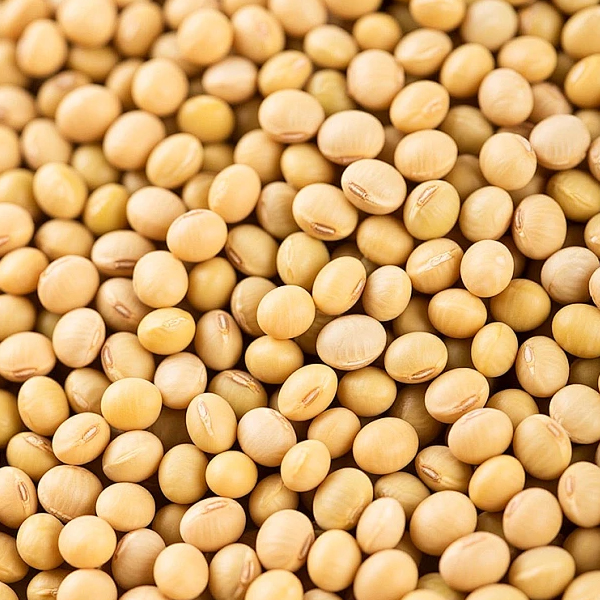
Freshly harvested soybeans are referred to as “raw grain”; they contain a wide variety of impurities, which can be broadly categorized into light impurities, heavy impurities, hard impurities, organic impurities, moldy/deteriorated impurities, and metallic impurities.
I. Light Impurities (Primarily removed via air separation)
Soybean leaves, stalks, pod husks, and stem fragments
Dust, fine soil particles, grass clippings, and fuzz/lint
Shriveled beans, split beans (half-grains), and insect-eaten empty shells
Broken bean skins and shattered cotyledons
Characteristics: Lightweight and bulky; air separators and suction dust-removal devices are primarily designed to handle these materials.
II. Heavy Impurities (Primarily removed via destoners / soil separators)
Pebbles, gravel, and small stones
Mud lumps, soil clods, and clay balls
Glass shards, broken tiles, and mineral granules
A critical concern here is “companion stones”—stones that are nearly identical in size to the soybeans themselves; these cannot be removed by standard sieving screens and must be processed using a destoner.
III. Hard Impurities (Specifically removed via magnetic separators)
Iron nails, wire scraps, screws, and metal shavings
Metal fragments detached from agricultural machinery
Welding rod stubs, iron slag, and rust
These types of impurities can damage equipment and generate sparks; they must be removed in advance using a magnetic separator.
IV. Organic Impurities (Removed via screening and gravity separators)
Weed seeds (such as vetch, barnyard grass, goosefoot seeds, etc.)
Seeds from other crops (broken corn kernels, wheat grains, mung beans, etc.)
Soil clods, grass roots, and small twigs/twigs
V. Moldy, Damaged, or Discolored Grains (Removed via gravity separators + color sorters)
Moldy beans and heat-damaged/deteriorated beans
Insect-bored beans, shriveled beans, and frost-damaged beans
Discolored beans, beans with black spots, and beans with disease lesions
Broken beans and beans with cracked skins
VI. Other Miscellaneous Impurities
Plastic bag fragments, twine/rope, and fabric strips
Hardened soil clumps and plastic debris from the field
Stones, brick fragments, and even remnants of small metal tools
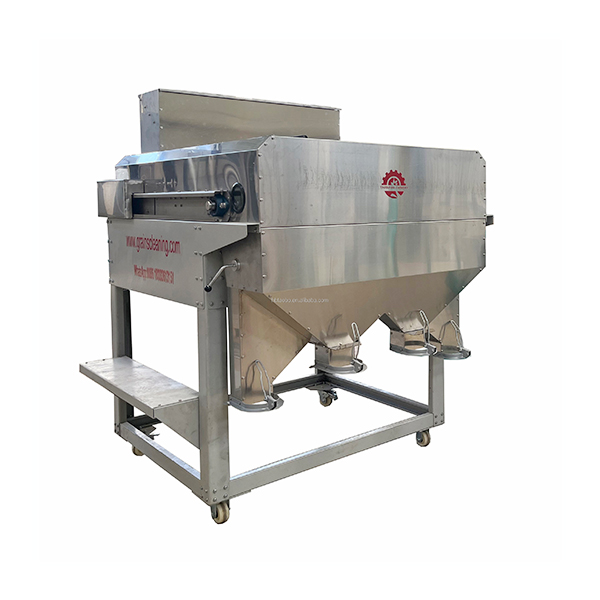
A magnetic soil separator—or simply “magnetic separator” for short—is, as the name implies, a device that utilizes magnetic force to remove soil; it is primarily used for removing soil impurities from grain.
The iron content found in soil does not exist as free, elemental iron, but rather as iron-bearing compounds. However, many of these iron compounds exhibit ferromagnetism; consequently, soil itself possesses a certain degree of magnetic susceptibility. Thus, the magnetic soil separator operates by leveraging this inherent magnetic property of soil to extract soil clumps and other impurities. Since the ferromagnetism of soil is extremely weak, ordinary magnets typically struggle to exert a noticeable attractive force upon it. To overcome this, the device must first employ a specialized structural configuration to significantly intensify the magnetic force at its specific point of application. Secondly, it must effectively harness this elusive, faint attraction—achieved with such difficulty—and amplify its impact through a technique akin to “using a feather to move a mountain,” thereby ensuring flawless separation with absolutely no soil clumps slipping through the process.
During operation, the material travels along a conveyor belt. As the belt wraps around the magnetic roller, the material enters a state of free fall, tracing a parabolic trajectory. During this descent, soil clumps are attracted by the high-intensity magnets; their trajectories are thereby altered, causing them to be diverted and separated from the grain stream by a partition.
To achieve effective soil separation, the magnetic separator relies on the precise control of numerous operational details. These include regulating the thickness of the material layer as it follows its parabolic trajectory, ensuring sufficient penetration of the magnetic field lines through the grain layer, and optimizing parameters such as the drop height and belt speed—factors that pertain directly to the practical application and operational execution of the device.
Process: Materials are fed into the feed hopper and, via an elevator and a three-way splitter, enter the grain inlet box. The bulk material is then distributed evenly across the conveyor belt. As the belt transports the material, it passes over two rows of filtering magnets and a magnetic roller, after which it is projected forward in a parabolic trajectory, forming a uniform discharge stream. Since soil particles contain ferromagnetic substances and possess magnetic properties, their trajectory is altered as they pass over the magnetic roller. Consequently, a diversion plate is utilized to separate the grain from the soil particles, directing them separately into the designated grain outlet and soil outlet of the discharge box.
Advantages: The conveyor belt is made of PU material, offering excellent wear resistance and anti-static properties. In contrast, most manufacturers utilize PE belts, which lack anti-static capabilities; this can lead to electrical and magnetic fields canceling each other out, resulting in poor separation efficiency.
The unit features TR bearings constructed from stainless steel (a material with a higher cost than carbon steel, ensuring greater safety). These bearings are water-resistant and rust-proof, offering a long service life and exceptional value for money.
Applicable Materials: Sesame seeds, soybeans, wheat, and corn.
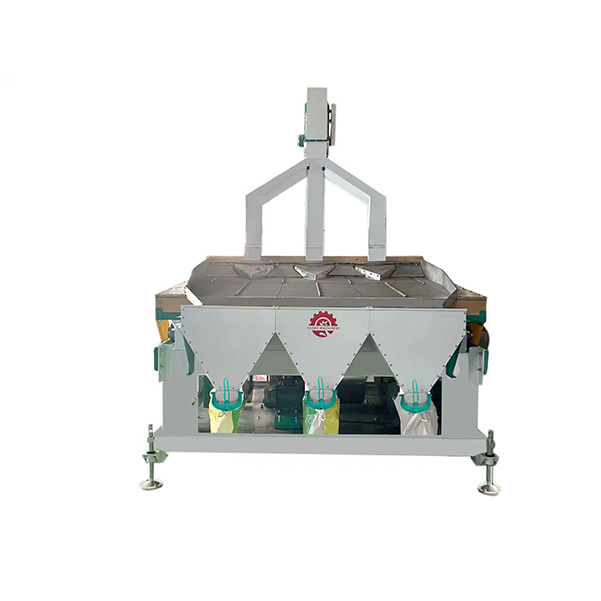
The “Destoner” (specifically, the Gravity Destoner) is a core piece of equipment designed to separate high-density heavy impurities—such as stones, mud lumps, gravel, and soil clods—and serves as an indispensable “Safety + Quality” critical machine within the cleaning line. I. Primary Impurities Removed (Soil / Stone Types)
“Companion” Stones / “Companion” Clods: Stones or mud lumps that are nearly identical to the grain/beans in size and shape (the most difficult to remove using standard sieves).
Small pebbles, sand grains, broken brick/tile fragments, and glass shards.
Large mud lumps, dried soil clods, and mineral impurities.
II. Core Role in the Cleaning Line
1. Protection of Downstream Equipment (Prevention of Damage, Clogging, and Breakage)
Prevents stones and hard mud lumps from damaging, wearing down, or jamming equipment such as: flour mills, rollers, crushers, precision sorters, and sieves.
Prevents sparks caused by metal-to-stone impact within high-speed machinery, thereby reducing the risk of dust explosions.
Reduces the time and cost associated with downtime for maintenance, part replacement, and clog removal.
2. Ensuring Food Safety and Quality
Completely eliminates the inclusion of stones and mud lumps in finished products, preventing dental damage or injuries to the mouth and digestive tract during consumption.
Ensures compliance with national grain hygiene standards (e.g., limits on impurities and mineral content), avoiding product rejection, returns, and regulatory penalties.
Enhances the purity, texture, color, and market appeal of beans, rice, flour, and assorted grains.
3. Facilitating Subsequent Processes (Reducing Load, Increasing Efficiency)
Removes heavy impurities in advance, preventing stones from interfering with the operation of gravity separators, color sorters, grading screens, and polishers.
Minimizes equipment wear and clogging caused by fine sand and dust, making subsequent cleaning and sorting processes more precise and efficient.
III. Working Principle (Gravity Separation Method)
The destoner does not rely on sieve mesh size; instead, it utilizes a triple-action separation mechanism based on specific gravity, airflow, and vibration:
Material Stratification: Grains/beans are fed onto an inclined, vibrating sieve deck; an upward airflow is directed from beneath, causing the material to “fluidize” (behave like a liquid).
Automatic Grading:
Stones / Mud Lumps: High specific gravity and density → Sink to the bottom layer and remain in close contact with the sieve plate.
Grains / Beans: Low specific gravity → Float on the upper layer.
Counter-Directional Movement:
Stones / Mud Lumps: Driven by vibrational inertia and the upward airflow, they move toward the higher end of the sieve deck (the stone discharge outlet).
Clean Grains / Beans: Driven by their own weight + Driven by continuous feeding, the material slides downward along the screen surface toward the lower end (the grain outlet).
Separation and Discharge: Stones and clods are discharged from the upper end, while clean grains and beans flow out from the lower end, thereby completing the removal of soil and stones.
Post time: Apr-17-2026