
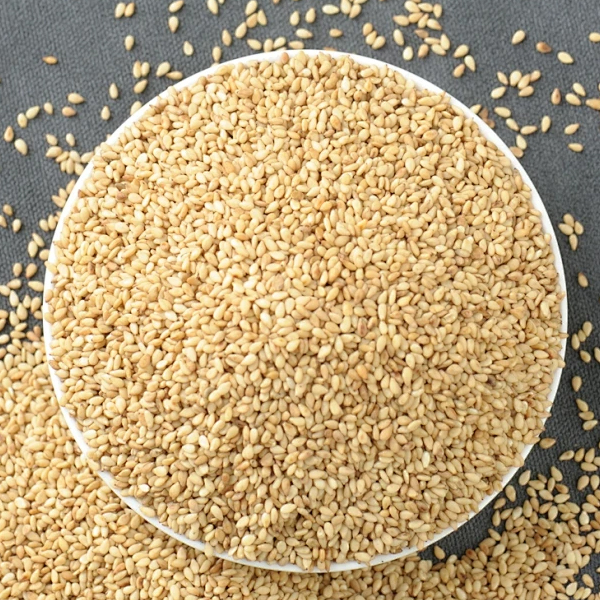
Working Process and Principles of Air-Screen Cleaners and Gravity Separators for Sesame Cleaning
Air-screen cleaners and gravity separators are the core equipment for sesame cleaning; the two work in a complementary division of labor. The air-screen cleaner primarily focuses on size grading and the separation of light impurities, addressing issues related to large debris, fine particles, and light, airborne contaminants. The gravity separator, conversely, specializes in separation based on specific gravity, precisely removing heavy impurities—such as stones and clods of earth—as well as light impurities like shriveled or moldy grains, thereby guaranteeing the purity and quality of the sesame.
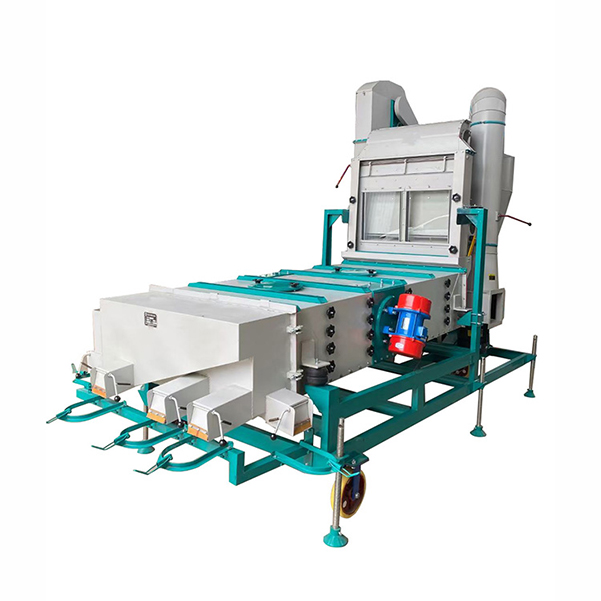
I. Air-Screen Cleaner (Sesame Cleaning)
Core Principles
Combining vibrating screening with airflow separation, the machine utilizes the differences in size, specific gravity, and suspension velocity between sesame seeds and impurities to achieve separation. Vibration causes the material to stratify; the sieves trap impurities of various sizes, while the airflow blows away light, airborne contaminants. It serves as the foundational equipment for the preliminary processing of sesame.
Typical Working Process
Feeding and Spreading: Sesame seeds are fed uniformly into the inlet via an elevator; a spreading device then distributes the seeds evenly across the sieve surface to prevent localized piling, which could compromise efficiency.
Primary Screening (Removal of Large Impurities): The upper sieve layer (featuring larger mesh openings, e.g., 8–12 mesh) traps large impurities—such as stalks, clods of earth, and pods—which are then discharged through the waste outlet.
Air Separation (Removal of Light Impurities): A fan generates an adjustable airflow that blows away light, airborne impurities within the sesame (including hulls, dust, shriveled grains, and grass clippings); these impurities are carried by the airflow into a dust collection unit, where they settle.
Secondary Screening (Removal of Fine Impurities): The lower sieve layer (featuring smaller mesh openings, e.g., 20–40 mesh) screens out fine impurities—such as dust, broken sesame seeds, and fine sand—thereby achieving a preliminary classification of the sesame.
Clean Grain Discharge: The qualified sesame seeds, having undergone both screening and air separation, are discharged through the clean grain outlet and proceed to the next processing stage (e.g., destoning via a gravity separator).
Key Parameters and Considerations
Sieve Configuration: The sieve setup must be selected based on the specific size of the sesame seeds and the types of impurities present; typically, the system consists of 2 to 4 layers, with the upper layers removing large impurities and the lower layers removing fine impurities. Airflow Regulation: The airflow velocity must be matched to the suspension velocity of the sesame seeds (approximately 1.5–2.5 m/s) to prevent the seeds from being blown away or lighter impurities from remaining behind.
Vibration Parameters: Vibration frequency and amplitude influence the material stratification effect; these parameters must be adjusted according to the processing volume and material characteristics to ensure both efficiency and effectiveness.
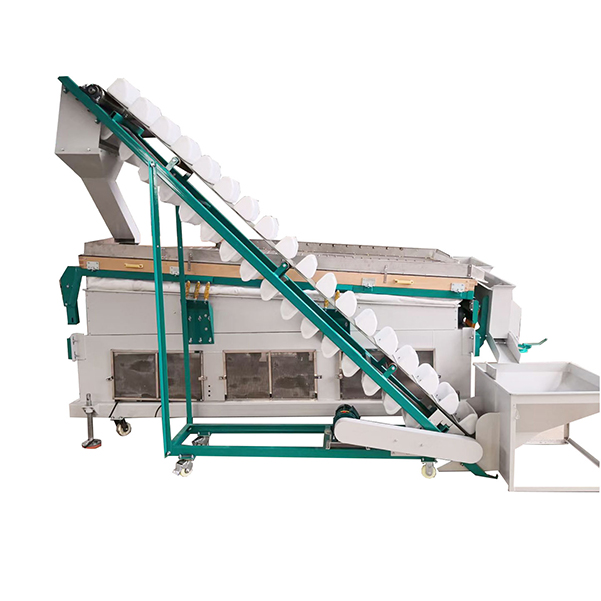
II. Gravity Separator (Sesame Cleaning)
1. Core Principle
Based on differences in material specific gravity and the fluidizing effect of airflow, the machine utilizes a combination of vibration and airflow to stratify sesame seeds according to their density. Heavy impurities sink while light impurities float; separation is then achieved through the inclination of the sieve deck and the use of diversion plates. The core mechanism relies on distinguishing the specific gravity differences between the sesame seeds and heavy impurities (such as stones and clods of earth), as well as light impurities (such as shriveled or moldy seeds).
2. Typical Workflow
Feeding and Layering: Sesame seeds, having already undergone preliminary cleaning via an air-screen separator, are fed uniformly onto the sieve deck of the gravity separator. A feed control plate is used to regulate the thickness of the material layer (typically 5–15 mm) to ensure uniform fluidization.
Fluidization and Stratification: A bottom-mounted fan blows air upward, causing the material layer to enter a fluidized state (resembling a liquid). The materials automatically stratify according to their specific gravity:
Heavy Particles (stones, clods, plump sesame seeds): Sink to the bottom layer, making contact with the sieve deck.
Light Particles (shriveled seeds, moldy seeds, broken seeds): Float to the surface layer, being slightly suspended by the airflow.
Trajectory Separation: The sieve deck is inclined (at an angle of 3–10°) and subjected to high-frequency vibration. Due to their greater inertia, heavy particles move along the direction of vibration toward the higher end of the sieve deck; conversely, light particles move toward the lower end of the sieve deck, guided by the airflow and vibration.
Split Discharge: Diversion plates are used to separate the various materials into distinct streams:
Heavy Particles (including plump sesame seeds and stones): Discharged through the outlet at the higher end (serving as either an impurity outlet or a clean grain outlet), proceeding to subsequent destoning or grading processes.
Light Impurities (shriveled seeds, moldy seeds): Discharged through the outlet at the lower end, to be treated as by-products or waste.
Heavy Impurities (stones, clods): Concentrate in a designated “stone collection zone” and are discharged through a dedicated stone outlet; the destoning efficiency can reach over 95%.
Key Parameters and Considerations
Airflow and Vibration: The airflow volume must be appropriately matched to the specific gravity of the material being processed. The vibration frequency (typically 500–1500 rpm) and amplitude directly influence the effectiveness of the stratification process; therefore, these parameters must be adjusted in coordination with one another. Sieve Surface Design: A perforated sieve surface ensures uniform airflow, while the inclination angle and length of the sieve determine separation precision; models specifically designed for sesame typically utilize “fish-scale” or long-slot sieves.
Material Layer Control: If the material layer is too thick, fluidization tends to be uneven and separation incomplete; conversely, if it is too thin, processing throughput is insufficient. Therefore, adjustments must be made based on the equipment parameters and the specific characteristics of the material.
III. Equipment Synergy and Sesame Cleaning Scenarios
Synergistic Process: Sesame first passes through an air-screen cleaner to remove large impurities, fine debris, and light contaminants; it then proceeds to a gravity separator to remove heavy impurities (such as stones and soil clumps) and shriveled grains, thereby achieving a comprehensive cleaning workflow that follows the principle of “coarse cleaning first, fine cleaning second.”
Applicable Scenarios:
Air-Screen Cleaner: Suitable for raw material pretreatment; it rapidly removes the majority of light impurities and size-based contaminants, thereby enhancing the efficiency of the subsequent gravity separator.
Gravity Separator: Suitable for fine cleaning, particularly for addressing impurities in sesame that have a specific gravity similar to the grain itself—such as stones and soil clumps—as well as difficult-to-separate shriveled or moldy grains. It serves as a critical piece of equipment for ensuring the purity of the sesame.
Important Considerations:
The air-screen cleaner requires periodic cleaning of its screens and dust collection system to prevent clogging, which could otherwise compromise airflow and screening effectiveness.
The gravity separator requires real-time monitoring of the fluidization state and discharge purity; airflow and vibration parameters must be adjusted promptly to prevent the retention of heavy impurities or the loss of sesame grains.
For both machines, parameters—including screen specifications, airflow volume, and vibration settings—must be optimized based on the specific sesame variety (e.g., white sesame, black sesame), its origin, and its impurity content to achieve optimal cleaning results.
Post time: Apr-11-2026