
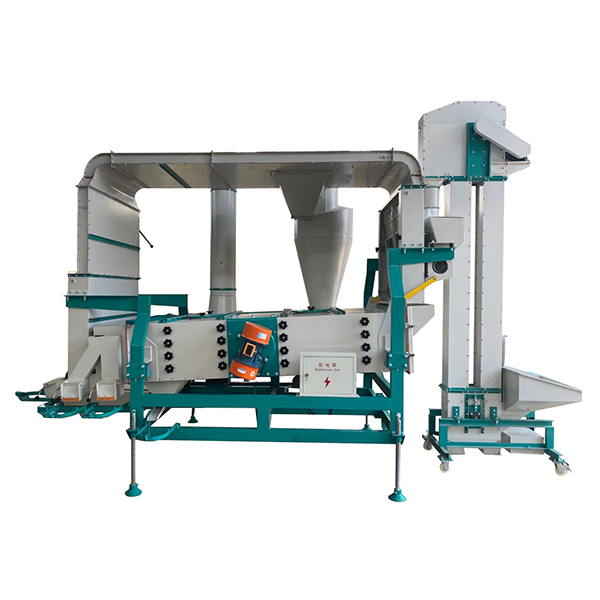
Raw chili seed stock is typically contaminated with significant amounts of broken chili skins, stems, dust, shriveled seeds, soil particles, and fine debris. Since the particle sizes of some impurities closely match those of the chili seeds, standard single-stage air-screen cleaners often struggle to fully remove light impurities, resulting in finished products contaminated with skin fragments and high material loss due to seeds being carried away with the waste. In contrast, the compound air-screen cleaner utilizes a combination of independent two-stage air separation (front and rear) and multi-layer vibrating screens, making it ideally suited for cleaning oilseeds like chili seeds that contain high levels of light impurities.
The core of the compound air-screen cleaner lies in its combination of a multi-layer compound screen assembly and a composite air-separation system. It utilizes physical differences—such as geometric size, terminal velocity (suspension speed), and specific gravity—between the material and impurities to achieve separation. The “compound” nature is reflected in the multi-layer screen configuration and the synergy between reciprocating vibration and composite air separation; this setup offers more screening stages and superior grading capabilities compared to standard single-air-screen models. Air separation can occur either before the material reaches the screens or between screening stages; some models integrate both pre- and post-screening air separation—resembling dual-air-screen structures—but with a primary focus on enhanced, multi-stage compound screening.
Material is fed into the hopper by an elevator and distributed evenly by a flow-leveling plate, creating a thin, uniform layer to prevent material piling, which would otherwise compromise separation efficiency. The material first enters the air-separation zone, where an upward negative-pressure airflow extracts light impurities—such as dust, husks, shriveled grains, and stem/leaf fragments—based on their low terminal velocity; these light impurities are then collected in a cyclone dust collector. Heavier, sound grains remain unaffected by the airflow and fall into the compound vibrating screen box.
The screen box is driven by a vibrating motor to perform a reciprocating motion and houses a multi-layer compound screen assembly. These layers are stacked vertically, with each layer assigned a specific screening function. The top layer features large apertures to catch oversized impurities—such as soil clods, pods, stalks, and large weed seeds—discharging them through a dedicated large-impurity outlet. The intermediate layers serve as the primary grading screens, enabling multi-stage separation to sort the material into categories such as prime product, large grains, and secondary grains. The bottom layer consists of fine-mesh screens that sift out small impurities like fine sand, broken seeds, and tiny weed fragments. This compound screening system can simultaneously generate multiple material streams—going beyond a simple “good product vs. impurity” split—to accomplish both coarse cleaning and grading in a single pass. The screen base is equipped with a self-cleaning mechanism using rubber bouncing balls; during vibration, these balls strike the screen mesh to prevent clogging by fragments or debris, ensuring stable, continuous operation over long periods. Some models of the compound screen-air cleaner feature a secondary air-separation stage between the screens; as the material falls between the two screen layers, it is subjected to airflow once more to remove any adhering light impurities dislodged during the screening process. The airflow volume can be independently adjusted to suit different grain types and control air velocity, ensuring light impurities are extracted without losing intact grains to the airstream.
After screening and air-separation purification, the high-quality material is discharged through the finished product outlet, while large impurities, small impurities, substandard grains, and light impurities are discharged via separate outlets, preventing backflow or re-contamination of the finished product.
Complete Workflow
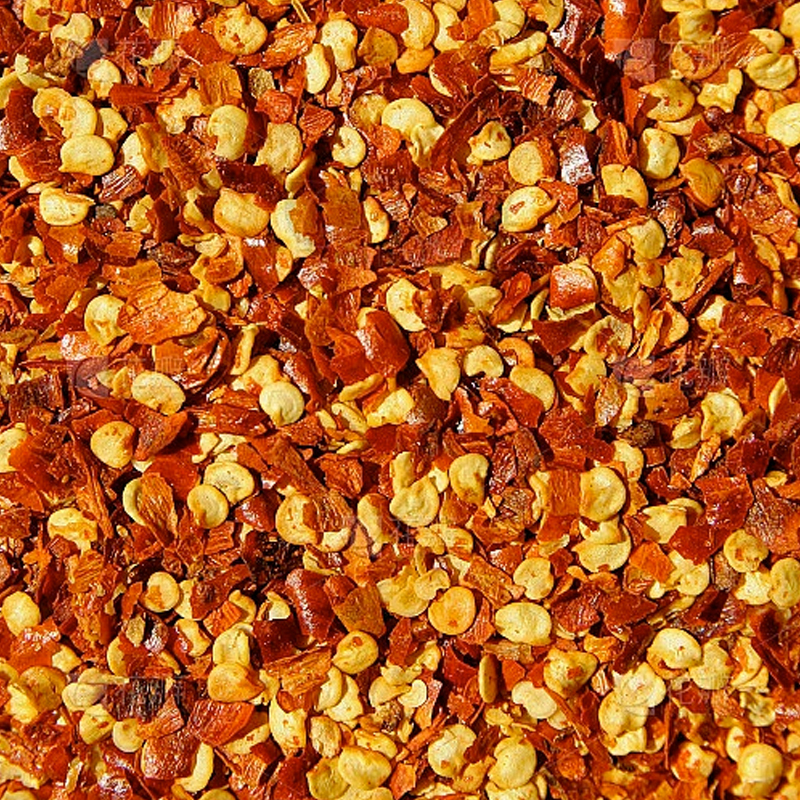
Raw chili seeds are fed into the equipment’s hopper via a conveyor and evenly distributed by a spreading mechanism. They first enter the primary (upstream) air separation channel, where an adjustable negative-pressure airflow extracts the majority of dust, light chili skin fragments, broken stems, hollow seeds, and fine debris; these light impurities are routed to a cyclone dust collector to prevent dust leakage. After this initial air separation, the material drops into a multi-layer vibrating screen assembly, which sorts the seeds by size using screens with varying apertures: the top layer discharges large impurities such as chili stems, large skin fragments, and soil clumps; the middle layer retains the qualified chili seeds; and the bottom layer sifts out fine soil, tiny seeds, and fine debris. The screened seeds then flow to the rear of the machine and enter the secondary (downstream) air separation channel for a final cleaning pass; this stage extracts fine skin fragments, surface dust, and thin, shriveled seeds that were kicked up or remained attached during screening, thereby removing any remaining light impurities. Airflow volumes for both stages can be adjusted independently to prevent the loss of good seeds; the purified chili seeds are discharged through the finished product outlet, while various impurities are expelled through separate outlets for large debris, small debris, and light waste/dust, completing the entire cleaning process. Some models feature an integrated simple destoning section to simultaneously separate sand, stones, and soil granules, thereby reducing the workload on downstream gravity separation equipment.
Key Advantages Across Multiple Aspects
1. Impurity Removal: Targeted solutions for the challenges of cleaning chili seeds
Utilizes a dual-stage air separation system with front and rear air channels—distinct from standard single-pass air/screen systems. The first stage removes the bulk of floating impurities, while the second stage performs a re-separation after screening to specifically target fine chili skin fragments, fuzz, and dust that remain attached or trapped; airflow in both stages is independently controllable, allowing for speed adjustments based on the moisture content of the seeds—effectively removing light impurities while preventing the loss of intact seeds. A multi-layer screen configuration is paired with a rubber bouncing-ball self-cleaning mechanism; since chili seeds with high fragment content tend to clog screens, the bouncing balls continuously strike the screen surface to prevent blockage, ensuring consistent screening precision during continuous operation. Large, small, and light impurities are discharged through separate channels, preventing re-contamination of the finished product.
2. Throughput and Continuous Production
Integrates air separation, screening, and dust removal into a single unit, enabling pre-cleaning and coarse cleaning of chili seeds without the need for multiple machines in series. It offers stable processing capacity suitable for high-volume, continuous operations in chili processing plants. The screen box features a balanced, vibration-dampening structure, resulting in minimal machine vibration and a low failure rate during prolonged use; it is well-suited for raw chili seeds with high impurity levels, maintaining cleaning efficiency even when the raw material contains a significant proportion of chili skins and debris.
3. Operation, Maintenance, and Adaptability
The screen panels are designed for quick installation and removal, allowing for rapid switching between screens of different aperture sizes; this enables the machine to handle not only the coarse cleaning of chili seeds but also small-grain seeds such as sesame, rapeseed, and perilla seeds, offering multi-purpose functionality. It is equipped with an enclosed cyclone dust removal system; given the high volume of dust and skin fragments generated during chili processing, this system effectively captures dust, improves the workshop environment, and meets environmental compliance standards. An observation window allows for real-time monitoring of the air separation and screening processes, while independent manual handles control the front and rear air dampers; operators can adjust airflow based on the impurity content of the incoming material, making the machine easy to set up and operate with a low learning curve.
4. Process Integration
Serving as the core primary cleaning equipment at the start of the production line, the machine removes the vast majority of skin fragments, dust, and stalk impurities from the chili seeds. This significantly reduces the workload on downstream gravity-based destoners and color sorters, minimizes wear on color sorter nozzles, and enhances the purity of the final product. It serves as an ideal primary cleaning unit for processing chili seeds, whether intended for oil extraction or as planting stock.
Scope of Application for the Dual-Air-Screen Cleaner
The dual-air-screen cleaner features a combination of two-stage independent air separation and multi-layer vibrating screening. It excels at handling light impurities, skin fragments, and shell debris. It is primarily designed for small-grained crops—such as grains, oilseeds, and vegetable seeds—that contain significant amounts of fuzz, broken skins, and shriveled husks. It is widely used for pre-cleaning and rough cleaning stages in production lines, and can also perform final cleaning for certain materials.
Oil Crops
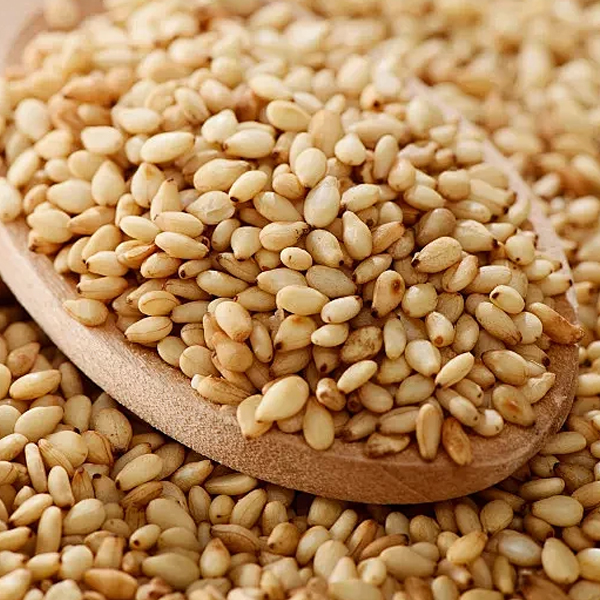
Chili seeds, rapeseed, sesame, perilla seeds, flaxseeds, sunflower seeds, safflower seeds, etc. These materials are typically mixed with large amounts of fruit skins, broken shells, shriveled seeds, and dust. The dual-air-channel system removes light skin fragments in two stages, minimizing material loss; it is ideal for the initial impurity removal of oil-pressing raw materials and oilseeds.
Vegetable and Flower Seeds
Coriander seeds, radish seeds, Chinese cabbage seeds, lettuce seeds, scallion seeds, chive seeds, and other small-grained vegetable seeds, as well as certain flower seeds. The two-stage air separation removes empty husks, broken stems, and dust, while interchangeable screens allow for graded cleaning; this equipment is commonly used for rough purification in seed processing plants.
Grains and Coarse Cereals
Millet, broomcorn millet, proso millet, sorghum, oats, tartary buckwheat, and common buckwheat. It removes bran, broken stems and leaves, dust, and shriveled grains, eliminating the majority of stalk fragments and light impurities. For raw materials with high bran content—such as millet and tartary buckwheat—the secondary air separation effectively reduces the residual bran powder in the finished product.
Small-Grained Legumes
Mung beans, adzuki beans, chickpeas, kidney beans, pinto beans, and other small-to-medium-sized legumes. By changing to screens with appropriate aperture sizes, the machine removes bean leaves, broken pods, dust, and shriveled beans. Note: Large-grained soybeans and fava beans are better suited for standard single-air-screen cleaners; the dual-air-screen model is primarily intended for small-grained legumes.
Forage and Forestry Seeds
Forage seeds such as alfalfa and *Astragalus adsurgens* (sand milkvetch). Many of these materials come with attached seed pods, fuzz, or broken stems; the dual-air-screen system offers distinct advantages in removing fuzz and light, thin impurities.
Post time: Aug-07-2026