
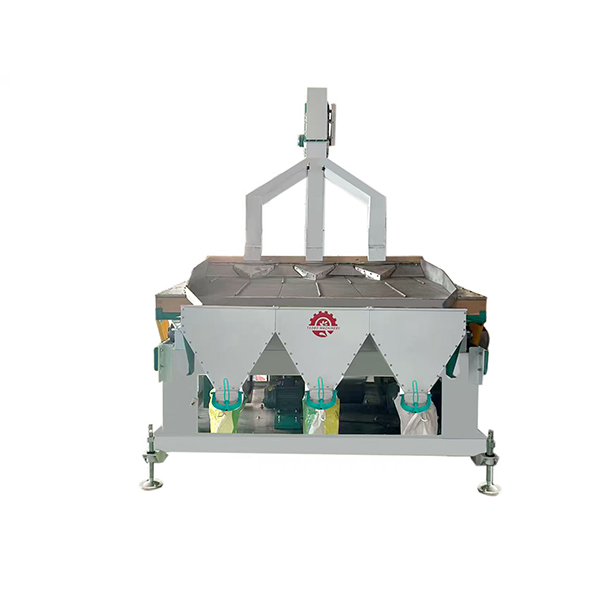
The fundamental operating principle of destoners has remained largely unchanged for the past century: it relies on a triple-action mechanism—fluidization via an upward airflow, vibration of the screen deck, and inclined conveyance—to cause denser stones to sink and move upward, while lighter grain kernels float and move downward. However, traditional models present several significant pain points in practical production.
First, there is the issue of “limited versatility.” In traditional destoners, airflow, vibration amplitude, and deck inclination are typically adjusted via mechanical handwheels and fixed pulleys. Switching to a different material requires stopping the machine, loosening bolts, and conducting repeated test runs. Given the substantial differences in particle size and specific gravity among various commodities—such as grains (corn, wheat, rice), sesame seeds, and legumes (soybeans, kidney beans, chickpeas)—a single set of operating parameters is rarely effective for all. Consequently, facilities are often forced to dedicate one machine to each specific material or settle for suboptimal settings, which frequently leads to incomplete stone removal or the loss of grain along with the stones.
Second, there is “poor airflow uniformity.” Traditional single-chamber designs often suffer from uneven air distribution—blowing intensely in the center of the screen deck while remaining weak along the sides. This results in inconsistent material bed thickness and localized, ineffective stone removal. Furthermore, because airflow is adjusted crudely using baffles, it is particularly difficult to control when processing small-particle items like sesame seeds: too much air causes the seeds to blow away, while too little fails to fluidize the material bed, preventing stones from sinking.
Third, there are issues with “product damage and dust.” Mechanical systems with constant vibration amplitude can cause small-particle materials to bounce excessively, leading to physical damage. Additionally, open-structure designs often allow dust to escape, making it difficult to meet the stringent standards required for food-grade processing facilities.
The 2026 destoner has been systematically upgraded to address these three challenges, shifting the focus from merely “removing stones” to “thorough removal, product integrity, operational flexibility, and ease of maintenance.”
II. Core Technical Upgrades and Their Underlying Principles
The upgrade of the new-generation destoner is not merely a matter of adding accessories; rather, it involves a comprehensive reconstruction centered on four key pillars: airflow, vibration, screen surface, and control.
First, a multi-zone air chamber system with independent, variable-frequency airflow control. The new design replaces the traditional single air chamber with multiple independent zones (front, middle, and rear). Airflow in each zone can be adjusted individually, ensuring uniform distribution across the entire length of the screen surface and a consistent material layer thickness—effectively eliminating the common issue of “intense airflow in the center but weak airflow at the edges.” By utilizing variable-frequency drives for the fans, the system allows for stepless airflow adjustment with digital readouts. When switching between different types of materials, operators can simply select a preset recipe on the touchscreen; parameters are updated within seconds, eliminating the need for manual mechanical adjustments (such as changing belts). This directly resolves the long-standing challenge of using a single machine to process a wide variety of materials.
Second, optimization of the screen surface structure. The screen consists of a perforated stainless steel plate featuring a “barb” (or directional protrusion) design. During vibration, these barbs exert a directional force that “grips” and pushes stones—which are in direct contact with the screen—upward, while simultaneously allowing the grain layer above to flow smoothly downward. The angle, aperture shape, and perforation ratio of these “fish-scale” elements have been precisely optimized to stabilize the critical separation point—ensuring stones are firmly gripped and moved upward, while grain flows downward efficiently. This significantly enhances destoning precision, making the equipment particularly well-suited for small-grained products like sesame seeds.
Third, a dual-layer screen configuration with pre-stratification. Some new models incorporate a two-tier screen system: the upper layer performs pre-stratification and thins out the material layer, while the lower layer carries out the final destoning. This “stacked, two-stage” separation process ensures more thorough stone removal, while simultaneously reducing the load and wear on each individual screen layer, thereby extending the service life of the screen plates.
Fourth, intelligent material-level monitoring and automated feed control. Equipped with material-level sensors and an automated feeding adjustment mechanism, the system monitors the thickness of the material layer on the screen in real time. It automatically reduces the feed rate if the layer becomes too thick, or increases it if the layer becomes too thin, ensuring that the material layer consistently remains “thin and uniform”—the optimal condition for effective separation. A stable material layer is a prerequisite for accurate stone removal. In traditional machines, operators must monitor the material flow and manually adjust the gates—a process prone to significant fluctuations—whereas automated control ensures consistent and repeatable stone-removal performance.
Fifth, the design features low-damage vibration and a fully enclosed, dust-proof structure. Vibration parameters are optimized based on the specific characteristics of the material, utilizing adjustable eccentric weights or variable-frequency vibration. For small-grained materials, the system employs low-amplitude, smooth conveyance to minimize bouncing and mechanical damage. The entire unit is fully enclosed and equipped with a dust-collection port, preventing dust leakage and meeting the hygiene standards required for food processing.
Sixth, the system incorporates modular, quick-change screen surfaces and wear-resistant materials. The screen surfaces are designed as modular, easily swappable components; when switching products, operators can simply replace the modules with the appropriate aperture size—a process that takes only minutes and eliminates the need to disassemble the entire machine. The screen plates and “fish-scale” (louvered) plates are constructed from wear-resistant stainless steel, while critical moving parts feature enhanced sealing and lubrication, resulting in longer maintenance intervals and reduced downtime.
III. Specific Advantages for Grains, Sesame Seeds, and Legumes
Grains (Corn, Wheat, Rice). Grains are characterized by relatively large particle sizes, high specific gravity, and varying stone content depending on the production region; rice, in particular, retains its husk and has a lower bulk density. The new-generation machine features high airflow, large-amplitude vibration, and a dual-layer screen deck, enabling efficient processing of high-volume material flows with thorough stone removal and high throughput. For rice, a pre-stratification design separates the husks from the grains before density-based separation, preventing husks and stones from becoming intermixed. Variable-frequency airflow control allows for seamless switching between corn, wheat, and rice by simply selecting a pre-set recipe, enabling a single machine to be used across different crop seasons.
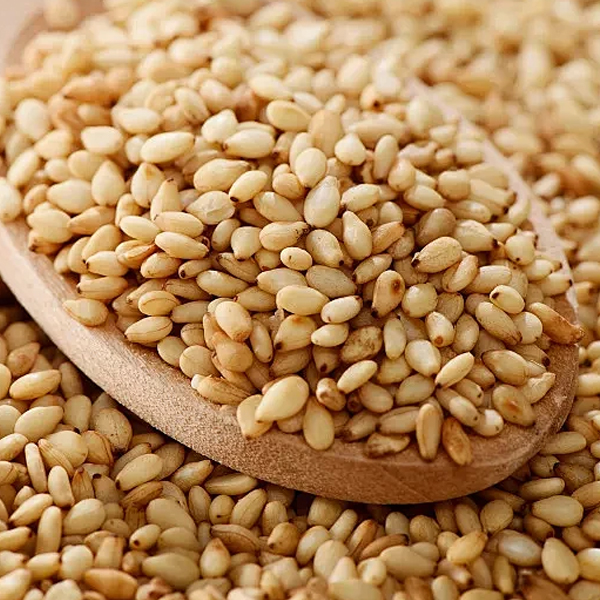
Sesame Seeds. Sesame seeds are extremely small and lightweight, often contain high levels of sand, and are highly susceptible to loss—making them the most challenging material for destoners to process. The new machine utilizes a partitioned air chamber to ensure uniform airflow across the screen surface, eliminating localized high-velocity gusts. The variable-frequency airflow can be precisely adjusted to a critical threshold where sesame seeds are fluidized (lifted and loosened) while stones remain unaffected. Optimized “fish-scale” screen plates provide superior grip for capturing fine sand, while an automatic material-level control system ensures a consistently thin and uniform layer. A low-amplitude vibration design prevents the seeds from bouncing and escaping. Through these combined features, the machine achieves both high purity and high yield, significantly reducing sand and stone residue to meet export-grade standards.
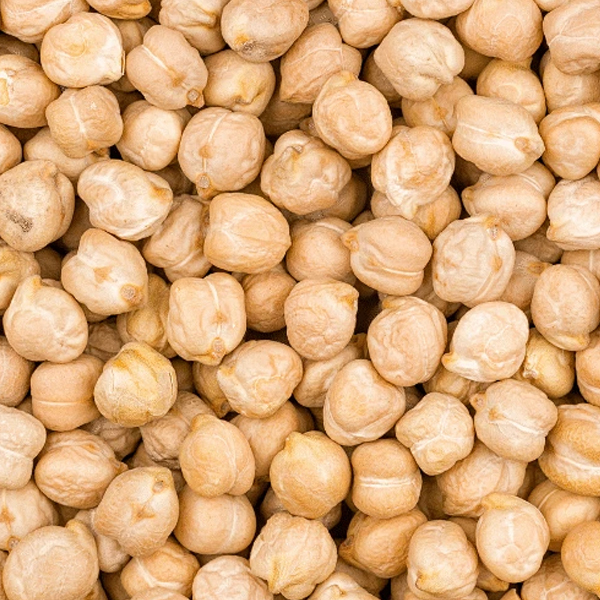
Legumes (Soybeans, Kidney Beans, Chickpeas, White Beans). Legumes have large, dense particles that are prone to breakage and are often contaminated with soil clods, stones, and broken pod fragments. The new machine’s high airflow and dual-layer screen deck facilitate rapid processing of large volumes with effective stone removal. A low-impact vibration design preserves the integrity of the beans, keeping breakage rates to a minimum. Additionally, the modular screen system allows for quick adjustments to accommodate different aperture sizes—such as those required for soybeans versus kidney beans—making the equipment highly adaptable for processing a diverse range of crops.
2026 destoner from Hebei Taobo Machinery features variable-frequency air regulation, partitioned air chambers, optimized fish-scale plates, and a modular screen surface design. It allows for the selection of specific parameter recipes tailored to different grains, sesame seeds, and legumes. The unit operates in a fully enclosed, dust-proof environment with minimal product breakage. It can be integrated with air-screen cleaners, grading screens, and color sorters to form a complete cleaning line, consistently achieving a purity level of over 99.5%—well-suited for export-oriented processing that requires frequent product switching.
Post time: Nov-06-2026