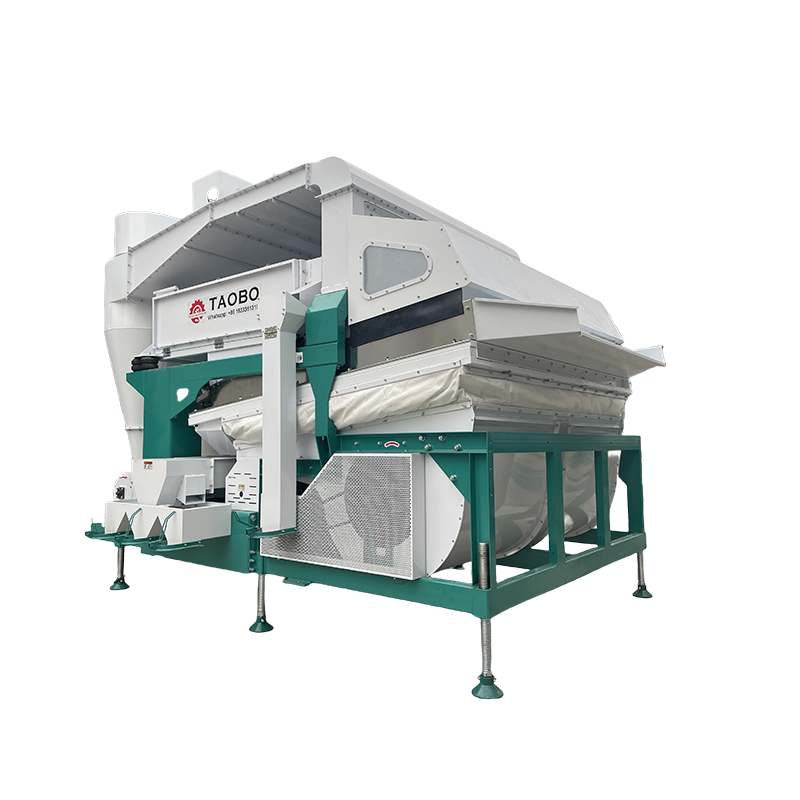
Core Advantages of the PLC-Controlled Air-Screen & Gravity Separator for Sesame and Soybeans
This machine integrates three cleaning stages—air separation, vibration screening, and gravity separation—and features an intelligent PLC variable-frequency control system. Designed to handle the distinct characteristics of sesame (tiny, lightweight) and soybeans (large, heavy grains), it offers significant advantages over standard manual cleaning equipment across four key areas: cleaning process efficiency, intelligent PLC control, material-specific adaptability, and suitability for production operations and export standards.
I. Composite Cleaning Process Advantages
Multi-stage impurity removal ensuring consistent finished product purity of up to 99.5%
The front-end air-screen unit removes lightweight impurities such as dust, broken shells, stems, leaves, and shriveled grains. Multi-layer vibrating screens use geometric sizing to separate large stalks and fine sand/soil. The rear-end gravity table utilizes density differences to effectively remove impurities that are similar in size to the product itself, such as stones, insect-damaged grains, moldy grains, and broken seeds.
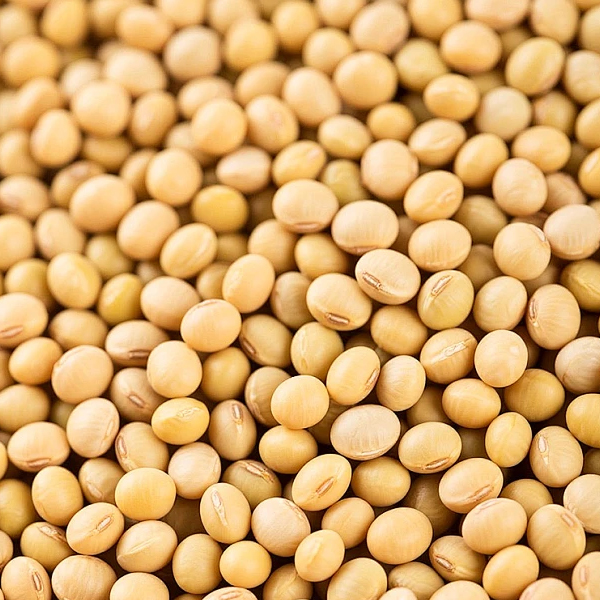
Soybean cleaning: Effectively removes soil clods, stones, insect-damaged beans, shriveled beans, and broken cotyledons.
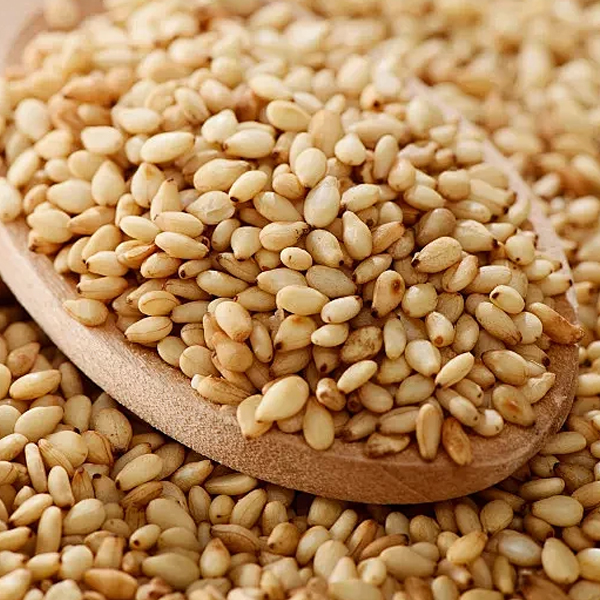
Sesame cleaning: Solves issues with fine sand, weed seeds, and empty sesame hulls; overcomes the challenge standard screens face in separating lightweight impurities of the same size as the sesame seeds.
Gentle separation to minimize breakage and material loss
For sesame—which is brittle, prone to breakage, and generates dust—airflow and vibration amplitude can be reduced. For soybeans—which have larger grains—air pressure and vibration parameters can be increased. Layered fluidized separation prevents violent material impact, reduces breakage, increases yield, and meets export standards for commercial grain.
Dual-purpose machine with rapid switching between sesame and soybean production
Switching between materials requires only a change of the specific screen mesh (long-hole screens for sesame; round-hole screens for soybeans) without replacing the main unit, making it ideal for processing plants handling both legumes and oilseeds like sesame.
Enclosed dust removal structure to improve workshop environments
Equipped with a cyclone dust removal system, the machine collects the large volumes of airborne dust generated during sesame processing, preventing leakage. This eliminates material loss caused by airborne dust and meets the environmental compliance requirements of overseas facilities.
II. Unique Advantages of the PLC Intelligent Control System
1. One-touch parameter storage and recall; no need for repeated adjustments when switching materials
The touchscreen features preset operating programs for both soybeans and sesame seeds, with digital storage of settings such as fan speed, feed rate, gravity table tilt angle, and vibration frequency. Operators can simply select the corresponding recipe—switching instantly between sesame and soybean modes—eliminating the need for manual trial-and-error adjustments to air dampers and vibration settings, thereby lowering the skill requirements for operators.
2. Closed-loop variable frequency control ensures stable operation
The PLC monitors feed flow in real-time and automatically coordinates the fan and vibration motors. It makes micro-adjustments to airflow and amplitude in response to feed fluctuations, preventing inconsistencies in cleaning performance caused by uneven feeding. This ensures uniform product quality, making the system ideal for integration into continuous, large-scale 24-hour production lines.
3. Real-time equipment monitoring and automatic fault alerts
The system monitors motor current, fan load, and material blockage signals. In the event of screen clogging, motor overload, or fan malfunctions, the system triggers an alarm and executes an orderly shutdown. This prevents issues like sesame paste clogging the screens or soybeans jamming the equipment, minimizes downtime for maintenance, and protects the screen mesh and gravity table surface.
4. Automated coordination for seamless integration into the cleaning line
The system interfaces with upstream and downstream equipment—such as bucket elevators, storage silos, color sorters, and packaging machines—to enable synchronized start-stop operations. This creates a fully automated sesame or soybean cleaning line, reducing the need for manual intervention during material loading and unloading.
III. Tailored Adaptability for Sesame and Soybean Processing
Adaptation for Sesame Processing
Airflow is finely adjustable, with a low-velocity mode that prevents tiny sesame seeds from being carried away by the air stream and lost. The gravity separator operates at high frequency and low amplitude, ensuring thorough stratification of the thin material layer to effectively separate empty/shriveled seeds and weed seeds. Anti-clogging bouncing balls are incorporated into the screens to prevent fine sesame seeds from getting stuck in the mesh.
Adaptation for Soybean Processing
Fluidization air pressure in the gravity separator is increased to efficiently separate stones and hard clods of soil. The vibration amplitude of the vibrating screen is adjustable to ensure smooth soybean flow and prevent accumulation. Simultaneous soybean grading allows for the separation of whole, high-quality beans from broken ones, meeting the diverse procurement standards of different customers.
This PLC-controlled intelligent air-screen and gravity separator integrates air separation, screening, and gravity-based precision cleaning, offering outstanding performance in processing sesame and soybeans. It features a built-in PLC intelligent control system that allows for one-touch switching between preset cleaning parameters for sesame and soybeans, eliminating the need for repeated manual adjustments during material changes. A multi-stage impurity removal process sequentially eliminates dust, stems, leaves, soil, stones of similar size, and moldy or insect-damaged seeds, achieving a final product purity of up to 99.5%. The system employs closed-loop variable-frequency control to stabilize airflow and vibration amplitude, effectively minimizing breakage losses for sesame while ensuring efficient stone removal for soybeans. Designed with anti-clogging screens suitable for fine sesame seeds and featuring a fully enclosed dust removal system, it maintains a clean production environment. The unit supports standalone operation or can be integrated with elevators and storage silos to form a fully automated cleaning line; it is compatible with the processing of various crops—including sesame and soybeans—offers stable operation and easy maintenance, and is widely used for commercial grain sales, oilseed pretreatment, and seed selection, with significant exports to grain-producing regions in Africa and Southeast Asia.
Post time: Aug-01-2026