
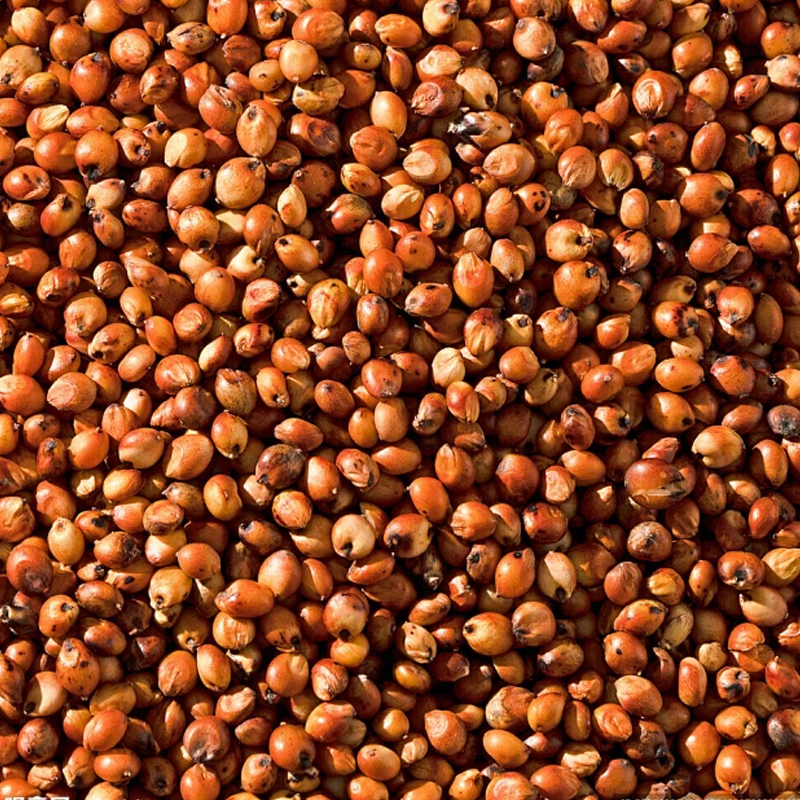
I. Primary Impurities in Raw Sorghum
Light impurities (removed primarily via air separation)
Sorghum husks, glumes, broken panicles, rachis fragments, shriveled grains, stem/leaf fragments, dust and grass clippings, weed seeds, and insect debris. This category accounts for the largest share; the fine, flaky debris easily clogs screens, while excessive airflow risks carrying away good grain.
Large impurities (trapped by the upper screen)
Sorghum stalks, panicle heads, soil clods, weed roots/stems, and fragments of woven rope/sacks.
Small impurities (passed through the lower screen)
Fine sand and soil, powder, tiny sorghum fragments, and insect egg debris.
“Shoulder-to-shoulder” heavy impurities (difficult to separate via air/screen; require a gravity-based destoner)
Stones and soil pellets similar in size to sorghum grains; some moldy or insect-damaged grains.
Imperfect grains (defects affecting quality; high standards require a gravity separator)
Shriveled, insect-damaged, sprouted, moldy, and broken grains.
Characteristics of sorghum impurities: High proportion of organic impurities like husks, dust, and panicle fragments; stones are small and similar in size to the grain, making complete removal via air/screen separation impossible.
II. Primary Impurities in Raw Soybeans
Light impurities (removed via air separation)
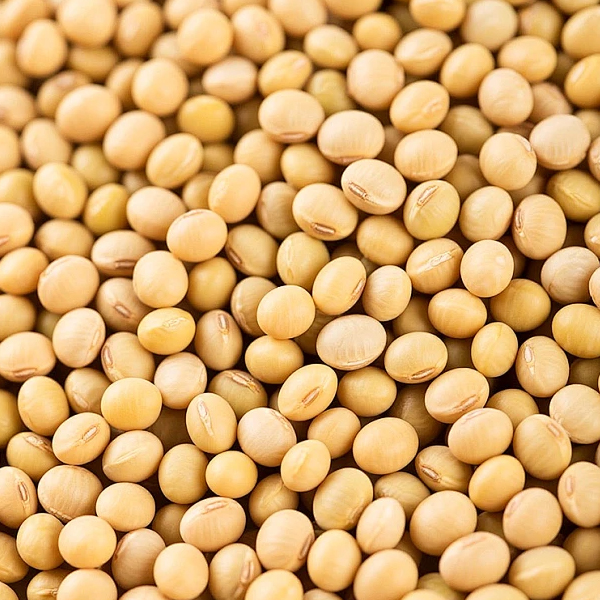
Pod fragments, seed coats, shriveled soybeans, leaf fragments, dust, and grass seeds. Soybean kernels are heavy; the proportion of light impurities is lower than in sorghum.
Large impurities (trapped by the upper screen)
Soybean stalks, whole pods, large soil clods, twigs, weeds, and woven material fragments.
Small impurities (passed through the lower screen)
Fine sand and soil, broken cotyledons (split beans), and small soil pellets. Broken cotyledons are a typical small impurity in soybeans; excessive vibration can cause further breakage.
“Shoulder-to-shoulder” heavy impurities (require a gravity-based destoner)
Stones and soil clods similar in size to soybeans; this is a key challenge in soybean cleaning.
Imperfect grains
Broken cotyledons, insect-damaged, sprouted, moldy, frost-damaged, and diseased grains; strict controls exist regarding broken beans in trade and processing. Foreign Impurities
Seeds of other legumes and grains, metal fragments; iron filings removed via magnetic separation.
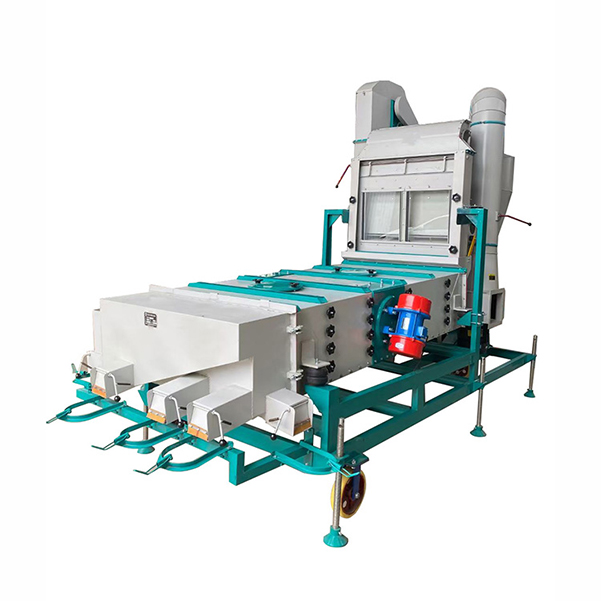
Differences in Cleaning Sorghum and Soybeans Using Air-Screen Cleaners
Sorghum kernels are relatively small, ovoid, and low in density; impurities typically consist of husks, broken panicles, dust, and shriveled grains. In contrast, soybean kernels are large, oblate, and heavy; impurities include pods, broken cotyledons, soil clods, and large stalk fragments. Due to significant differences in terminal velocity and kernel size, the two crops require distinct approaches regarding screen selection, airflow settings, feeding rates, screen inclination angles, and the handling of specific processing challenges.
1. Differences in Screen Selection
For sorghum cleaning, the upper screen uses 10–12 mm round holes to catch large impurities like broken panicles and stalks; the lower screen uses 3.5–4.5 mm round holes to sift out fine soil and broken seeds while retaining intact sorghum kernels. Round-hole screens are preferred, as small sorghum kernels tend to get stuck in rectangular-hole screens.
For soybean cleaning, the upper screen uses 16–20 mm round holes to remove pods, soil clods, and long stalks; the lower screen uses 8–10 mm round holes to sift out broken beans and small soil particles while retaining intact soybeans. Given the large kernel size, larger screen apertures are used; a combination of round and rectangular holes can be employed to minimize crushing or breakage caused by bean crowding.
2. Differences in Airflow Adjustment
Sorghum has a low terminal velocity, so low-to-medium airflow is used; excessive airflow would carry away intact kernels, resulting in product loss. The goal is to blow away husks, dust, and shriveled panicles; the setting is correct if only husks and debris—and no intact kernels—exit the light-impurity outlet.
Soybeans are heavy and have a higher terminal velocity, allowing for medium-to-high airflow settings to effectively remove pods, broken skins, and shriveled beans without risking the loss of sound kernels. While insufficient airflow allows pods and husks to contaminate the finished product, airflow must not be excessive, as high-velocity impact can cause the beans to split. 3. Feed Flow Rate and Screen Inclination Angle
Sorghum grains have moderate flowability; therefore, the feed flow rate should not be excessive, and the material layer should be kept relatively thin to ensure airflow can penetrate it. A slightly steeper screen inclination angle—between 6° and 8°—helps the small sorghum grains move forward and prevents material accumulation that could clog the screen apertures.
Soybeans are heavy and possess good flowability, allowing for a moderately higher feed flow rate and a slightly thicker material layer. The screen inclination angle should be set between 5° and 7°; if the angle is too steep, the soybeans will slide rapidly across the screen surface, resulting in inadequate screening where small impurities fail to be removed before the beans exit as the finished product.
4. Key Cleaning Focus: Addressing Pain Points and Common Issues
Handling sorghum involves addressing common problems such as grain loss and screen clogging; broken sorghum husks and fine debris tend to gum up the screen apertures, necessitating regular cleaning. Additionally, because the weight difference between shriveled and sound grains is minimal—making complete separation via air-and-screen cleaning alone difficult—high-standard processing workflows often incorporate a gravity separator at the final stage.
When processing soybeans, the priority is preventing grain breakage; vibration amplitude must not be set too high, as excessive vibration can easily crack the beans. Large soil clods and pods tend to clog the upper screen deck, so ensuring the discharge outlet for large impurities remains clear is crucial. Broken bean fragments are classified as intermediate impurities and are separated using the lower screen deck.
5. Differences in Overall Process Flow
Raw sorghum contains a high proportion of dust and lightweight impurities (such as husks), placing a heavier load on the air-separation stage; consequently, the process prioritizes the bulk removal of husks and dust during the vertical air-separation phase before the grain enters the vibrating screen.
Raw soybeans contain significant amounts of large solid impurities, placing a heavier load on the vibrating screen stage; large impurities like soil clods and pods are screened out first, followed by air separation to remove shriveled beans and seed coats. If the raw material contains a high level of stones, a gravity-based destoner must be installed after the air-separation unit.
Post time: Aug-19-2026