
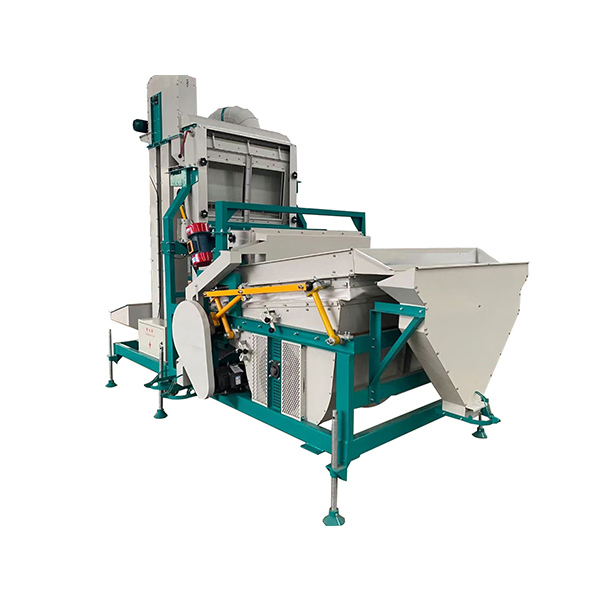
The fundamental distinction in using a wind-sieve gravity separator to clean sesame seeds versus chickpeas stems from the significant differences in their particle size, specific gravity, morphology, and types of impurities; this distinction is directly manifested across five key dimensions: screen configuration, airflow volume and pressure, vibration parameters, gravity table operating conditions, and—finally—throughput and susceptibility to wear.
I. Differences in Basic Material Characteristics
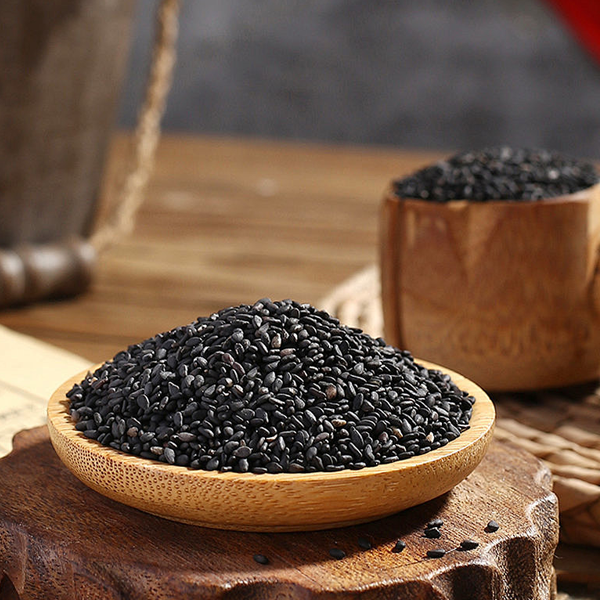
Sesame: Extremely small particles (length 1.5–2.5 mm, width 1–1.5 mm); low specific gravity (approx. 0.75–0.85 g/cm³); smooth surface; and extremely high fluidity. Impurities primarily consist of dust, fine sand, grass seeds, shriveled seeds, empty hulls, and tiny pebbles; the seeds are also prone to breakage.
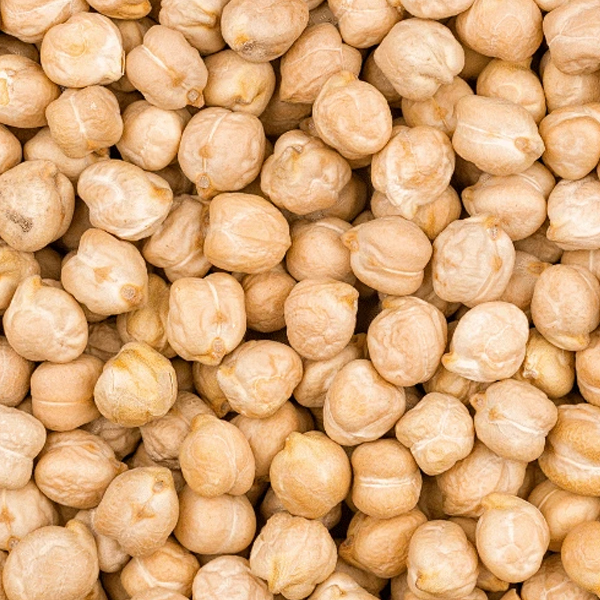
Chickpeas: Large particles (diameter 5–10 mm, irregular peach-like shape); high specific gravity (approx. 0.95–1.15 g/cm³); rough surface texture; poor fluidity; and angular contours. Impurities primarily consist of soil clumps, large stones, straw, broken beans, insect-damaged beans, moldy beans, and weed seeds; the beans are resistant to impact and are not easily broken.
II. Air Separation System (Airflow) Parameters and Performance Variations
1. Sesame Seeds
Air Speed: Low air velocity, high air pressure, uniform and fine airflow (achieved by lowering the fan speed via variable frequency control); the critical suspension velocity is low (approximately 2–4 m/s), meaning that even a slightly excessive air speed can cause sound sesame seeds to be drawn away.
Air Duct: Narrow air ducts, dual/multi-stage air separation, strong negative-pressure suction; airflow volume must be strictly controlled to prioritize the removal of extremely light dust, empty shells, and shriveled grains, thereby preventing the loss of marketable product.
Challenges: Unstable airflow can easily lead to **”grain loss”** (where sound sesame seeds are inadvertently drawn away) or incomplete cleaning; the system requires high-precision airflow control valves and sealed air ducts.
2. Chickpeas
Air Speed: High air velocity, large airflow volume, low air pressure (achieved by operating the fan at high speed); the critical suspension velocity is high (approximately 6–9 m/s), requiring strong winds to blow away light impurities (such as straw, empty shells, and broken husks).
Air Duct: Wide air ducts, single/dual-stage primary air separation; the airflow is primarily utilized to remove light impurities, exerting minimal impact on the sound chickpeas and posing little risk of product loss.
Challenges: Insufficient air speed results in residual light impurities; while excessive air speed does not adversely affect the sound chickpeas, it leads to wasted energy consumption and significant dust generation.
III. Screening System (Sieve) Configuration and Grading Differences
1. Sieve Mesh Aperture (Core Distinction)
Sesame
Upper Sieve (Removal of Coarse Impurities): Small aperture (2.5–3.5 mm) — removes grass stalks, small soil clumps, and large debris.
Middle Sieve (Grading / Removal of Fine Impurities): Extremely small aperture (1.2–2.0 mm) — separates small pebbles, sand grains, broken sesame seeds, and weed seeds.
Lower Sieve (Collection): Ultra-fine mesh (≥40 mesh) — prevents the loss of fine materials.
Characteristics: Multi-layered small apertures, high mesh count, precision-punched or woven screens; sieve apertures are prone to clogging, requiring the installation of a rubber ball cleaning mechanism.
Chickpeas
Upper Sieve (Removal of Coarse Impurities): Large aperture (12–16 mm) — removes large stones, straw, and mud clumps.
Middle Sieve (Grading / Removal of Fine Impurities): Medium aperture (6–9 mm) — separates broken beans, fine impurities, and immature beans.
Lower Sieve (Collection): Coarse mesh (8–12 mesh) — serves only to prevent the loss of large particles.
Characteristics: Large apertures, thick plates, wear-resistant punched screens; sieve apertures are not prone to clogging, allowing for a larger vibration amplitude.
2. Vibration Parameters
Sesame: Low amplitude (1–3 mm), high frequency (16–22 Hz), small inclination angle; this prevents sesame seeds from bouncing too high, breaking, or sliding off the sieve surface too rapidly.
Chickpeas: High amplitude (4–8 mm), low frequency (8–14 Hz), large inclination angle; this ensures that large particles tumble, stratify, and pass through the sieve effectively, preventing material blockage.
IV. Gravity Separation (Gravity Table) Core Differences (Most Critical)
Sesame
Table Deck: Small deck area, dense “fish-scale” perforations, low inclination angle (3°–6°); since sesame seeds are light and highly fluid, a slightly larger inclination angle would cause them to slide down too quickly, preventing proper stratification. Airflow: Minimal bottom airflow with uniform distribution; the airflow serves merely to induce slight suspension, allowing heavier, high-quality sesame seeds to settle to the bottom and migrate upward, while shriveled seeds, empty hulls, and light impurities float to the surface and flow downward.
Vibration: Micro-vibration—high frequency and low amplitude; primarily driven by friction with secondary bouncing action, designed to prevent chaotic layering and mixing of the sesame seeds.
Challenges: Extremely minimal specific gravity difference (the difference between good seeds and shriveled seeds is <0.1), requiring extremely precise adjustment; prone to “mixed layering,” making it difficult to meet purity standards.
Chickpeas
Deck: Large deck surface, wide-aperture “fish-scale” plates, and a steep incline (8°–15°); since chickpeas are heavy and possess poor flow characteristics, a steep incline and strong vibration are required to drive the stratification process.
Airflow: Strong bottom airflow with a penetrating distribution pattern; the airflow lifts the material bed, allowing full-bodied, heavy beans to settle to the bottom and migrate upward, while insect-damaged, moldy, empty, or broken beans float to the surface and flow downward.
Vibration: Strong vibration—low frequency and high amplitude; ensures that the large-sized particles are thoroughly loosened, resulting in clear stratification and complete separation.
Challenges: Significant specific gravity difference (the difference between good beans and defective beans/stones is >0.2), making separation relatively easy; however, care must be taken to prevent the high-amplitude vibration from causing the beans to collide and sustain damage.
V. Comparison of Throughput, Fragility, and Operational Considerations
1. Sesame
Throughput: Low (2–5 tons/hour); small grain size, requiring precise control and resulting in a slow flow rate.
Breakage Risk: Extremely high; requires low-speed conveying, gentle contact, and impact prevention; elevators and chutes must be lined with rubber.
Operation: Primarily focused on fine-tuning, with stability taking precedence; even minute changes in airflow volume, vibration amplitude, or inclination angle can affect performance, necessitating repeated calibration.
2. Chickpeas
Throughput: High (8–15 tons/hour); large grain size, rapid flow rate, and heavy equipment load.
Breakage Risk: Low; the beans are hard and impact-resistant, making them unlikely to break during standard conveying and vibration processes.
Operation: Primarily focused on coarse adjustment, with efficiency taking precedence; parameters allow for a wide adjustment range with high tolerance for error, making it easy to achieve stability.
VI. Differing Priorities in Impurity Removal
Sesame: Focuses on removing dust, fine sand, tiny pebbles, hollow or shriveled grains, and weed seeds; the core objective is the “precise removal of light impurities and minute heavy impurities.”
Chickpeas: Focuses on removing large stones, soil clods, straw, broken beans, insect-damaged beans, and moldy beans; the core objective is the “vigorous removal of large impurities and defective beans.”
Summary
Cleaning sesame requires “precise micro-control”: low airflow, fine screen perforations, subtle vibration, shallow inclination angles, low throughput, breakage prevention, and prevention of grain loss.
Cleaning chickpeas allows for a “vigorous, robust approach”: high airflow, coarse screen perforations, strong vibration, steep inclination angles, high throughput, impact resistance, and ease of separation.
When switching between these two materials on the same air-screen gravity separator, it is mandatory to replace the entire set of screens and make significant adjustments to the fan frequency, vibration amplitude/frequency, gravity table inclination angle, and airflow volume; otherwise, the desired cleaning efficacy cannot be achieved.
Post time: Apr-08-2026