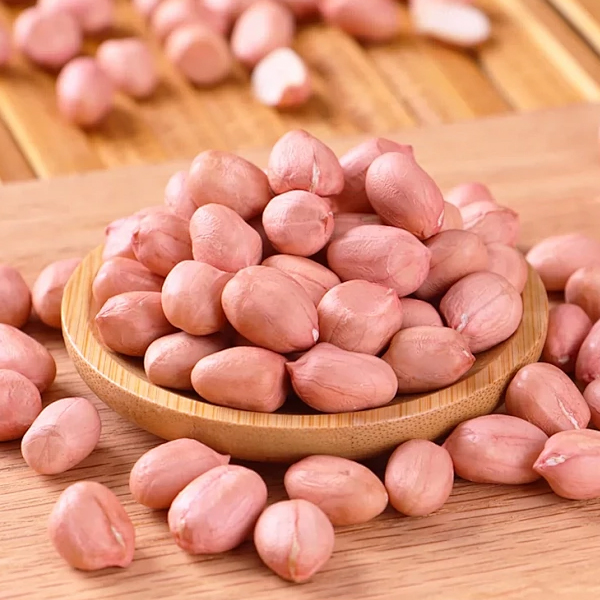
The air-screen gravity cleaner integrates air separation, screening, and gravity-based sorting into a single unit, making it a highly versatile piece of cleaning equipment in the grain, oil, and seed processing sectors. Capable of simultaneously handling impurities that differ in particle size, weight, and terminal velocity (suspension speed), it is widely used for the preliminary cleaning and fine processing of crops such as peanuts (in-shell) and sorghum. Peanuts have rough shells and complex material compositions, with raw stock often containing clods, stones, shriveled pods, broken shells, stems, leaves, dust, and plastic fragments; sorghum grains are small, and raw stock frequently contains glumes, stalk fragments, weed seeds, grit, immature shriveled grains, and insect-damaged kernels. Given the significant differences in impurity morphology and physical properties between these crops, the air-screen gravity cleaner employs a multi-stage process to selectively remove impurities based on weight, size, and density. This enhances product purity and lays the groundwork for subsequent operations—such as shelling, milling, storage, and seed coating—thereby effectively reducing equipment wear, minimizing the risk of mold during storage, and increasing both commercial value and seed germination quality.
Raw material is fed into the machine’s inlet from upstream conveying equipment and first passes through a distribution mechanism to ensure even spreading—the initial step of the cleaning process. A stable, controllable feed rate is essential; excessive flow can lead to material accumulation and incomplete screening, while insufficient flow reduces processing efficiency. The distribution device spreads the material flat, ensuring that peanuts or sorghum are evenly distributed across the entire width of the screen surface. This prevents localized clustering and ensures that both the airflow and the screen surface make full contact with every single grain or pod. Peanuts vary greatly in individual volume and weight, with a mix of full pods, shriveled pods, and broken shells; sorghum grains are small and prone to clumping. The distribution stage breaks up these clumps and prevents uneven material flow, thereby guaranteeing the effectiveness of all subsequent sorting stages. After exiting the material-leveling zone, the material first enters the preliminary air-separation and dedusting stage. Inside the equipment, a controlled combined vertical and horizontal airflow is generated to separate light impurities based on differences in suspension velocities. Impurities such as dust, broken peanut vines, dried shells, broken pod fragments, and lightweight shriveled pods (in the case of peanuts), or glumes, stalk fragments, dust, light chaff, and extremely light, underdeveloped grains (in the case of sorghum), have suspension velocities far lower than the qualified main material; the airflow carries these light impurities upward or laterally, collecting them in a dedicated light-impurity settling chamber. Heavier items—such as peanut pods and sorghum grains—settle downward due to gravity and proceed to the screening system. This stage primarily removes airborne dust and the vast majority of lightweight organic impurities, preventing dust from entering the screening chamber and clogging the screen apertures; it also pre-separates large-volume, stalk-like light impurities, thereby reducing the workload on downstream screens and gravity separators. Airflow rates must be adjusted differently for the two materials: peanut pods are heavier and require a higher airflow, whereas sorghum grains are lighter and require a moderately reduced airflow to prevent intact grains from being sucked out and lost.
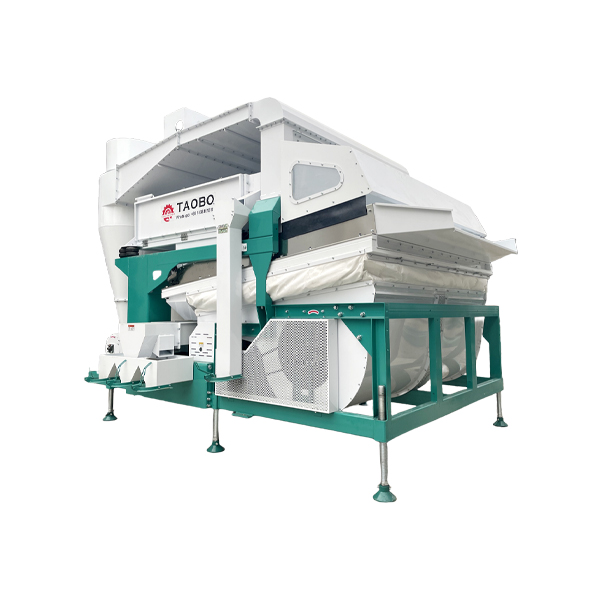
After undergoing air separation to remove light impurities, the material enters a multi-layer vibrating screening system, where it is graded and cleared of impurities based on geometric size differences across varying screen mesh apertures. The screen box undergoes high-frequency reciprocating vibration, driving the material to slide directionally along the screen surface, thereby facilitating material stratification and passage through the screens. The top layer features large-aperture mesh designed to intercept impurities larger than the finished product; for instance, when processing peanuts, it captures clods of soil, stones, large root fragments, and weed clumps, discharging these oversized foreign objects directly from the top screen’s outlet, while in sorghum processing, it separates large debris such as coarse stalks and soil clumps. The middle screen layer is matched to the particle size of the finished product, allowing acceptable peanut pods or sorghum grains to pass through for further transport, while retaining oversized, misshapen pods or large weed seeds on the surface for discharge. The bottom layer is fitted with fine-aperture mesh to remove impurities smaller than the finished product; this screens out fine sand, small stones, and shell fragments during peanut processing, and removes fine silt, tiny weed seeds, and broken grains during sorghum processing. The vibrating screening process primarily addresses impurities with inconsistent geometric dimensions, separating and removing both oversized and undersized contaminants. Given that peanut pods have irregular, bumpy shells prone to clogging screen apertures, the equipment’s vibration amplitude must be carefully calibrated to minimize the risk of jamming; conversely, sorghum grains are tiny, requiring high-precision screen apertures to prevent either product leakage or mesh clogging. Although the screening process removes most impurities of incorrect dimensions, “co-sized” impurities—contaminants similar in size to the finished product—remain; examples include soil clods resembling peanut pods, or gravel and insect-damaged grains matching the size of sorghum kernels. Since these impurities share similar dimensions with the main material and cannot be separated by screening alone, they must be routed to a gravity separation stage for further processing. After undergoing pre-treatment via air-screen separation, the material enters the gravity separation table. The table surface undergoes inclined reciprocating vibration while a uniform upward airflow is continuously introduced from below, causing the material to enter a fluidized state; final separation is achieved based on density differences. Denser materials—such as stones, soil clods, and heavy sand—move toward the high end of the table due to vibration and are discharged through the heavy impurity outlet. Materials of moderate density—such as high-quality peanut pods or plump sorghum grains—occupy the middle layer of the fluidized bed and flow toward the low end, exiting through the finished product outlet. Lower-density materials—such as shriveled pods, insect-damaged grains, moldy grains, and damaged kernels—float on the upper layer and are discharged through the light impurity outlet. When processing peanut pods, which are large and heavy, the table’s inclination angle is increased and the airflow pressure raised; conversely, for small sorghum grains, the angle is reduced and the airflow pressure lowered. These adjustments ensure proper fluidization, preventing issues such as material stagnation (where the bed fails to flow) or excessive lifting (where the material is blown away entirely).
Upon completion of the separation process, the system yields four discharge streams: large impurities, fine impurities, heavy stones and soil clods, low-grade rejects, and the finished product. Clean peanut pods or sorghum grains exit through the main discharge port and can be directly fed into a downstream elevator for transport to shelling, polishing, or storage silos; various impurities are collected and discharged separately for easy handling.
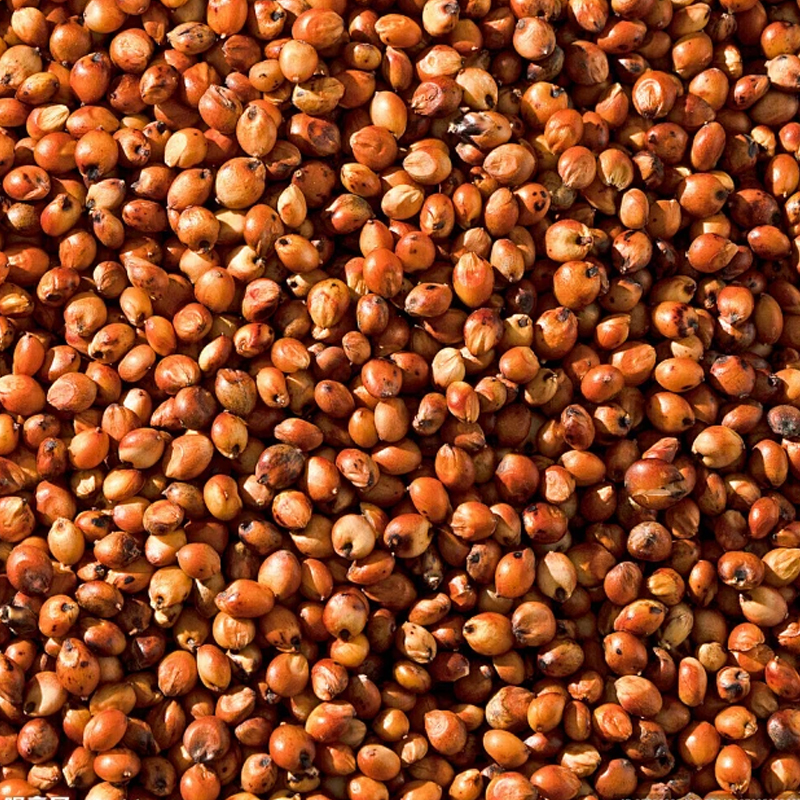
The air-screen gravity cleaner offers multifaceted benefits for the cleaning of peanut pods and sorghum. First, it employs a combined cleaning process that ensures comprehensive impurity removal. While single-method systems have limitations—air separation only removes light impurities, vibrating screens sort by size, and gravity separation targets density differences—this integrated machine combines all three stages. It removes a wide range of impurities in a single pass, including dust, stalks, husks, weed seeds, stones, soil clods, shriveled kernels, insect-damaged kernels, and broken fragments. This achieves a purity level of 99.5% for peanut pods and ensures sorghum meets market procurement standards, satisfying the basic requirements for commercial sales and seed processing.
Second, it protects downstream processing equipment and reduces losses. If stones or hard soil clods in raw peanut pods are not removed beforehand, they can strike and damage the shelling rollers, causing rapid wear and resulting in a high percentage of broken kernels. Similarly, sand and stones mixed with sorghum accelerate the wear of milling rollers and increase maintenance frequency. By separating out hard, heavy impurities early on, the machine significantly reduces equipment breakdowns, lowers the cost of replacement parts, and minimizes material breakage.
Third, it improves storage stability and inhibits mold growth and heating. Peanut pods have a high oil content, and contaminants such as shriveled pods, broken shells, and soil carry large amounts of microorganisms; if stored without cleaning, they readily absorb moisture, heat up, and become moldy. In sorghum, impurities like husks, broken grains, and dust create uneven air gaps within the grain pile, facilitating moisture accumulation and pest infestation. Cleaning removes broken, moldy, and insect-damaged kernels as well as dust and debris, resulting in uniform, intact grains and improved airflow throughout the pile; this effectively extends the storage period and reduces grain loss.
Fourth, it distinguishes between finished products and secondary materials, enabling material grading and value enhancement. While removing impurities, the equipment separates plump, high-quality material from shriveled or defective grains; shriveled peanut pods and sorghum grains can be collected separately for use as animal feed, enabling graded material utilization and boosting overall economic returns. In seed processing applications, removing shriveled and insect-damaged grains significantly increases the germination rate of the remaining plump seeds, thereby upgrading the seed quality.
Fifth, the system ensures an eco-friendly working environment by minimizing dust pollution. The entire unit features an enclosed structural design that centrally collects dust generated during air separation, preventing significant leakage and improving workshop conditions. It is designed for large-scale, continuous production lines and can be integrated with equipment such as bucket elevators, storage silos, and magnetic separators to achieve fully automated, continuous processing—from raw material intake to finished product output—for both peanut pods and sorghum.
In summary, the air-screen gravity cleaner employs a comprehensive process—combining material leveling, compound air separation, multi-layer vibrating screening, and gravity-based fluidized separation—to effectively remove impurities varying in weight, size, and density. It addresses the specific material characteristics of peanut pods (large, coarse shells and diverse impurities) and sorghum (small grains with numerous similarly sized impurities). Beyond simple impurity removal, the machine performs preliminary material grading, enhancing the quality and commercial grade of the finished products while protecting downstream processing machinery and optimizing storage conditions. It serves as indispensable core cleaning equipment for peanut and sorghum processing lines.
Post time: Sep-28-2026