Located in the tropical and subtropical monsoon climate zone, Vietnam has abundant rainfall and heat, as well as rich arable land resources. It is an important agricultural producer in Southeast Asia. Its main food crop is rice, while its legume crops are mainly soybeans, mung beans, and red beans. These crops are often rotated or intercropped with food crops, which is suitable for local planting patterns.
I. Major Legume Crops
Soybeans
Soybeans are the most widely cultivated legume crop in Vietnam, with major production areas concentrated in the northern provinces of Hanoi, Vinh Phuc, and Bac Ninh, as well as some hilly areas in the central region. Soybean cultivation in Vietnam is mostly done by small-scale farmers, using primarily local traditional varieties and a small number of introduced varieties. Production is relatively limited, and some needs are met by imports to satisfy domestic demand for edible oil processing and feed production. In recent years, the Vietnamese government has been promoting soybean variety improvement and cultivation technology enhancement to increase self-sufficiency.
Mung Beans
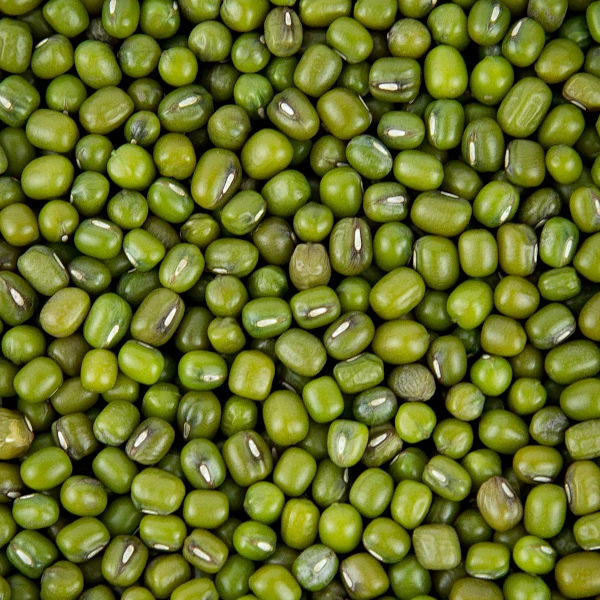
Mung beans are a widely cultivated miscellaneous legume in Vietnam. They are highly adaptable and grown throughout the country, often in rotation with crops such as rice and corn. As a short-growing crop, they effectively utilize land resources. Vietnamese mung beans are of good quality, meeting domestic consumption needs and being exported to neighboring countries. They are mainly used to make mung bean soup, mung bean cakes, and other foods.
Red Beans (Adzuki Beans)
Red bean cultivation in Vietnam is relatively small-scale, mostly done by small-scale farmers, primarily distributed in the northern mountainous areas and the central highlands. Its primary use is for food, serving as an important ingredient in traditional porridge and desserts, with a small amount also used in animal feed processing.
Lysimachia and Peas: The cultivation of these two types of beans in Vietnam is relatively limited. Lysimachia are mostly grown in vegetable gardens in the southern plains, primarily for fresh consumption; peas are mainly grown in the high-altitude areas of the north, taking advantage of the cool climate, resulting in lower yields and primarily for local consumption.
Cleaning impurities from beans requires selecting appropriate cleaning equipment based on the type of impurity (e.g., shriveled grains, soil, straw, sand, foreign particles), the differences in physical properties between the impurities and the beans (specific gravity, size, shape, surface smoothness), and the processing scale (small-scale farmers/large-scale farms).
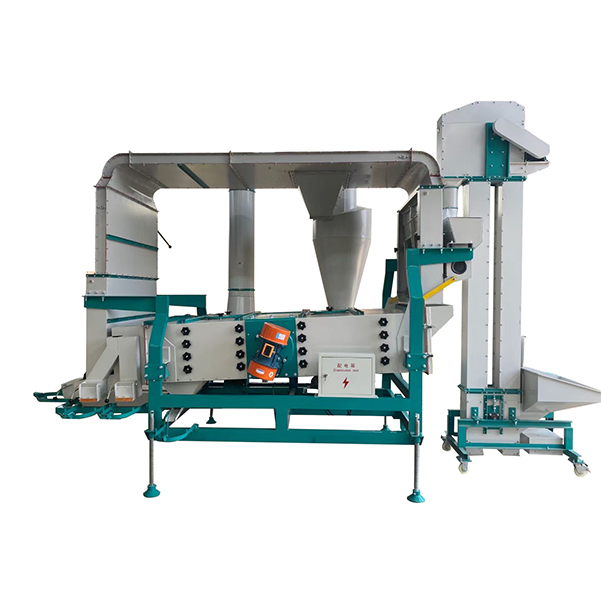
Air-screen cleaner: This is the most commonly used basic equipment for bean cleaning. It utilizes the combined effects of airflow and screen grading, suitable for the initial cleaning of most beans (soybeans, mung beans, chickpeas, peas, etc.).
Working principle: After beans and impurities enter through the feed inlet, the airflow generated by the blower first blows away lighter impurities with a much smaller specific gravity than the beans, such as straw fragments, shriveled leaves, and empty shriveled grains. Then, the beans and residual impurities fall onto screens with different apertures. Through screen vibration, impurities larger or smaller than the beans, such as clods of soil, small stones, and foreign particles, are separated.
Applicable Impurities: Lightweight straw, empty and shriveled beans, clods of soil with large size differences, and small gravel.
Advantages: Simple structure, easy operation, and low cost; suitable for small and medium-sized farmers for small-batch processing, and also a pre-treatment device for large-scale cleaning.
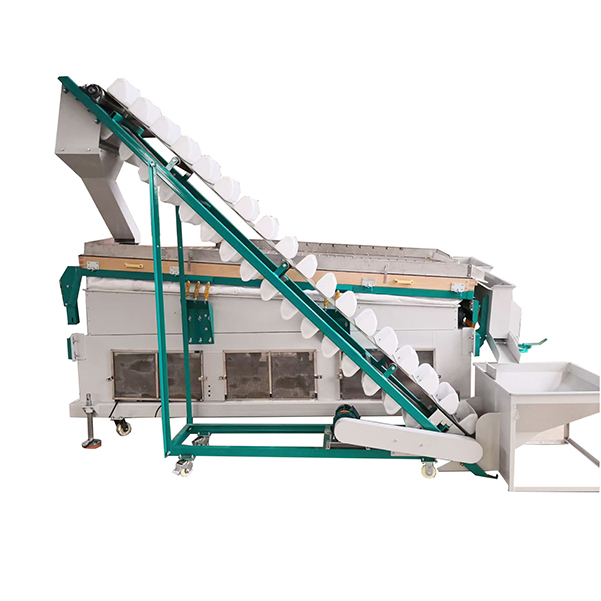
Gravity Separator: For impurities of the same size but different specific gravities that are difficult to separate by air-screen cleaners, such as gravel, moldy particles, and insect-damaged beans similar in size to beans, the gravity separator provides more precise cleaning.
Working Principle: The inclined screen surface of the equipment simultaneously undergoes reciprocating vibration and airflow penetration. Beans and impurities on the screen surface are subjected to the combined effects of vibration, airflow buoyancy, and gravity. Gravel with a higher specific gravity sinks and adheres tightly to the screen surface, moving towards the upper end of the screen and being discharged; healthy beans with a moderate specific gravity float in the middle layer and move towards the discharge port; moldy beans and shriveled beans with a lower specific gravity float on the surface and are guided to the waste port by airflow or vibration.
Applicable Impurities: Gravel of the same size, moldy beans, insect-damaged beans, and diseased beans.
Advantages: High cleaning precision, which can significantly improve the commercial purity of beans; often used in combination with air screen cleaners as the core equipment for fine cleaning of beans.
Post time: Jan-07-2026