
I. Differences in Impurity Composition: Soybeans vs. Sesame
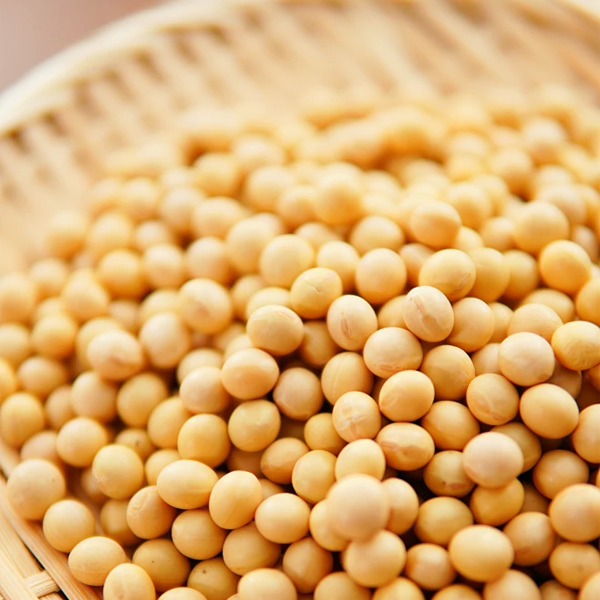
Although both soybeans and sesame are oilseed crops, they differ significantly in terms of particle size and the composition of impurities present. These differences dictate distinct parameter configurations for cleaning equipment. Soybeans have relatively large particles (approximately 5–8 mm in diameter), and their impurities—such as stalk fragments, pod husks, large clods of soil, stones, moldy or insect-damaged beans, broken cotyledons, fine soil, and dust—tend to be larger in size. In contrast, sesame seeds are extremely small (approximately 1.5–2 mm in diameter), and their impurities—including fine sand, soil, debris, husks, shriveled or empty seeds, lightweight weed seeds, stones, grit, metal fragments, and moldy seeds—are characterized by their small size and a mix of varying weights.
II. Working Principle and Advantages of the Air Screen Cleaner
(A) Working Principle
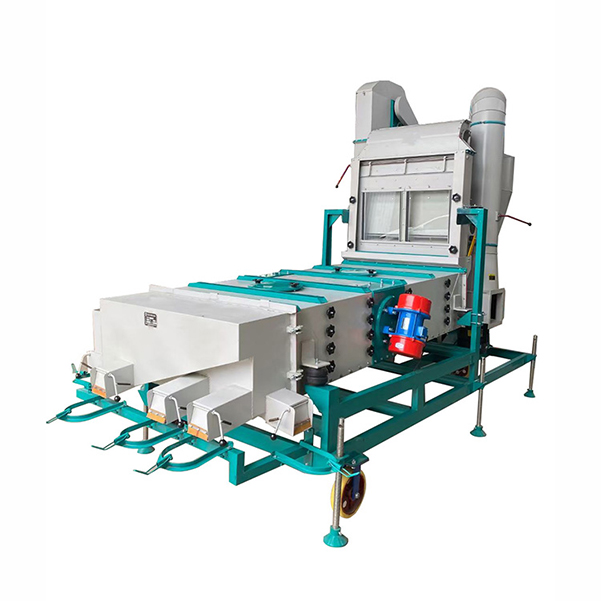
The air-screen cleaner operates by integrating two physical separation methods—screening and air-based separation (aspiration)—within a single unit.
Feeding and Spreading: Material enters the hopper through an inlet and is distributed evenly across the screen surface via a flow-control mechanism. This ensures a uniform layer thickness, preventing material accumulation that could hinder effective screening.
Screening (Separation by Size): Driven by an eccentric mechanism, the screen assembly undergoes reciprocating vibration, causing the material to tumble and advance forward along the inclined screen surface. The screens are arranged in layers with varying aperture sizes: the upper layer traps large impurities—such as straw, stones, or other debris—which are then discharged via an outlet at the end of the screen; the lower layer retains the primary product while allowing fine impurities—such as sand, soil particles, and small fragments—to pass through.
Air-based Separation (Separation by Density/Weight): A fan generates a controlled, directional airflow that acts upon the material as it falls or moves. Impurities with low density and a large surface area—such as dust, husks, shriveled/empty grains, and lightweight weed seeds—are carried away by the airflow into a dust-collection system. Meanwhile, the denser, well-filled primary product continues downward toward the discharge outlet. The airflow volume can be adjusted via dampers, allowing for settings tailored to the specific characteristics of different crops, such as soybeans or sesame.
Application for Soybeans: Larger screen apertures are used, combined with a moderate airflow, to effectively remove pod husks, straw segments, large soil clods, and dust, while also screening out fine soil. Application for Sesame: Smaller screen apertures (0.8–1.5 mm) are used, with the airflow set to a lower, more precise level to avoid accidentally removing small, lightweight sesame seeds; the focus here is on eliminating husks, shriveled or empty grains, dust, and tiny weed seeds. This illustrates the adaptive logic of using the same fundamental principles with different operational parameters.
(II) Specific Advantages
First, multi-functional performance and significant improvements in purity. By utilizing screening to address differences in “geometric dimensions” and air separation to handle variations in “specific gravity and aerodynamic properties,” the machine effectively captures both types of impurities. A single pass achieves both coarse and intermediate cleaning, substantially increasing the purity of soybeans and sesame seeds—thereby significantly reducing the workload for subsequent processing stages such as destoning, grading, and color sorting. Second, minimal material damage and high versatility. The system employs gentle reciprocating vibration and pneumatic separation rather than mechanical impact, ensuring low breakage rates for both soybeans and sesame seeds. With easily swappable screens and adjustable parameters—including airflow, vibration amplitude, and feed rate—a single unit can be adapted for various crops, such as soybeans, sesame seeds, mung beans, and white kidney beans. Third, high processing capacity and eco-friendly operation. The machine supports continuous, large-volume feeding, meeting the demands of industrial-scale oilseed processing. Its fully enclosed structure, integrated with a dust collection system, minimizes dust leakage and maintains a clean working environment. These features—high airflow, low breakage, and superior adjustability—define the core strengths of the air-screen cleaner from Hebei Taobo Machinery.
III. Working Principle and Advantages of the Destoner
(A) Working Principle
The destoner (specifically, a gravity-based destoner) is designed to remove heavy impurities that are similar in size to the target material. Its operation relies on the coupling of three physical processes: fluidization via airflow, vibration of the screen surface, and transport along an inclined plane.
Once the material enters the destoner, a fan forces air upward through a screen surface—typically perforated with small holes or featuring a fish-scale-like structure—creating a uniform, ascending airflow. This airflow loosens the bed of material, causing it to enter a fluidized, suspended state. In this state, heavier particles—such as stones, sand, soil clods, and metal fragments—sink to the bottom and remain in direct contact with the screen surface. Meanwhile, lighter, high-quality materials (like soybeans or sesame seeds) are buoyed by the airflow and remain in the upper layer.
Simultaneously, the screen assembly, driven by an eccentric mechanism, undergoes reciprocating vibration while positioned at a specific incline. The heavy impurities at the bottom are transported along the inclined screen surface toward the stone-discharge outlet. Conversely, the lighter, high-quality material in the upper layer moves along the incline—facilitated by both the vibration and the airflow—toward the product-discharge outlet. Consequently, materials of varying specific gravities are clearly stratified and discharged separately, achieving precise separation.
Key operational parameters include: airflow volume (which determines the degree of fluidization); vibration amplitude and frequency (which dictate transport and stratification efficiency); the inclination angle of the screen surface (which influences material flow direction and separation precision); and the feed rate (which determines the thickness of the material bed). For soybeans, which are relatively large and dense, the airflow volume and vibration amplitude must be set to higher values, and the screen aperture size should be adjusted accordingly. For sesame seeds—which are extremely small and easily carried away by air—the airflow must be precisely reduced. Furthermore, the screen inclination and vibration amplitude require fine-tuning to ensure the seeds are sufficiently fluidized without being inadvertently discharged along with the stones or blown away; this application demands a much higher level of parameter precision.

(II) Specific Advantages
First, it enables the thorough removal of heavy impurities that are similar in size to the product. While air-screen cleaners struggle to remove heavy contaminants—such as stones, sand, glass shards, or metal fragments—that share the same dimensions as the main product, a destoner can eliminate them efficiently. This fundamentally prevents equipment damage during processing and mitigates food safety risks—a critical factor for the export of soybeans and sesame seeds. Second, it serves a dual purpose by also functioning as a quality grader. Beyond removing stones, it can separate full, plump grains from shriveled or broken ones based on specific gravity. This ensures greater uniformity in terms of grain plumpness, bulk density, and color, significantly enhancing both the commercial grade and the visual appeal of the product. Third, it reduces the load on downstream equipment and boosts overall operational efficiency. Once material has been cleaned and destoned, it enters the optical sorter in a highly purified state; this allows the optical sorter to achieve greater recognition accuracy and higher throughput. Consequently, the purity and production capacity of the entire processing line are improved, consistently reaching a purity level of over 99.5%.
IV. Configuration Differences and Integration within the Processing Line
Configuration differences can be summarized into three key areas: First, the screen aperture—soybeans require larger apertures, whereas sesame seeds require smaller apertures (typically 0.8–1.5 mm). Second, the airflow setting—soybeans require medium-to-high airflow, while sesame seeds require precise, low-intensity airflow to prevent the product from being accidentally aspirated or scattered. Third, the amplitude and inclination angle—soybeans require larger settings, while sesame seeds require smaller, finely tuned settings. When selecting equipment, users should provide the manufacturer with data on the material’s moisture content, impurity levels, target capacity, and purity requirements, allowing the manufacturer to recommend the appropriate screen configurations and operational parameters.
Regarding the integration of the entire processing line, a sequential configuration is recommended: Air-Screen Cleaner → Destoner → Magnetic Separator → Grading Screen → Optical Sorter → Automatic Packaging Machine. In this setup, the air-screen cleaner removes light and large impurities; the destoner precisely eliminates stones and performs initial grading; the magnetic separator removes ferrous debris; the grading screen ensures uniform grain size; the optical sorter removes discolored or defective grains; and the packaging machine handles accurate weighing and final packaging. Through a six-stage sequential processing line, both soybeans and sesame seeds can consistently achieve a purity level of over 99.5%, meeting the stringent requirements for both food-grade and export-grade standards.
The air-screen cleaners and destoners from Hebei Taobo Machinery feature a design characterized by high airflow, minimal product damage, and excellent adjustability. With quick-change screens and precisely tunable parameters, the equipment can be optimized for the specific physical characteristics of either soybeans or sesame seeds. The entire processing line is fully enclosed to ensure a dust-free environment, offering high throughput and stable operation—making it a reliable choice for soybean and sesame processors aiming to achieve high purity, low breakage, and premium-grade output.
Post time: Nov-05-2026