
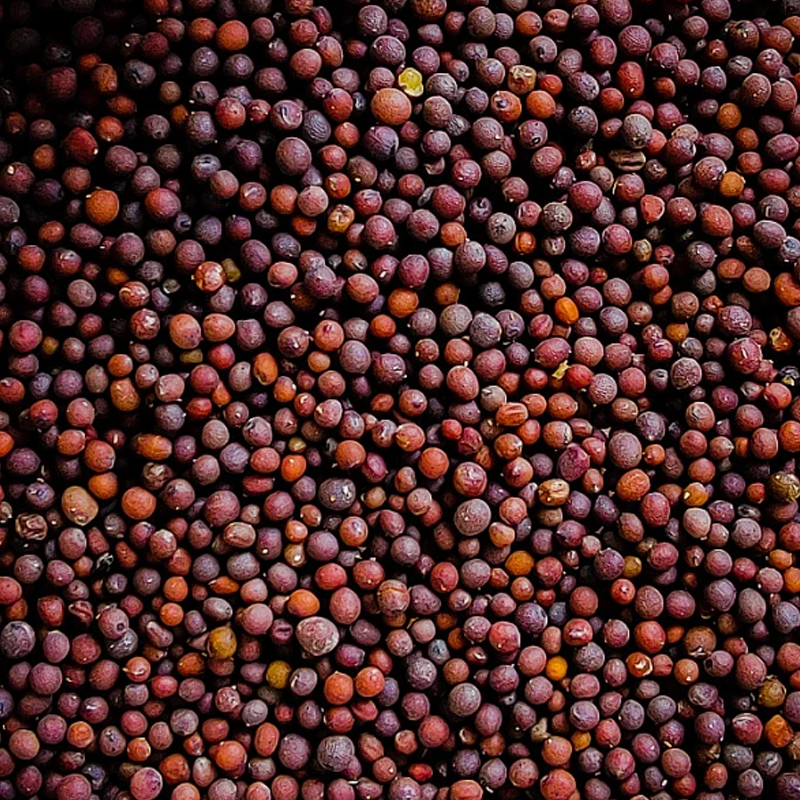
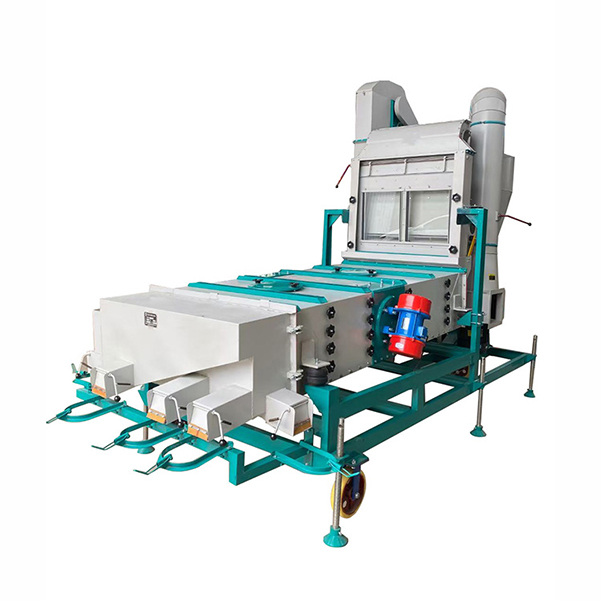
After harvesting and drying, rapeseed is often contaminated with straw, dust, shriveled seeds, and plant debris, as well as stones, soil clods, and moldy grains of similar size; direct processing can damage equipment and reduce oil yield and quality. A tandem setup—combining an air-screen cleaner and a gravity destoner—enables graded impurity removal and deep purification, meeting standards for both oil processing and commercial storage.
The air-screen cleaner handles the initial coarse cleaning stage. Raw material is fed into the machine at a steady rate, where airflow removes lightweight impurities such as dust, stem fragments, and empty husks. Multi-layer vibrating screens then sort the material by size: the top layer catches large impurities like soil clods and long straw; the middle layer retains intact rapeseed; and the bottom layer sifts out fine sand and debris. A secondary air-separation step at the discharge end removes any remaining light impurities. This process efficiently eliminates the vast majority of impurities that differ significantly in size or weight, thereby improving raw material quality, reducing the load on downstream equipment, and allowing for a preliminary assessment of seed plumpness. However, air separation and screening alone cannot separate stones or soil clods that are similar in size to the rapeseed.
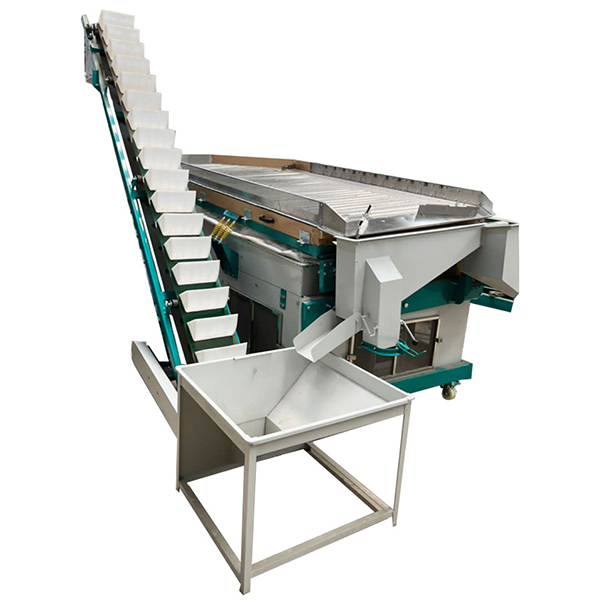
The gravity destoner performs deep, precise cleaning on the pre-cleaned rapeseed. By combining upward airflow with reciprocating screen vibration, the machine fluidizes the material, causing stratification based on density: denser stones and hard soil clods are pushed upward along the screen surface and discharged; plump, high-quality seeds float in the upper layer and slide down to the outlet; and lighter, sprouted, or moldy grains are separated out by the airflow. Through the coordinated operation of this system, stones and low-quality grains are thoroughly removed, achieving a rapeseed purity of 99.5%.
1、Detailed Classification of Common Impurities in Rapeseed
I. Light/Airborne Impurities (Primarily removed by air-screen cleaners)
Plant debris (stems and leaves): Rapeseed stalks, stems, leaf fragments, and pod shells remaining after harvesting and threshing, as well as weed stems and leaves picked up during drying; these are lightweight and easily blown away by airflow.
Empty or shriveled seeds: Underdeveloped seeds caused by poor pollination or drought; they are thin, shriveled, and have a specific gravity far lower than normal seeds.
Dust and dirt: Fine ash and soil dust picked up during field drying or storage, mixed within the gaps between seeds.
II. Large, Hard Impurities
Large materials mixed in during harvesting and drying: Soil clods, mud lumps, gravel, grass roots, weed seed heads, plastic fragments, and loose threads from woven bags; these are significantly larger than rapeseed and can be separated using vibrating screens.
III. Fine/Fragmented Impurities
Fine sand, soil dust, broken seed fragments, insect-damaged debris, and tiny weed seeds; these have a smaller particle size than intact rapeseed and fall through the lower screen mesh during cleaning.
IV. “Shoulder-to-Shoulder” Impurities (Hardest to remove; require specific gravity/destoning separators)
Impurities with volume and size nearly identical to rapeseed; air-screen cleaners cannot distinguish them, so separation relies on density differences:
Gravel and small mud pellets: Small, round dried soil pellets and fine gravel formed in the field; similar in size to rapeseed but denser.
Low-quality/deteriorated seeds: Sprouted seeds, moldy seeds, and insect-hollowed seeds; these have lower density.
Similar weed seeds: Tiny weed seeds that grow alongside rapeseed in the field; their particle size is close to that of the rapeseed.
V. Other Trace Impurities
Insect eggs, grass seed fragments, and tiny plant seeds picked up during harvesting, as well as debris clumps formed during storage.
2、
Rapeseed Cleaning: Complete Workflow and Equipment Advantages of the Air-Screen Cleaner + Gravity Destoner
These two units operate in series: the air-screen cleaner performs initial coarse cleaning, while the gravity destoner handles deep, precision cleaning to remove stones and debris of similar size to the seeds. Used together, they consistently raise rapeseed purity to 99.5%, meeting standards for both oil mill raw material pretreatment and commercial rapeseed sales.
I. Complete Production Line Workflow
Overall Process Sequence
Raw rapeseed → Bucket elevator infeed → Air-screen cleaner (pre-cleaning) → Intermediate conveying → Gravity destoner (precision cleaning) → Clean rapeseed discharge (storage / oil pressing / packaging)
(A) Air-Screen Cleaner Operational Steps (Initial Coarse Cleaning)
Uniform Infeed + Front-end Air Separation
Rapeseed drops from the hopper into the inlet, with feed rate controlled for uniformity. An upstream airflow fan extracts air, removing lightweight impurities—such as dust, hulls, stem/leaf fragments, and shriveled/empty seeds—which are collected in a cyclone dust collector; plump seeds continue downward into the screen box.
Multi-layer Vibrating Screening and Grading
The screen box is fitted with 2–3 layers of galvanized screens with varying aperture sizes, utilizing high-frequency motor vibration for size-based sorting:
Top layer (large aperture): Retains oversized impurities like stalks, large mud clods, and coarse straw, discharging them through the impurity outlet;
Middle layer: Retains intact, plump rapeseed;
Bottom layer (small aperture): Allows fine impurities—such as fine sand, broken seeds, and insect-damaged debris—to pass through;
Rear-end Secondary Air Separation
After screening, the rapeseed passes through a rear air duct where a final air blast removes any remaining lightweight shriveled grains and floating dust; the coarsely cleaned rapeseed is then conveyed via a chute to the gravity destoner’s inlet.
Post-Air-Screening Status: Large, fine, and lightweight impurities are largely removed; the only remaining contaminants are stones, sand, and moldy grains that are similar in size to the rapeseed and cannot be separated by screening alone.
2) Specific Gravity Destoner
Rapeseed is evenly spread across the base of an inclined screen deck featuring a “fish-scale” pattern. A fan beneath the deck delivers a continuous upward airflow; combined with the reciprocating vibration of the screen surface, this keeps the rapeseed in a suspended, fluidized state.
Density-based stratification and separation (Core Principle)
Separation via density differences:
Denser stones, mud clods, and hard soil particles: Sink to the bottom layer, resting against the fish-scale surface; they slowly “climb” upward due to the vibration and are eventually discharged through the grit/stone outlet.
Plump, high-quality rapeseed: Possesses moderate density and remains suspended in the upper layer, sliding down the screen surface driven by the feed flow.
Moldy, sprouted, or insect-damaged/shriveled seeds: Lower density causes them to be lifted by the airflow and diverted into a separate discharge stream.
Finished product discharge
Clean rapeseed is discharged from the lower end of the screen, ready for immediate transfer to the oil-pressing stage or for storage and packaging. The stone removal rate exceeds 98%, with virtually no intact rapeseed lost within the rejected stones and grit.
II. Core advantages of each piece of equipment
1. Advantages of the Air-Screen Cleaner
Broad-spectrum impurity removal, suitable for mixed raw grain: Removes dust, stems/leaves, mud clods (large and small), empty/shriveled grains, and debris—handling all impurities with significant size or weight differences in a single pass. Ideal for raw rapeseed that contains a complex mix of impurities after farm-level drying.
High throughput, low loss: Features a wide screen box design capable of processing 1 to 30 tons per hour. The enclosed dust-removal structure prevents leakage, minimizing grain loss from spillage.
Flexible and adjustable: Airflow speed, screen mesh size, and vibration amplitude can be adjusted or changed as needed; suitable for both dry and moist rapeseed.
Pre-processing load reduction, protecting downstream equipment: Removes large, hard objects early on, preventing stones from entering the specific gravity machine and damaging the fish-scale screen deck, thereby extending the service life of the entire system.
Integrated grading function: Can grade rapeseed based on plumpness as required, distinguishing between rapeseed intended for oil extraction and that intended for seed stock. 2. Advantages of the Gravity-Based Destoner
Overcomes the challenge of separating “look-alike” stones: It is the only machine capable of separating sand, gravel, and soil clods that are identical in size to rapeseed but differ in density—a critical process step that air-sieve separators cannot achieve.
Optimizes oil quality: Removes moldy and sprouted seeds, preventing the extracted rapeseed oil from developing rancidity, off-flavors, or dull color, thereby upgrading the oil’s quality grade.
Protects the main oil-pressing unit: Thoroughly removes sand and stones, preventing abrasion and scoring of the screw press rollers and roasting pans, which significantly reduces equipment maintenance frequency.
High separation precision: Achieves a final rapeseed purity of up to 99.5%, meeting the rigorous quality standards required for grain and oil exports as well as high-end edible oil processing.
Stable operation: Features wear- and corrosion-resistant sieve plates and a vibration-balanced design for low noise, ensuring smooth, steady performance during prolonged, continuous production.
Using a combination of an air-screen cleaner and a gravity separator to process rapeseed significantly mitigates wear on oil press components caused by grit and stones—thereby reducing maintenance costs—while also removing spoiled seeds to effectively boost oil yield and enhance the oil’s flavor and color. Additionally, the enclosed dust-removal design improves the workshop environment, making the system well-suited for the continuous production needs of small-to-medium-sized oil mills and grain-and-oil processing plants.
Post time: Aug-10-2026