I. Primary Impurities in Chickpeas
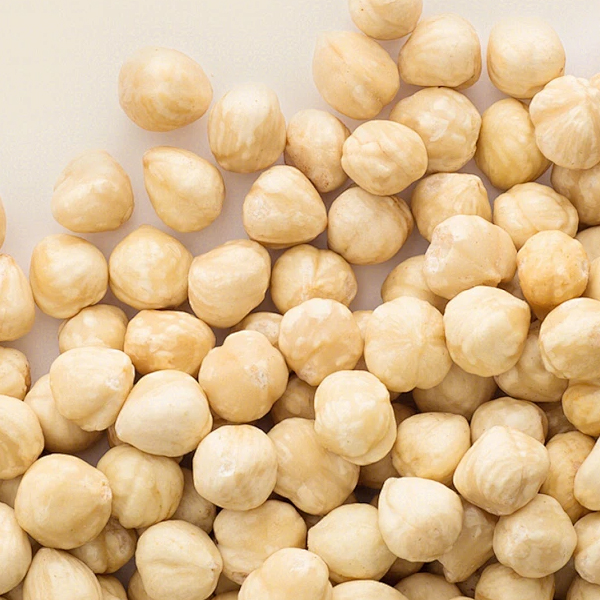
Chickpeas are irregularly spherical, featuring a pointed protrusion at one end, with a diameter of approximately 6–9 mm. They are categorized into two main types: large-seeded varieties (Kabuli type, characterized by larger size and lighter color) and small-seeded varieties (Desi type, characterized by smaller size and darker color). Impurities can be introduced at any stage—from harvesting and threshing to drying, transport, and storage—and can be classified based on four dimensions: size, specific gravity, material, and quality.
Category 1: Large Impurities (significantly larger than the chickpeas themselves). These include straw segments, stalk fragments, pod husks, weed stems, pieces of twine, plastic scraps, large clods of soil, and stones. Such impurities typically enter the batch during threshing or drying; if not removed beforehand, they can clog screens and damage processing equipment.
Category 2: Fine Impurities (significantly smaller than the chickpeas). These consist of fine soil, sand, dust, pulverized pod husks, broken seed coats, and weed seeds. Since chickpeas are often grown in arid or semi-arid regions, the soil is typically dry at the time of harvest, leading to a high content of fine sand and soil particles—a primary focus during the cleaning process.
Category 3: Heavy Impurities (similar in size to the chickpeas but with a higher specific gravity). These include stones, coarse sand, glass shards, metal fragments, and soil clods. Such “co-sized” impurities are the most challenging to remove from chickpeas; they cannot be separated by screening (due to similar dimensions) or air classification (as they are too heavy to be blown away), necessitating separation based on differences in specific gravity. Export orders often impose strict limits on stone content, which is a critical factor in ensuring successful customs clearance.
II. 2026 Cleaning Equipment and Respective Functions
To address the five types of impurities mentioned above, a complete chickpea cleaning line is typically configured as follows: “pre-cleaning → destoning → grading → iron removal → color sorting → (dehulling/polishing) → packaging,” with each piece of equipment serving a specific purpose.
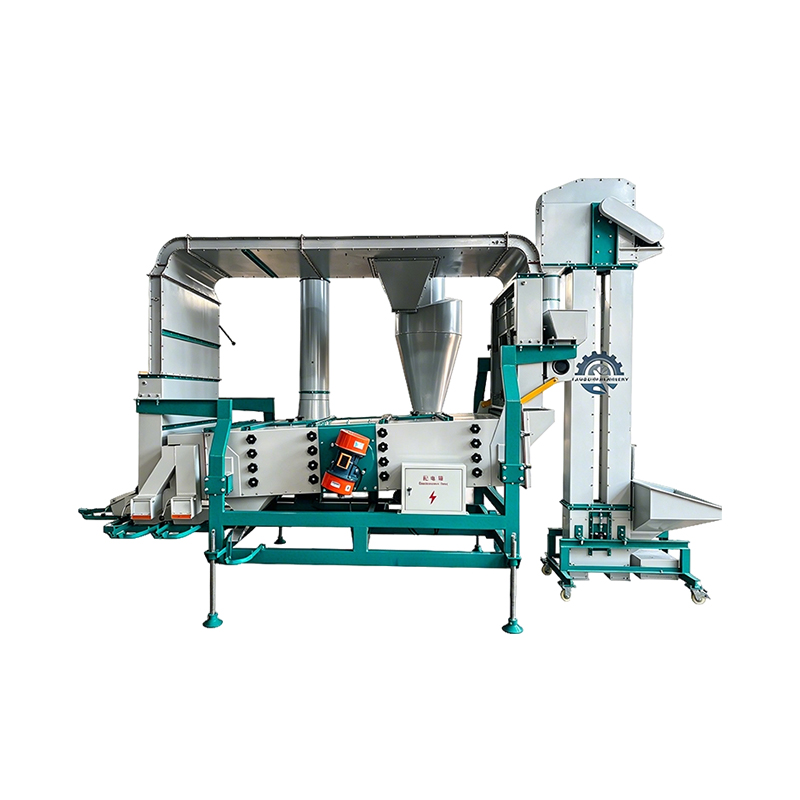
First, 2026 Air screen cleaner (pre-cleaning: removing large, fine, and lightweight impurities).
This serves as the initial stage of the entire line. It operates through a combination of screening and air separation: the screen deck vibrates, causing the material to tumble and move forward across the surface. The upper screen layer traps and discharges large impurities—such as stalks, pod husks, and large stones—while the lower screen layer retains the chickpeas, allowing fine sand and soil to pass through. Simultaneously, a fan generates a directional airflow that extracts dust, chaff, shriveled grains, and lightweight weed seeds. For chickpeas, the air-screen cleaner simultaneously removes large, small, and lightweight debris, significantly reducing the workload for subsequent processing stages. Since large-seeded Kabuli chickpeas and small-seeded Desi chickpeas differ in size, the screen aperture sizes must be configured accordingly.
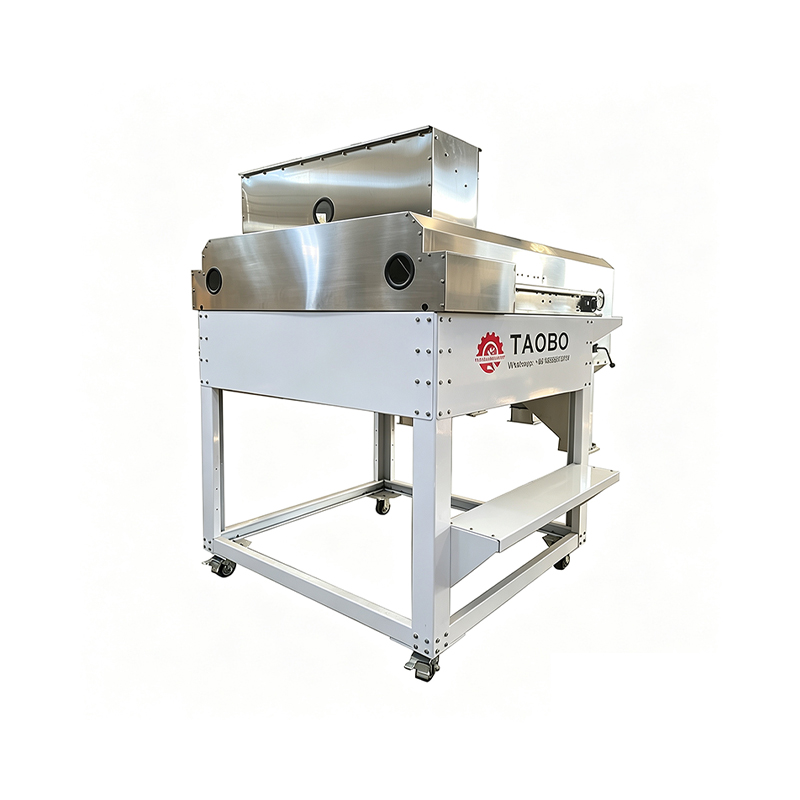
Second, 2026 destoner (removing stones of similar size and other heavy impurities).
This is the core piece of equipment in a chickpea cleaning line. It functions through a combination of three mechanisms: fluidization via upward airflow, vibration of the deck, and transport along an inclined plane. The airflow fluidizes the material layer, causing heavier items—such as stones and sand—to sink and make contact with the deck, while the lighter chickpeas rise to the top. The vibration and inclination of the deck cause the stones to move upward along the slope toward the stone discharge outlet, while the chickpeas move downward toward the grain outlet. Given that chickpeas are relatively large and dense, the destoner requires a higher airflow volume and greater vibration amplitude, along with appropriately larger screen apertures. The effectiveness of the destoning process directly determines whether the final product meets the stone-content standards required for export inspection.
Third, 2026 gravity separator (grading based on plumpness and removing insect-damaged or moldy grains).
While sharing the same operating principle as destoners, these machines serve a different purpose: whereas destoners target “heavy impurities,” precision sorters focus on “light impurities”—separating insect-damaged beans (hollowed out internally and thus lighter in weight), shriveled grains, immature beans, and moldy beans from sound, plump ones. Insect damage (such as that caused by weevils) is common during the storage of chickpeas; gravity-based precision sorting is an effective method for removing these “internally damaged” beans, which is particularly critical when processing chickpeas intended for use as seed or grain.
Fourth, 2026grading machine (size-based classification).
These consist of multiple stacked screen layers with varying aperture sizes. As the product passes through each layer, the chickpeas are sorted into different size categories (large, medium, and small), while broken halves and small, shriveled grains are removed. Grading serves two main purposes: first, it ensures uniform commercial specifications—large-sized Kabuli chickpeas, for instance, command a price premium, allowing for tiered pricing based on grade. Second, it creates a consistent size profile for subsequent color sorting and packaging, which improves the accuracy of both optical recognition and weighing/metering.
Fifth, 2026 magnetic separators (iron removal).
These use high-intensity magnetic rollers or permanent magnet plates to attract and remove ferromagnetic impurities such as iron filings, nails, and welding slag. Although these devices feature a simple design and require little to no power, they serve as a vital line of defense for food safety. They are typically installed at several points in the processing line—after the air-screen cleaner, before color sorting, and prior to packaging.
Sixth, 2026 color sorters (removal of discolored and moldy grains).
High-precision optical sensors detect color variations on the surface of the chickpeas, and high-speed air nozzles blast away discolored beans, moldy grains, peeled beans, and other off-colored impurities. Since mold and insect damage in chickpeas are often accompanied by changes in color, the color sorter acts as the final checkpoint to ensure visual uniformity and hygienic quality—a piece of equipment that is virtually essential for export orders.
Advantages of Equipment from Hebei Taobo Machinery
First, the company possesses strong capabilities in providing complete processing lines, which can be customized based on specific raw materials. With extensive experience in the cleaning and sorting of grains and pulses, Taobo has a deep understanding of the variations in grain size and specific gravity among different types and varieties of chickpeas (including large and small-seeded varieties). The company offers solutions ranging from individual machines to full-scale processing lines. By precisely configuring screen apertures, airflow, and deck parameters—tailored to the client’s specific raw material impurity levels, moisture content, target capacity, and purity requirements—Taobo avoids the common pitfalls of using “one-size-fits-all” equipment that often fails to meet desired sorting standards.
Second, key parameters for individual machines can be finely adjusted to accommodate raw materials sourced from diverse regions. Air-screen cleaners feature variable-frequency airflow control and modular, quick-change screens. Destoners and gravity separators allow for independent adjustment of airflow, vibration amplitude, and deck inclination; these settings can be saved as “recipes” and recalled instantly when switching between different origins or varieties, enabling a single machine to handle multiple batches with varying characteristics.
Third, the company maintains a mature manufacturing and delivery system, supported by comprehensive export services. Backed by a 10,000-square-meter production facility, a team of over 100 professionals, and more than a dozen patents, Taobo’s equipment is built with robust, heavy-duty frames and long-lasting wear-resistant components, ensuring high reliability and low failure rates. The company’s products are exported to over 50 countries and regions. Services include customization for destination-country voltage standards, specialized wooden crating for ocean freight, and turnkey solutions—encompassing system design, trial runs, remote commissioning guidance, and operational training.
For chickpea processing enterprises, a cleaning line is not merely a collection of machines, but a systematic process that assigns specific tasks based on impurity types and calibrates parameters according to the unique characteristics of the material. Hebei Taobo Machinery’s chickpea cleaning lines—featuring air-screen cleaners for initial processing, gravity-based equipment for core separation, and grading/color-sorting systems for final refinement, all integrated with dust collection and automation—consistently deliver high-purity, low-damage, and uniform-grade products, meeting the rigorous standards required for both international export trade and seed processing.
Post time: Nov-13-2026