
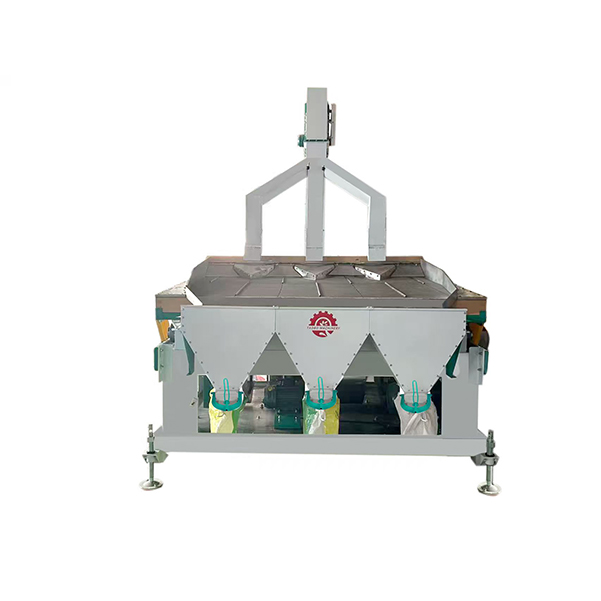
In the sesame cleaning process, gravity separators, destoners, and magnetic separators are specialized equipment targeting different types of impurities. Each plays a specific role and works in tandem to precisely remove heavy impurities such as sand, gravel, and metal from sesame seeds, improving their cleanliness and quality. They are also well-suited to the small size, low density, and easily broken characteristics of sesame seeds, making them core equipment in the sesame cleaning process. Their specific functions are as follows:
Destoner:Targets the removal of heavy impurities such as sand and gravel from sesame seeds.
The destoner is the core equipment for removing sand and gravel impurities in sesame cleaning and is a crucial step in the pre-cleaning process. It specifically removes inorganic heavy impurities such as sand, mud, stones, and soil particles that are similar in size to sesame seeds but have a much higher density.
Sesame seeds easily become mixed with field sand and gravel during planting, harvesting, and drying. These impurities are similar in size to sesame seeds and cannot be separated by sieving, but their density differs significantly (sesame density is approximately 0.8~0.9 g/cm³, while sand and gravel density is approximately 2.6~2.8 g/cm³). The destoner utilizes the principle of gravity difference + vibration/airflow assistance to allow sand and gravel to settle, separate and discharge quickly inside the equipment, preventing sand and gravel from entering the subsequent processing stage and causing equipment wear (such as damage to grinding and oil pressing equipment molds and screws), while thoroughly removing sand and gravel impurities that affect the edibility and processing quality of sesame.
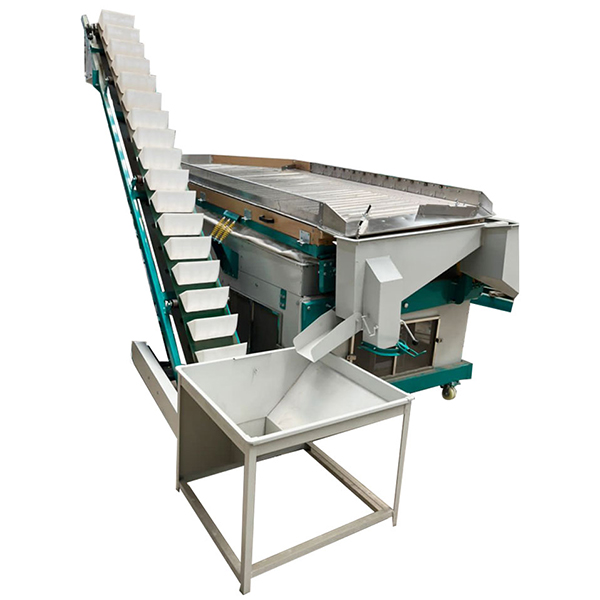
Gravity meter: Removing light/heavy impurities and imperfect grains of similar specific gravity from sesame seeds.
The gravity meter is the core equipment for fine cleaning of sesame seeds. It primarily removes impurities with similar particle size but different specific gravity than sesame seeds, while simultaneously separating imperfect grains (shriveled grains, insect-damaged grains, empty shells). This compensates for the blind spots of screening and destoning machines, making it a crucial step in improving the purity of sesame seeds.
Sesame seeds may contain light impurities such as shriveled sesame seeds, grass seeds, dried seed coats, and light bran, as well as small amounts of heavier impurities such as clumps of mud and heavy grass seeds. These impurities are similar in size to sesame seeds and cannot be separated by screening. Furthermore, their specific gravity difference is much smaller than that between sesame seeds and sand/gravel, making them ineffective for destoning machines. The gravity separator utilizes the principles of gravity difference, airflow stratification, and vibration conveying to separate sesame seeds and impurities into layers based on their specific gravity. Lighter impurities float to the top and are carried away by the airflow, while heavier impurities sink to the bottom and are discharged separately. Perfect sesame seeds are precisely collected in the middle layer. At the same time, it can separate shriveled, insect-damaged, and other imperfect seeds from high-quality sesame seeds, improving the overall plumpness and purity of the sesame seeds and ensuring the quality of raw materials for subsequent processing stages such as oil pressing and flour making.
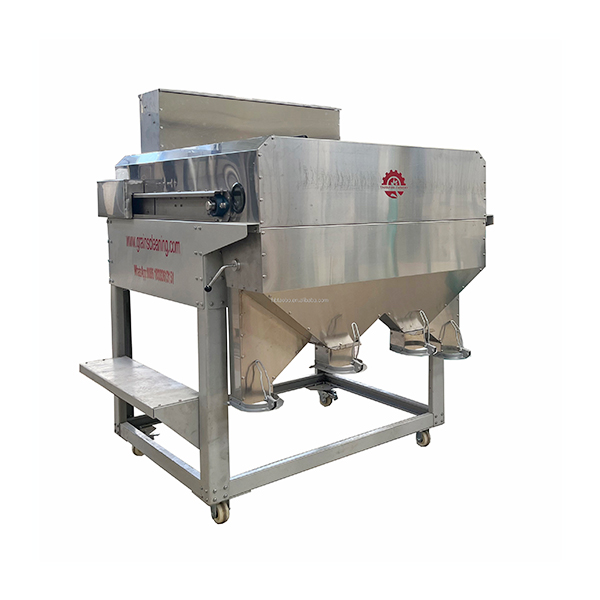
The magnetic separator utilizes the characteristic that soil clods contain trace amounts of iron. Sesame seeds, carried by a conveyor belt, are thrown out in a parabolic trajectory at the magnetic roller. The soil clods are separated by being attracted by the magnetic force, causing their trajectory to deviate. First, a light magnet is used to pre-remove iron impurities.
Precise Impurity Removal: Targeted removal of soil-related impurities such as clods, dust, and sand from sesame seeds, preventing them from affecting the quality of sesame processing (e.g., soy products, oil pressing) and equipment safety.
Equipment Protection: Separates hard objects such as sand and gravel, preventing wear or jamming of subsequent grinding and oil pressing equipment (e.g., grinding rollers, screw presses), extending equipment lifespan.
Quality and Efficiency Improvement: Enhances the cleanliness of sesame seeds, reducing subsequent cleaning costs.
The Logic of the Three-Part Collaboration in Sesame Cleaning: Sesame cleaning generally follows a process of “destoning → gravity separation → magnetic separation” or “initial screening → destoning → gravity separation → magnetic separation”: First, a destoning machine quickly removes heavy impurities such as sand and gravel, preventing wear and tear on the precision components of the gravity separator. Next, the gravity separator performs fine cleaning, removing specific gravity impurities and imperfect particles, improving the purity of the sesame seeds. Finally, a magnetic separator provides final safety protection, removing any metallic impurities that may have been introduced throughout the process, ensuring the safety of subsequent processing and the product.
These three components provide comprehensive cleaning of the three core impurities in sesame seeds: sand, specific gravity impurities, and metallic impurities. Each is indispensable and is standard equipment in the cleaning section of large-scale, standardized sesame processing.
Post time: Jan-23-2026