
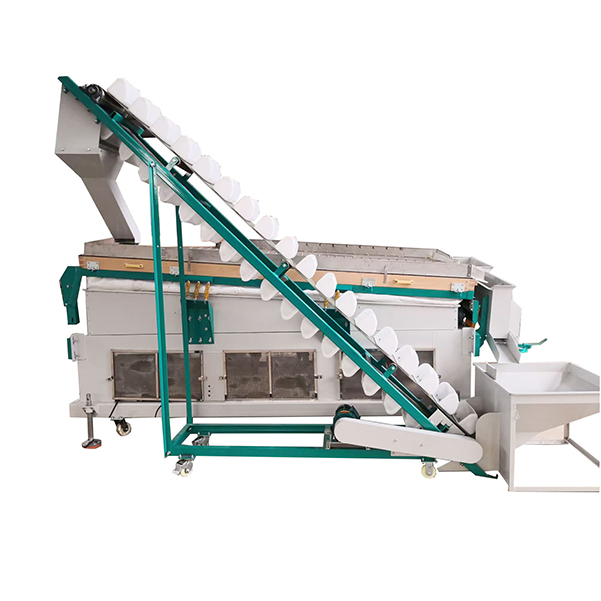
Categorization of impurities to be removed from kidney bean and pinto bean raw materials:
I. Large, lightweight impurities (removed during the first stage of air-screen cleaning)
Stalks, vines, grass fragments, pod husks, twine, plastic scraps, withered leaves, and large soil clods. These impurities are bulky yet lightweight; removal relies primarily on **pre-cleaning screens** and **air-screen cleaners** (using airflow).
II. Small particles, fine debris, and dust
Soil powder, fine sand, bean fragments, and seed coat debris. Removed via air-suction dust extraction combined with lower-level fine-mesh screens.
III. Impurities differing in particle size (removed via vibrating screen grading)
1. Impurities larger than the beans: Large soil clumps, stones, and large grains of other crops.
2. Impurities smaller than the beans: Fine sand/soil, broken bean cotyledons, grass seeds, and small weed seeds.
Separation is achieved using multi-layered screens based on particle size.
IV. Impurities of similar size (processed primarily by gravity separators)
Particles nearly identical in size to kidney/pinto beans that cannot be removed by standard screens: stones of similar size, hard soil pellets, sintered soil clods, and high-density weed seeds. Separation relies on weight differences using **gravity destoners** or gravity separators
V. Low-quality or spoiled beans (removed via gravity separator grading)
Shriveled beans, insect-damaged beans, moldy beans, sprouted beans, desiccated/wrinkled beans, and broken bean halves. While these beans may appear normal in shape, they have a lower bulk density; airflow and gravity separation distinguish them from high-quality beans. Severely discolored or spoiled particles are subsequently removed by a color sorter.
VI. Discolored impurities (precision cleaning via color sorter)
Beans of different varieties/colors, discolored moldy beans, beans with black spots, black stones, and discolored soil particles. Since gravity separators cannot distinguish color, a color sorter is required for the final color-based sorting stage.
VII. Other mixed foreign crops
Sorghum, corn, wheat, other bean varieties, and weed seeds.
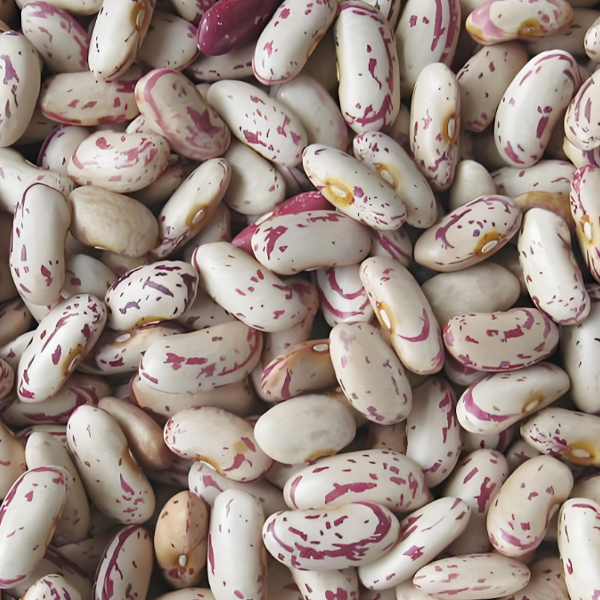
II. Working Principle of the Gravity Separator for Cleaning Pinto Beans
Gravity separation relies on differences in specific gravity and bulk density, achieving separation through the synergistic action of three factors: airflow-induced fluidization, reciprocating vibration of the screen surface, and the dual-axis inclination of the screen deck.
Raw pinto beans are evenly spread across a perforated, inclined screen deck. A fan beneath the deck delivers a controlled upward airflow that passes through the screen mesh and acts upon the layer of beans. With the airflow adjusted to the optimal level, the beans are lifted and separated, entering a fluidized, suspended state. High-quality beans (which are dense and plump), stones, and clods of dirt—all having high specific gravity—resist being lifted and remain in close contact with the screen surface. Conversely, low-density materials—such as shriveled, insect-damaged, moldy, or broken beans—float in the upper layer of the material bed.
Simultaneously, the screen surface undergoes high-frequency reciprocating vibration. The heavy particles in the bottom layer, in contact with the screen, are driven by the surface’s friction; aided by the screen’s longitudinal upward slope, these heavy materials move up the screen surface. Meanwhile, the lighter, inferior beans suspended in the airflow do not touch the screen surface; experiencing minimal friction, they slide down the screen under the influence of gravity. A transverse inclination directs materials of different qualities toward separate discharge zones, ultimately ensuring the distinct discharge of heavy impurities (stones and dirt clods), high-quality finished beans, and inferior, lightweight beans.
During the separation process, parameters such as airflow volume, vibration frequency, screen inclination, and feed rate are adjustable. These can be precisely calibrated based on the moisture content and impurity profile of the pinto beans to thoroughly separate particles of similar size but differing weights—overcoming the limitations of standard air-screen cleaners, which often fail to remove “companion stones” (stones similar in size to the beans) or effectively grade bean quality.
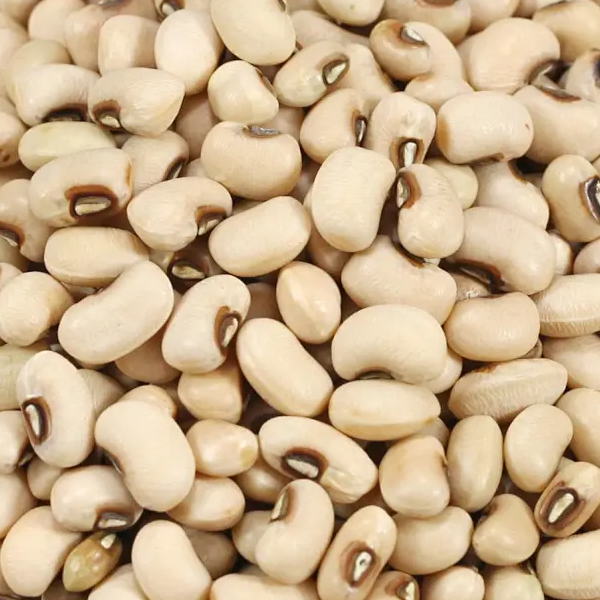
III. Complete Workflow for Cleaning Pinto Beans Using a Gravity Separator
1. Uniform Feeding:Pinto bean raw material, having undergone preliminary air-and-screen cleaning, is conveyed to the gravity separator’s feed hopper. A vibrating feeder mechanism spreads the material evenly across the entire screen deck, preventing localized piling or uneven thickness and ensuring stable airflow and vibration-based separation.
2. Fluidized Automatic Stratification:A fan continuously blows air upward from beneath the screen, placing the pinto beans in a fluidized, suspended state. Combined with the screen deck’s directional reciprocating vibration, the material stratifies based on specific gravity differences. Heavier, plump, high-quality beans, along with stones and hard clods of dirt, settle against the bottom layer of the screen; lighter, shriveled, insect-damaged, moldy, or broken beans remain suspended in the upper material zone.
3. Differential Displacement Sorting: The screen deck is set with both longitudinal and transverse inclinations. Heavy particles in the bottom layer, in contact with the screen, are driven by vibrational friction to move “uphill” toward the heavy impurity discharge end. Conversely, suspended light/inferior beans in the upper layer are not dragged by screen friction and flow “downhill” toward the light impurity outlet. Medium-quality beans are discharged from a middle diversion outlet, achieving multi-stage grading.
4. Separate Discharge and Recovery: Stones and dirt clods are discharged from the heavy impurity outlet; intact, plump, qualified beans flow from the finished product outlet; shriveled, broken, and moldy beans exit via the light impurity outlet; intermediate-grade material can be recirculated for a second round of fine sorting. A dust removal system operates throughout the process to collect dust and debris, minimizing airborne pollution.
5. Dynamic Parameter Fine-Tuning: Fan airflow, vibration amplitude, screen deck inclination, and feed rate are adjusted in real-time based on the moisture content of the beans and the quantity of impurities, ensuring consistent sorting precision. IV. Key Functions of the Gravity Separator in Pinto Bean Processing
1. Removal of Heavy Impurities of Similar Size: It eliminates heavy impurities—such as stones, hard mud clods, and sintered soil particles—that are similar in size to the pinto beans. This overcomes the limitations of standard vibrating screens, which cannot separate heavy impurities of the same particle size, thereby preventing hard impurities from damaging downstream equipment (such as polishers, color sorters, and packaging machines) and ensuring food safety.
2. Quality Grading and Purification: It precisely separates shriveled, insect-damaged, sprouted, moldy, and broken or spoiled beans. By selecting high-quality, plump, and dense beans, it effectively upgrades the product grade and market value, meeting export-grade purity standards (up to 99.5%).
3. Optimization of Production Line Operations: Gravity separation ensures consistent material quality, reducing the processing load on downstream color sorters and polishers, minimizing consumable wear, and increasing the overall yield of qualified finished products.
4. Flexible Sorting for Diverse Applications: A single gravity separator can handle both the purification of food-grade pinto beans and the selection of high-germination-rate seeds, effectively meeting the processing needs for both commercial grain and seed stock.
Post time: Sep-02-2026